
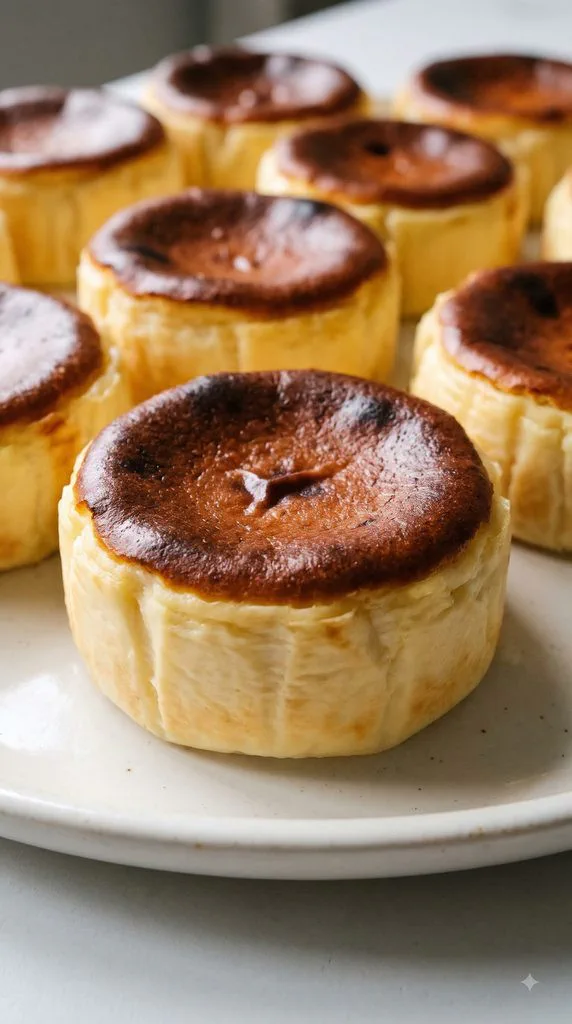
Mini Basque Burnt Cheesecake has a dark, caramelized top and a creamy middle with just enough tang from the cream cheese. Each little cake gets its shape from a parchment-lined muffin cup. The hot oven does the browning, and a few hours in the fridge give the centers time to set. Serve them plain so you can taste the toasted top in every bite.
Why I Love This Recipe
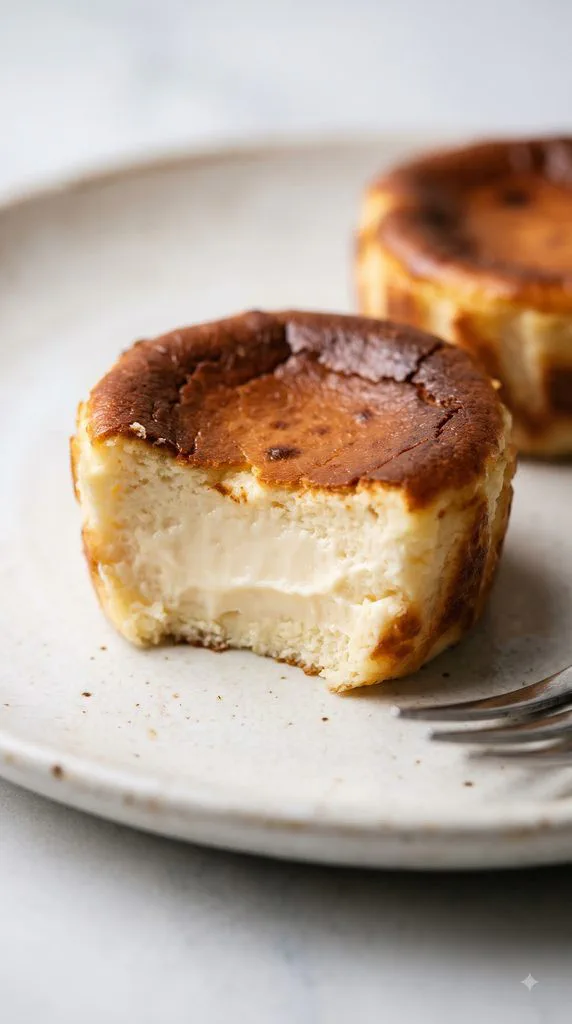
The best bite goes straight through the dark top into the soft center. The edges get a little firmer than the middle, so each small cake gives you both textures.
- One bowl. The batter comes together in the same bowl from start to finish.
- Easy portions. Each muffin cup holds its own little cheesecake.
- Simple prep. The batter goes straight into the parchment, with no crumb base to press into the cups.
- Easy to make ahead. Bake the cheesecakes the day before and peel the parchment off when you’re ready to serve.
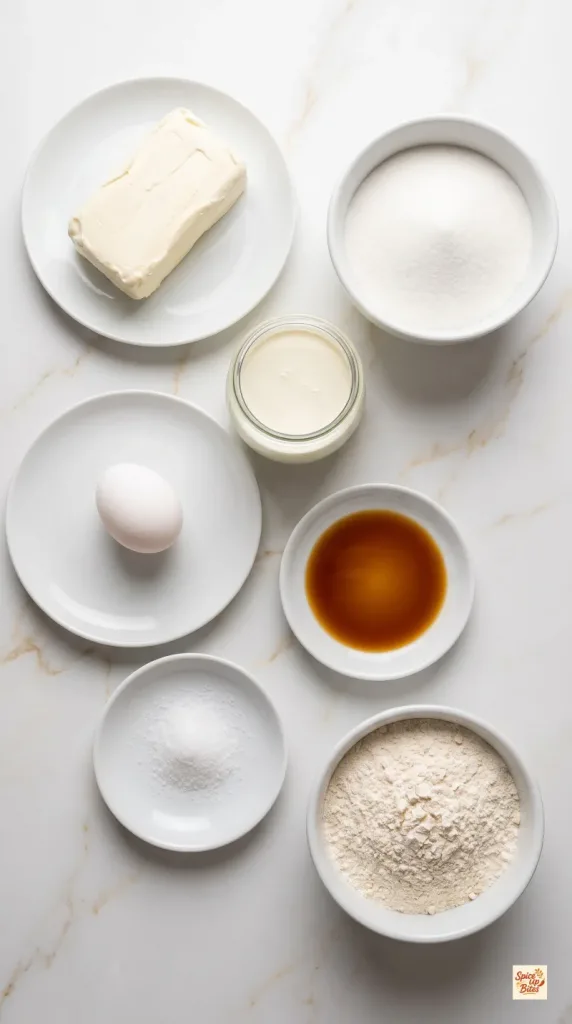
What You’ll Need
- Servings — 6 individual cheesecakes
- Prep Time — 20 minutes, with softened cream cheese
- Cook Time — 18–24 minutes
- Cooling Time — 45 minutes
- Chill Time — At least 4 hours
- Total Time — 5 hours 23 minutes to 5 hours 29 minutes, plus time to soften the cream cheese
- Oven Temperature — 425°F (220°C)
- Pan — Standard 12-cup muffin pan, using 6 wells
- 8 oz (226 g) full-fat block cream cheese, softened
- ⅓ cup (67 g) granulated sugar
- 1 large egg, at room temperature
- ½ cup (120 ml) heavy cream, at room temperature
- ½ teaspoon vanilla extract
- ⅛ teaspoon fine sea salt
- 1 tablespoon (8 g) all-purpose flour
Tools You Need
- Standard rectangular 12-cup silver aluminum muffin baking pan with a flat rolled rim, no separate handles and six wells lined with 5-inch squares of white parchment
- Scissors
- Medium glass mixing bowl
- Electric hand mixer
- Flexible spatula
- Measuring cups and spoons
- Fine-mesh sieve
- Wire cooling rack
How to Make Mini Basque Burnt Cheesecake
Start with soft cream cheese so the batter comes together smoothly.
Step 1: Heat the Oven and Line the Pan
Set a rack in the upper third of the oven and preheat to 425°F (220°C).
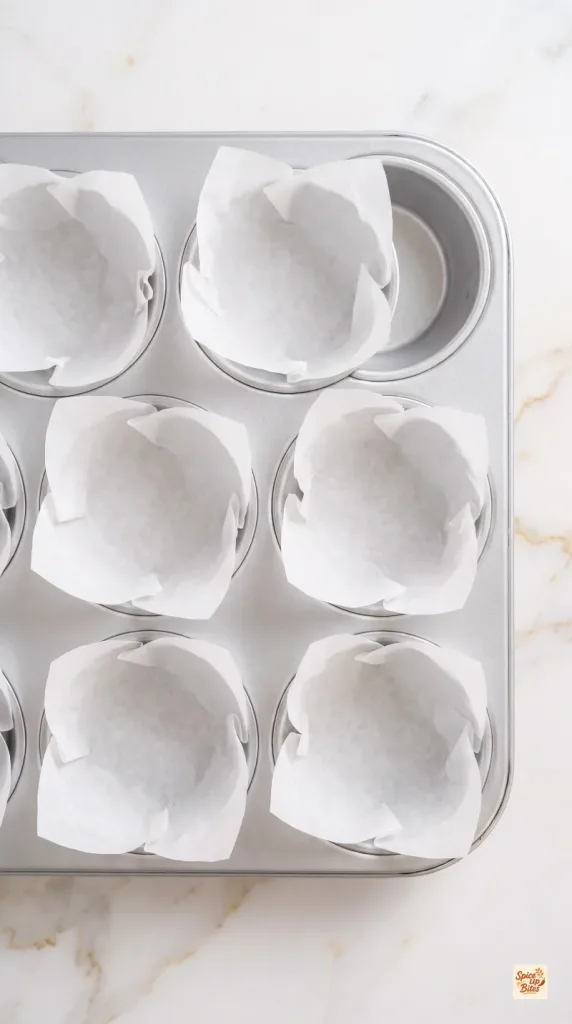
Cut six 5-inch squares of parchment.
Press one square into each of 6 standard muffin wells, working the creases against the sides so the paper sits flat on the bottom and extends above the rim.
Step 2: Make the Batter
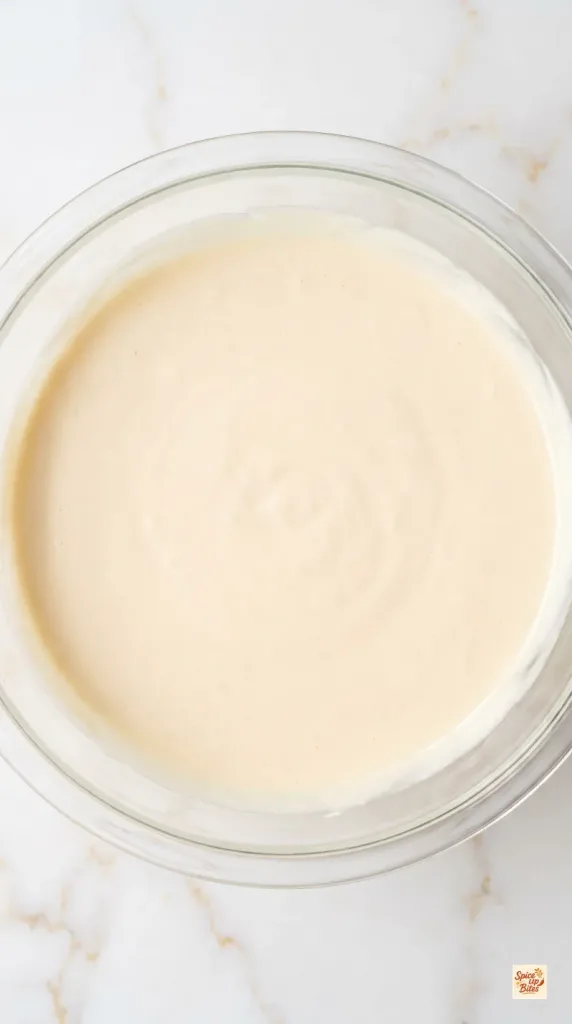
Beat 8 oz (226 g) softened cream cheese and ⅓ cup (67 g) granulated sugar on medium for 1–2 minutes, until smooth.
Scrape down the bowl.
Mix in 1 large egg on low just until the streaks disappear.
Mix in ½ cup (120 ml) heavy cream, ½ teaspoon vanilla extract and ⅛ teaspoon fine sea salt on low.
Sift 1 tablespoon (8 g) all-purpose flour over the bowl.
Mix on low just until the flour disappears, then scrape the bowl and fold gently to catch any thicker batter at the bottom.
Step 3: Fill the Cups
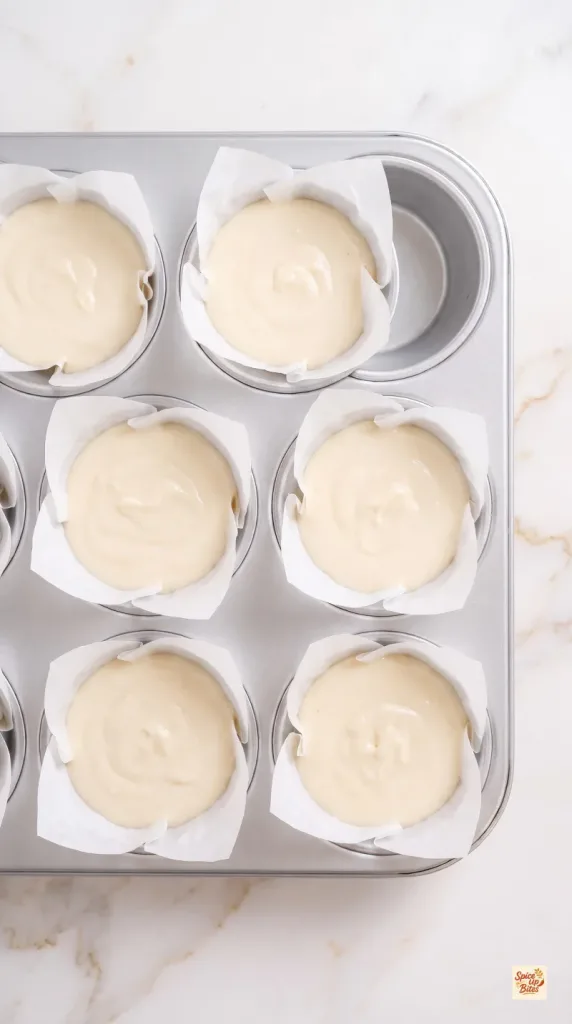
Divide the batter evenly among the 6 lined wells, filling each about three-quarters full.
Tap the pan gently on the work surface to release large air pockets.
Step 4: Bake the Cheesecakes
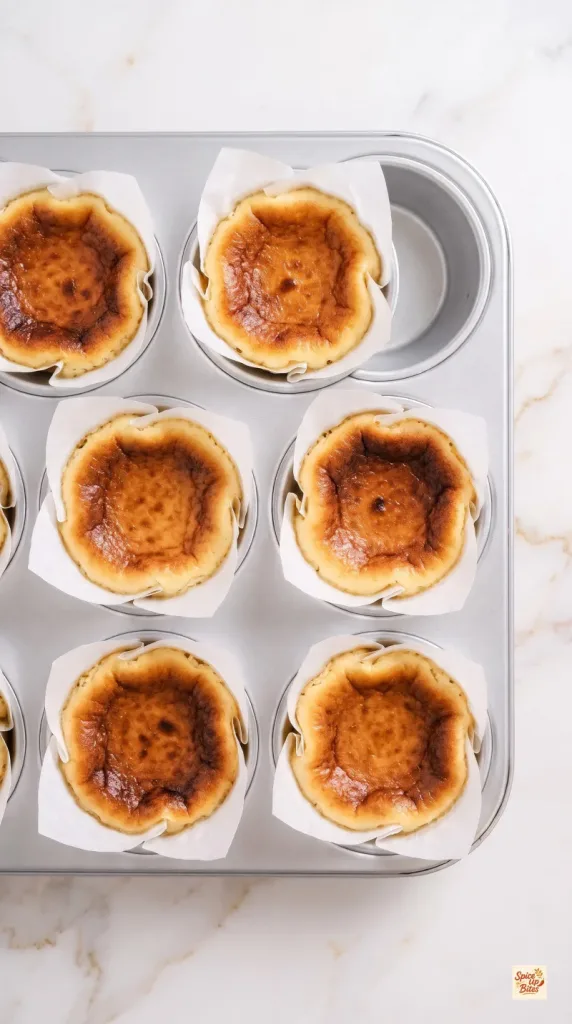
Bake at 425°F (220°C) for 18–24 minutes. Start checking at 18 minutes.
Take the pan out when the tops are deep mahogany brown, the edges are set and the centers wobble gently as a whole when you nudge the pan. The middle should never look liquid.
Step 5: Cool, Chill and Serve
Cool the cheesecakes in the pan on a wire rack for 45 minutes, or until they reach room temperature. The centers will settle slightly.
Lift the cheesecakes out by the parchment and set them in a covered container.
Refrigerate for at least 4 hours, or overnight, until set.
Peel away the parchment and serve the cheesecakes plain. For a softer bite, let them stand for 10 minutes before serving.
Why This Recipe Works (Quick Science)
At high heat the exposed surface browns quickly, giving the cheesecake its deep color and toasted flavor. Inside, the egg sets the batter while the cream cheese and cream keep it silky. A spoonful of flour helps the small cakes hold their shape after the parchment comes off. The centers continue to firm as they cool, then become easy to cut after chilling.
Common Mistakes to Avoid
- Starting with cold cream cheese. Let it soften until it yields easily to a light press. Scrape the sides of the bowl as you mix so no thick bits get left behind.
- Whipping after the egg goes in. Use low speed from there. Too much air can make the cakes rise sharply and collapse into large cracks.
- Using a mini muffin pan. Use standard muffin wells. Smaller wells change both the portion size and the bake time.
- Waiting for a firm center in the oven. Pull the pan when the edges are set and the middle still has a small wobble. The fridge finishes firming the texture.
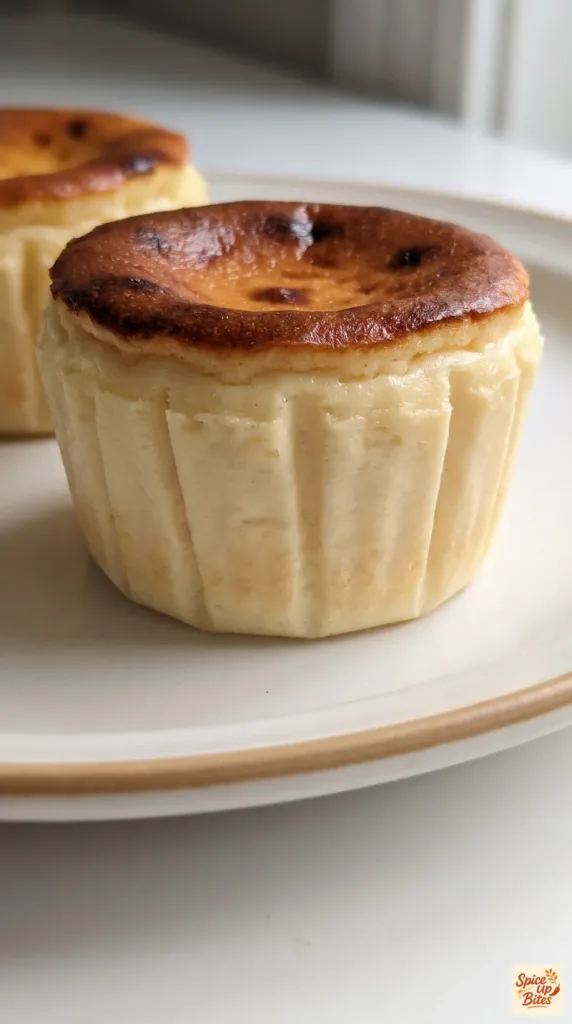
- Peeling the parchment while warm. Chill the cakes first so their sides hold together as the paper comes away.
Leftovers and Storage
Store the chilled cheesecakes covered in the refrigerator for up to 3 days. Leave the parchment on until serving to protect the sides.
Macros Information
These are estimates per cheesecake, based on six servings.
- Calories — 260
- Protein — 4 g
- Carbohydrates — 14 g
- Fat — 21 g
- Saturated Fat — 12 g
- Fiber — 0 g
- Sugar — 13 g
- Sodium — 185 mg
Frequently Asked Questions (FAQ)
Q: Do these cheesecakes have a crust?
A: They’re crustless. The batter bakes directly against the parchment, which leaves soft creases along the sides.
Q: Why is the top so dark?
A: The high heat gives the surface its signature deep brown color and a lightly bittersweet, toasted flavor.
Q: Do I need a water bath?
A: Bake the muffin pan on its own. Direct oven heat helps the exposed tops brown.
Q: Can I use cream cheese from a tub?
A: Use full-fat block cream cheese. Spreadable cream cheese can have a different moisture content and give you a looser set.
Q: Why did my cheesecakes sink?
A: A slight dip is expected. The cakes puff as they bake and settle as they cool.
Q: How can I tell if the center is done?
A: A gentle shake should make only the center wobble slightly. The edges should hold steady and the batter should never slosh.
Q: Can I bake them a day ahead?
A: Yes. Chill the cooled cakes overnight in a covered container, then peel the parchment just before serving.
Q: Should I serve them straight from the fridge?
A: Serve them cold for a firmer bite, or let them stand for about 10 minutes for a softer center.
Final Thoughts
Give these little cheesecakes time to chill, then cut into one and see how the dark top gives way to the creamy center. If you make a batch, leave a comment and tell me how they turned out. Happy cooking!