
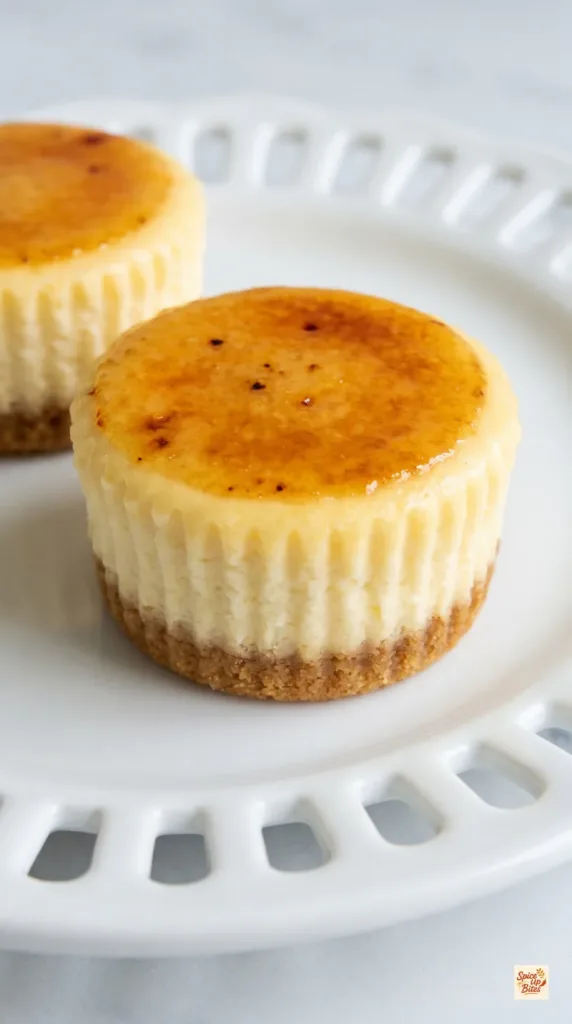
Mini Creme Brulee Cheesecake gives you two of the best dessert textures in one bite. The thin sugar top cracks under a spoon, then you hit cold vanilla cheesecake and a buttery graham cracker base. Bake the individual portions in a muffin pan and chill them ahead. The last-minute torching takes just a few minutes.
Why I Love This Recipe
That first tap of the spoon is half the fun. The sugar sets into a crisp shell, and the creamy cheesecake gives just enough tang to balance it.
- Easy portions. The muffin pan gives you 12 little cheesecakes you can lift out one at a time.
- A crisp base. A quick bake firms up the buttered crumbs before the filling goes in.
- A finish you can do at the last minute. Keep the cheesecakes chilled, then torch only the ones you plan to serve.
What You’ll Need
- Servings — 12 mini cheesecakes
- Prep time — 20 minutes
- Cook time — 29 minutes, including torching
- Cooling time — 1 hour
- Chill time — 4 hours
- Total time — 5 hours 49 minutes
- Oven and pan — 325°F (163°C), standard 12-cup muffin pan
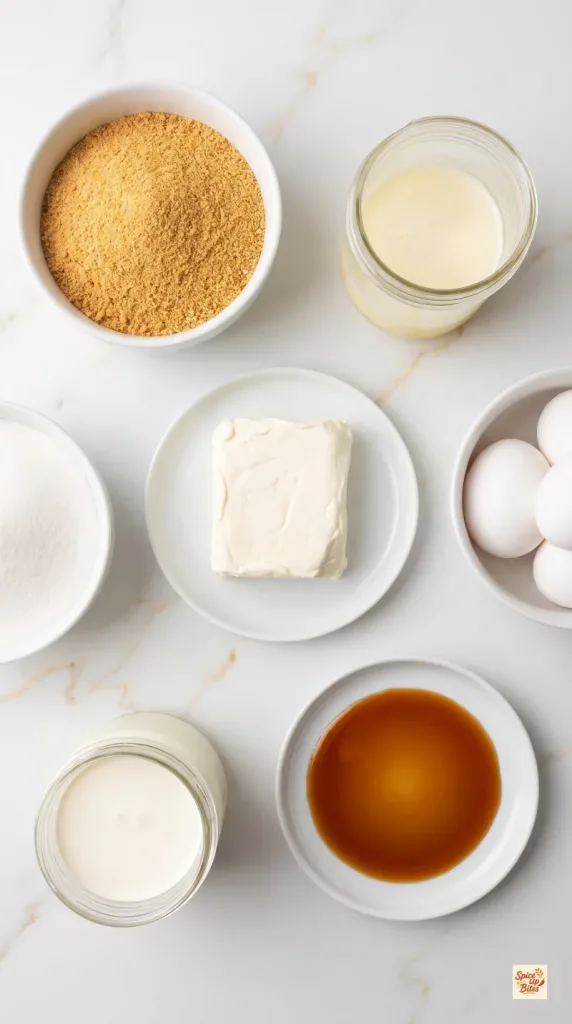
- 1 cup (120 g) finely crushed graham cracker crumbs
- 4 tablespoons (56 g) unsalted butter, melted
- 16 oz (454 g) full-fat block cream cheese, softened
- ¾ cup (150 g) granulated sugar, divided
- 2 large eggs, at room temperature
- ¼ cup (60 ml) heavy cream, at room temperature
- 2 teaspoons vanilla extract
Tools You Need
- Standard 12-cup muffin pan and paper liners
- Mixing bowls, measuring cups and spoons
- Flat-bottomed glass and flexible spatula
- Electric hand mixer
- Wire cooling rack
- Kitchen torch and a heatproof work surface
How to Make Mini Creme Brulee Cheesecake
Give the baked cheesecakes time to chill all the way through before you add the sugar tops.
Step 1: Press and Bake the Crusts
Preheat the oven to 325°F (163°C) and line a standard 12-cup muffin pan with paper liners.
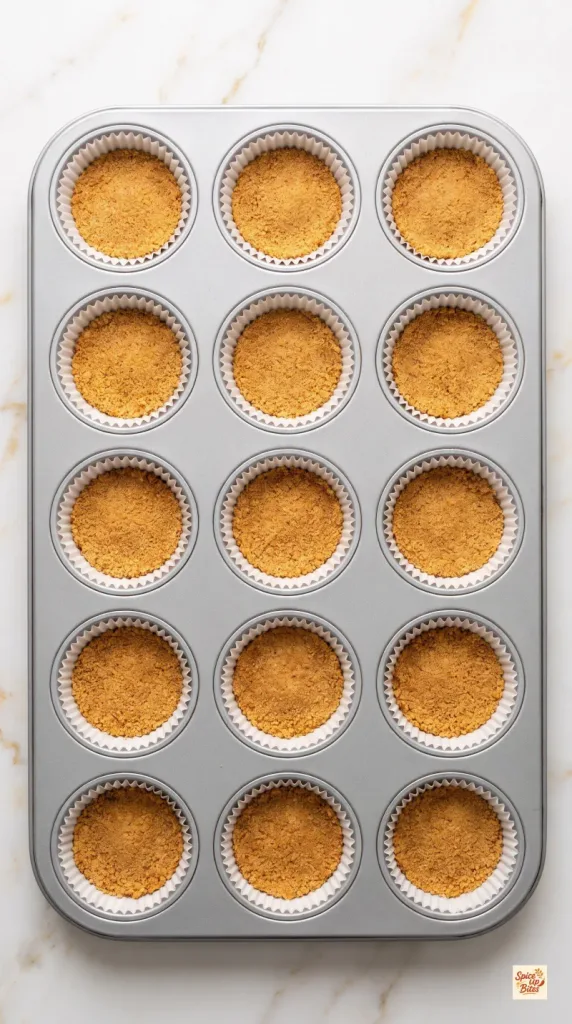
Stir 1 cup finely crushed graham cracker crumbs and 4 tablespoons melted unsalted butter in a bowl until the crumbs feel like damp sand.
Divide the crumbs evenly among the liners. Press down with the flat bottom of a glass to form a thin, even base in each cup.
Bake for 7 minutes, until the crusts look set and lightly toasted. Set the pan on a rack to cool while you mix the filling.
Step 2: Mix the Vanilla Filling
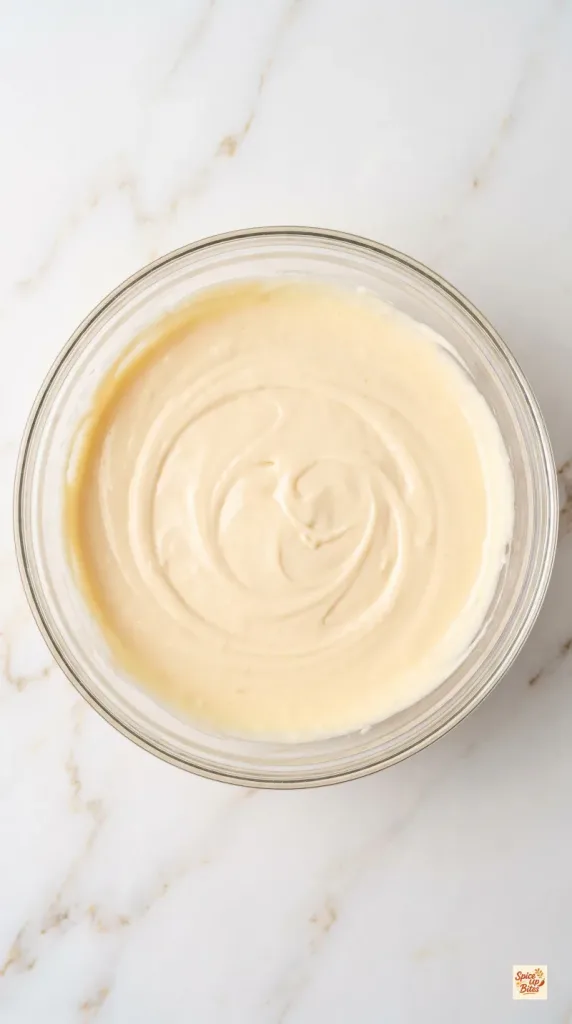
Beat 16 oz softened full-fat block cream cheese and ½ cup granulated sugar on low speed until smooth. Scrape the sides and bottom of the bowl.
Mix in 2 large eggs, one at a time, on low speed. Stop once each egg blends into the batter.
Add ¼ cup heavy cream and 2 teaspoons vanilla extract and mix on low just until the batter is even.
Step 3: Fill the Cups
Divide the vanilla batter evenly over the 12 baked crusts, using about ¼ cup per liner. Leave a little room at the top of each liner.
Gently tap the pan on your work surface to release large air bubbles.
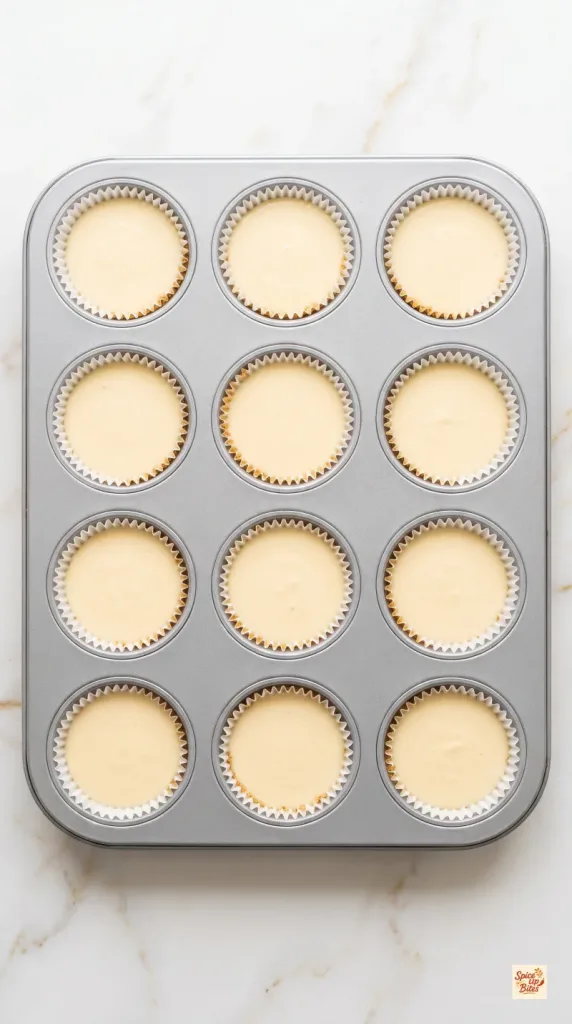
Step 4: Bake and Chill
Bake at 325°F (163°C) for 17 to 20 minutes, until the edges are set and the centers wobble slightly as one piece when you nudge the pan. If the centers ripple like liquid, give them another minute and check again.
Cool in the pan on a wire rack for 1 hour.
Cover the pan and refrigerate for at least 4 hours, or overnight, until the cheesecakes are firm and cold.
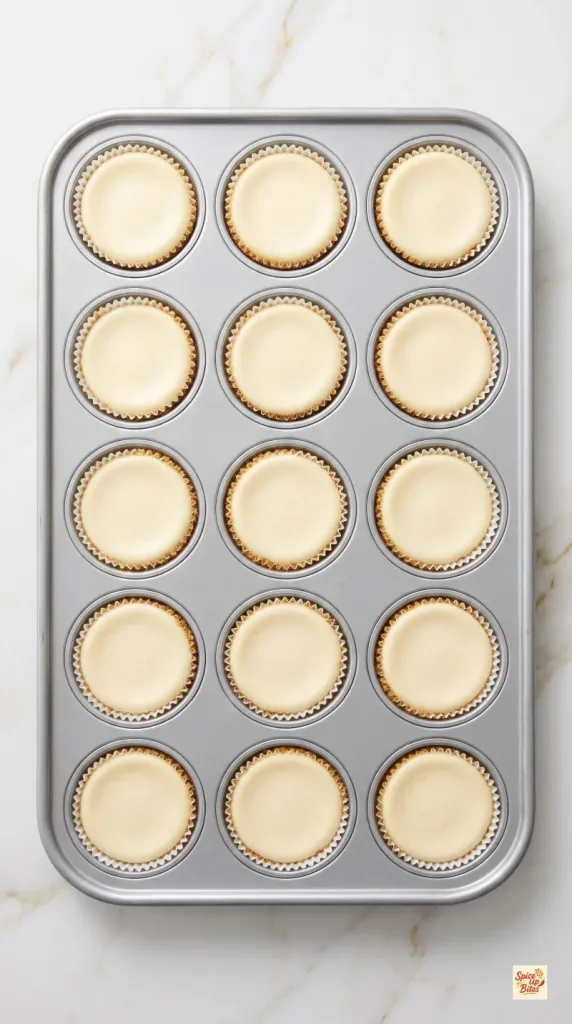
Step 5: Torch the Tops and Serve
Lift the cold cheesecakes out of the muffin pan and peel off the paper liners. Set the cheesecakes on a heatproof work surface.
Divide the remaining ¼ cup granulated sugar among the 12 cheesecakes, using 1 teaspoon per cheesecake. Sprinkle it evenly across each top in a thin layer.
Move a kitchen torch in small circles above the sugar until it melts and turns amber. Work on one cheesecake at a time and keep the flame moving.
Let the shells harden for 1 to 2 minutes. Transfer the cheesecakes to a serving board or plate and serve while the tops are crisp and the centers are cold.
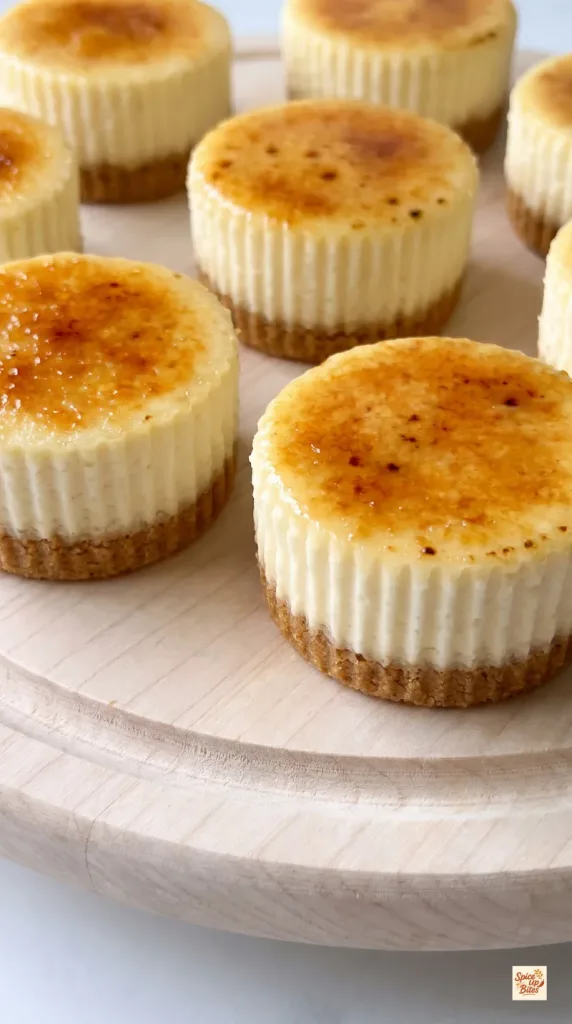
Why This Recipe Works (Quick Science)
Melted butter coats the crumbs and helps them pack together. The short first bake sets the crust so it can hold the filling. As the cheesecakes bake, the egg proteins set the filling. Chilling firms it enough to peel away the liner cleanly.
The torch melts and browns the thin layer of sugar quickly, so the cheesecake stays cold inside. The melted sugar hardens as it cools. Over time it absorbs moisture from the filling and loses its snap, which is why it goes on just before serving.
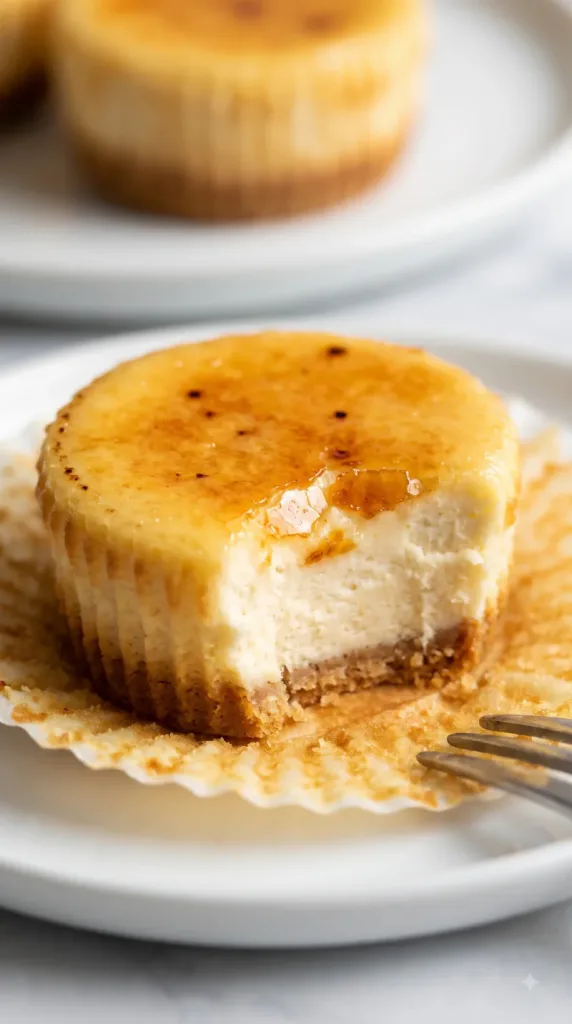
Common Mistakes to Avoid
- Using cold cream cheese. It leaves little lumps that are hard to mix out once the eggs go in.
- Beating on high after adding the eggs. Extra air can make the filling rise and sink. Low speed is enough to bring it together.
- Baking until the centers are stiff. A small jiggle is the cue to take the pan out. The filling keeps setting as it cools.
- Leaving sugar in little piles. Thick spots take longer to melt. Spread each teaspoon out evenly before you torch it.
Leftovers and Storage
Cover and refrigerate the plain, chilled cheesecakes for up to 3 days. For longer storage, wrap the untorched cheesecakes individually and freeze for up to 1 month. Thaw them in the fridge overnight before adding sugar. Refrigerate any leftovers with the sugar already on them and expect the shells to soften.
Macros Information
These are estimates per cheesecake, based on 12 servings.
- Calories — 275 kcal
- Protein — 4 g
- Carbohydrates — 22 g
- Fat — 20 g
- Saturated fat — 11 g
- Fiber — less than 1 g
- Sugar — 16 g
- Sodium — 175 mg
Frequently Asked Questions (FAQ)
Q: Do I need a water bath?
A: No. The small portions bake directly in the lined muffin pan.
Q: Is this a mini muffin pan recipe?
A: Use a standard muffin pan. The mini muffin wells are smaller and would need a shorter bake.
Q: How do I know when the bottoms are ready?
A: The pressed crumbs should look lightly toasted and hold their shape. The crust firms more as it cools.
Q: Why does my filling have lumps?
A: Cream cheese is easiest to smooth when it has softened. Beat it with the sugar and scrape the bowl before adding the eggs.
Q: Can I make the cheesecakes the day before?
A: Yes. Bake and chill them overnight, then peel the liners and torch the tops just before serving.
Q: Can I use an oven broiler instead of a torch?
A: A kitchen torch gives you better control over each small top and keeps the cold filling from warming as much.
Q: Can I use superfine sugar?
A: Yes. Use the same amount just for the topping. The finer grains melt quickly, so watch the color as you move the torch.
Q: Why did the topping turn sticky?
A: The sugar shell absorbs moisture as it sits. For a crisp top, caramelize the sugar right before you serve.
Final Thoughts
Keep the cheesecakes cold, give the sugar a moment to set, and listen for that first crack. If you make Mini Creme Brulee Cheesecake, leave a comment and tell me how the tops turned out.
Happy cooking!