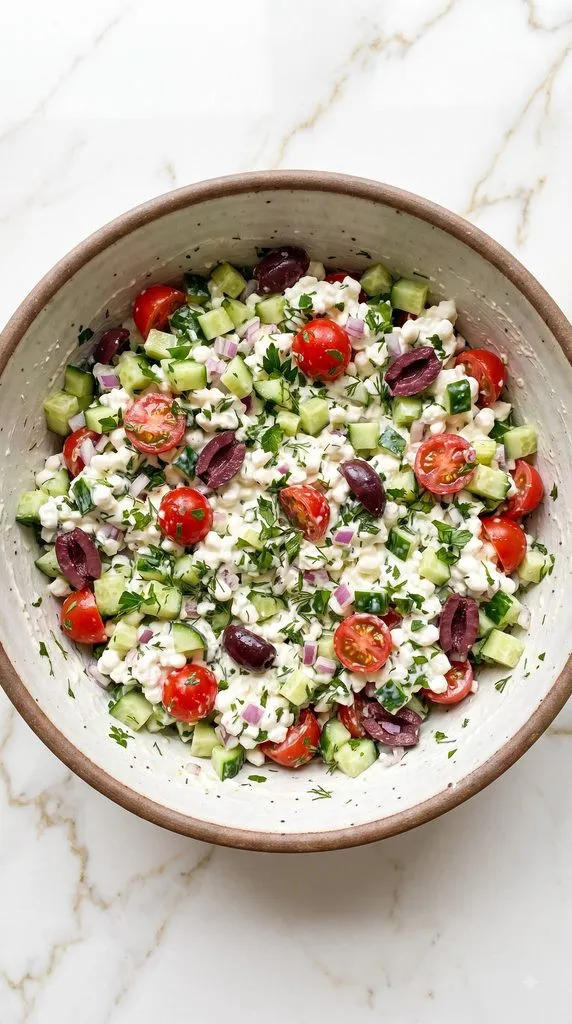

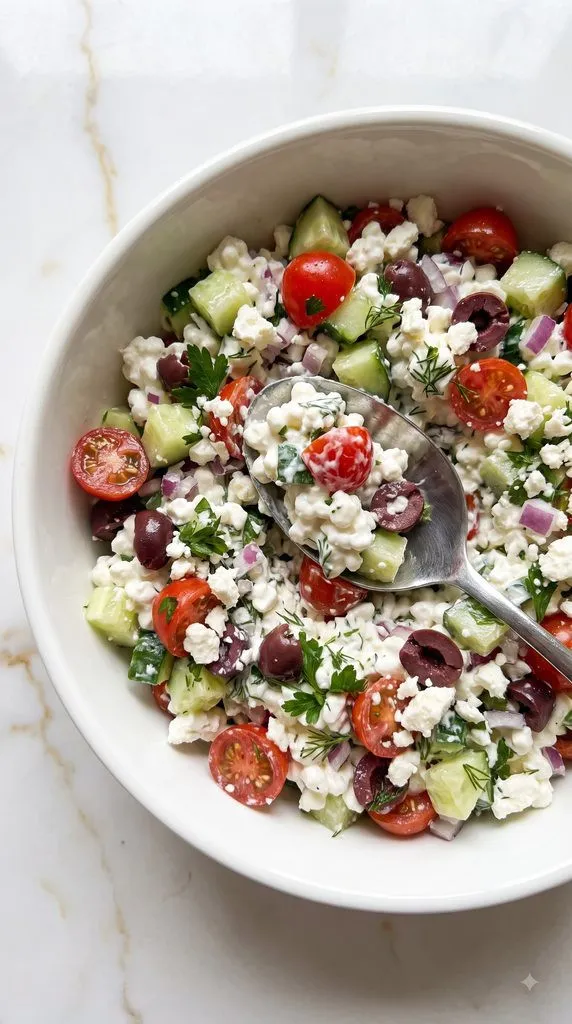
This Mediterranean Cottage Cheese Salad is fresh, creamy, crunchy, and full of bright flavor. Cottage cheese makes it filling, while cucumber, tomatoes, olives, herbs, and lemon keep every bite light and fresh. Best of all, there is no cooking. You can have it on the table in about 15 minutes.
Servings: 4
Prep time: 15 minutes
Cook time: 0 minutes
Total time: 15 minutes
Why I Love This Recipe
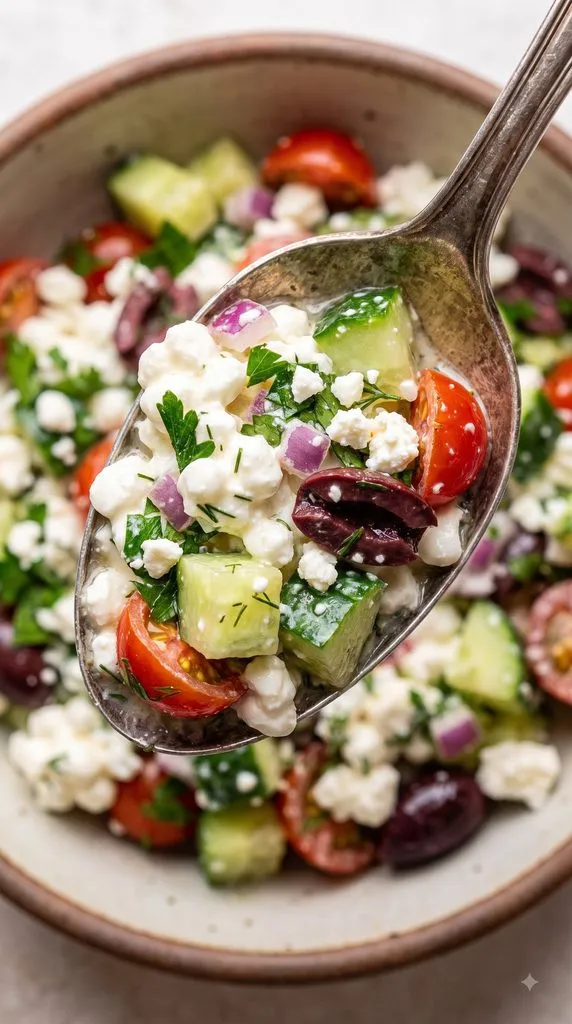
I started making salads like this when I wanted something that felt fresh but was more filling than a bowl of vegetables. Cottage cheese turned out to be a great base. It is creamy enough to pull everything together without needing a heavy dressing.
The best part is the mix of textures. You get cool, crisp cucumber, juicy tomato, salty olives and feta, creamy cottage cheese, and fresh herbs in the same bite.
- It takes only about 15 minutes.
- There is no stove or oven needed.
- Cottage cheese gives it plenty of protein.
- Fresh lemon keeps the salad bright instead of heavy.
- Cucumber and tomatoes add lots of crunch and freshness.
- Olives and feta give you plenty of flavor without a complicated dressing.
- It works for lunch, a light dinner, or a side dish.
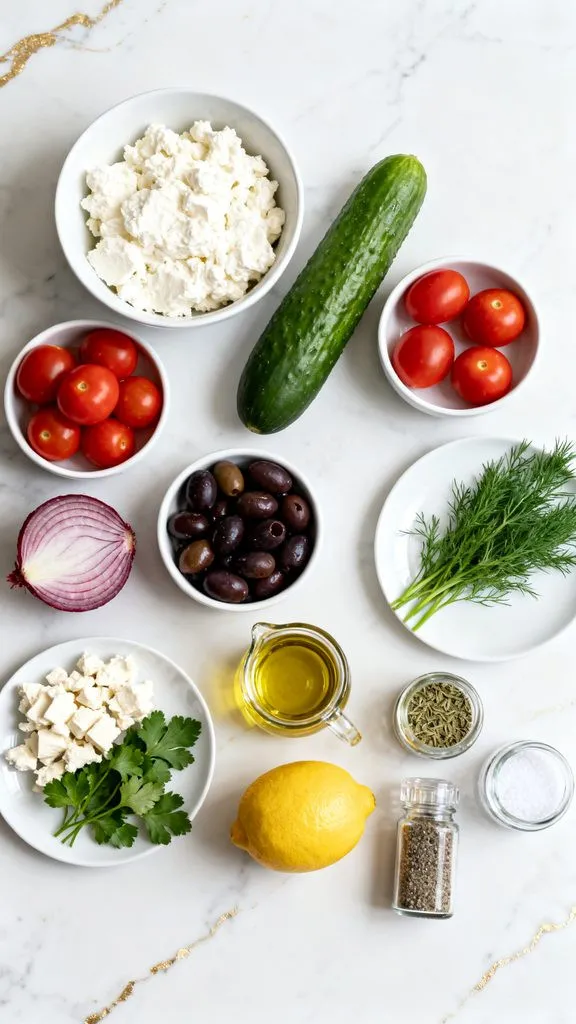
What You’ll Need
- 2 cups cottage cheese, preferably 2% or 4%
- 1 medium cucumber, about 1 1/2 cups diced
- 1 cup cherry tomatoes
- 1/4 cup red onion
- 1/3 cup pitted Kalamata olives
- 1/3 cup crumbled feta cheese
- 1/4 cup fresh parsley
- 2 tablespoons fresh dill
- 1 tablespoon extra-virgin olive oil
- 2 tablespoons fresh lemon juice
- 1/2 teaspoon dried oregano
- 1/4 teaspoon freshly ground black pepper
- 1/8 teaspoon fine sea salt
Tools You’ll Need
- Large mixing bowl
- Cutting board
- Chef’s knife
- Measuring cups
- Measuring spoons
- Citrus juicer
- Large spoon or silicone spatula
- Four round bowls or one round serving bowl
Recipe and Instructions
Step 1: Chop the Vegetables
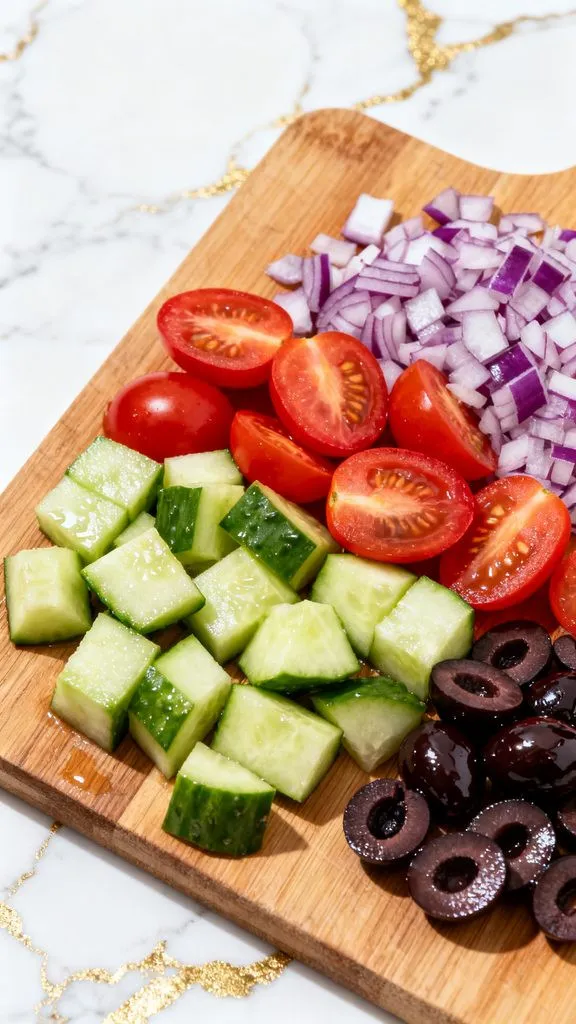
Dice 1 medium cucumber (about 1 1/2 cups) into small bite-size pieces. Cut 1 cup cherry tomatoes in half. Finely dice 1/4 cup red onion. Slice 1/3 cup pitted Kalamata olives.
Keep the pieces fairly small. This makes it easier to get several ingredients in each bite.
Step 2: Make the Cottage Cheese Base
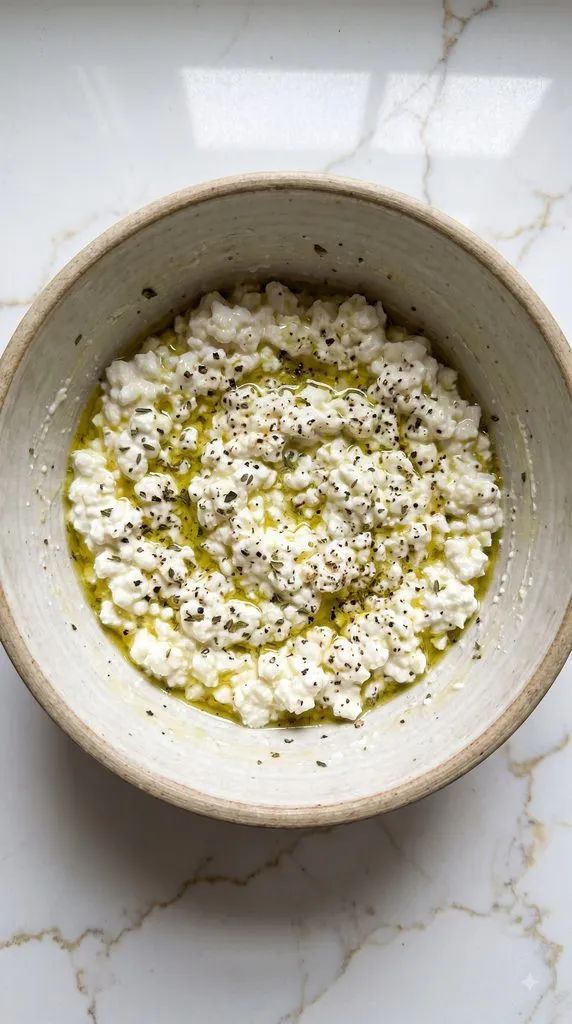
Spoon 2 cups cottage cheese into a large mixing bowl. Add 1 tablespoon extra-virgin olive oil, 2 tablespoons fresh lemon juice, 1/2 teaspoon dried oregano, 1/4 teaspoon freshly ground black pepper, and 1/8 teaspoon fine sea salt.
Gently stir until the seasonings are spread through the cottage cheese. Do not overmix. You want to keep those soft cottage cheese curds.
Step 3: Add the Vegetables and Herbs
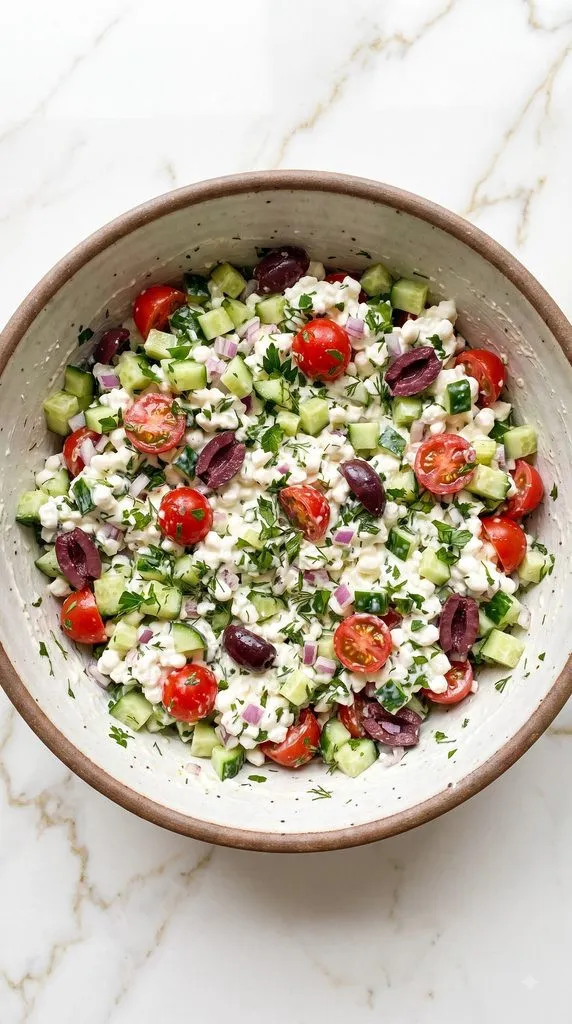
Add the 1 1/2 cups diced cucumber, 1 cup halved cherry tomatoes, 1/4 cup finely diced red onion, and 1/3 cup sliced Kalamata olives from Step 1 to the seasoned cottage cheese.
Add 1/4 cup chopped fresh parsley and 2 tablespoons chopped fresh dill.
Gently fold everything together until the vegetables and herbs are spread evenly through the cottage cheese. A few turns with a large spoon or spatula should be enough.
Step 4: Add the Feta and Serve
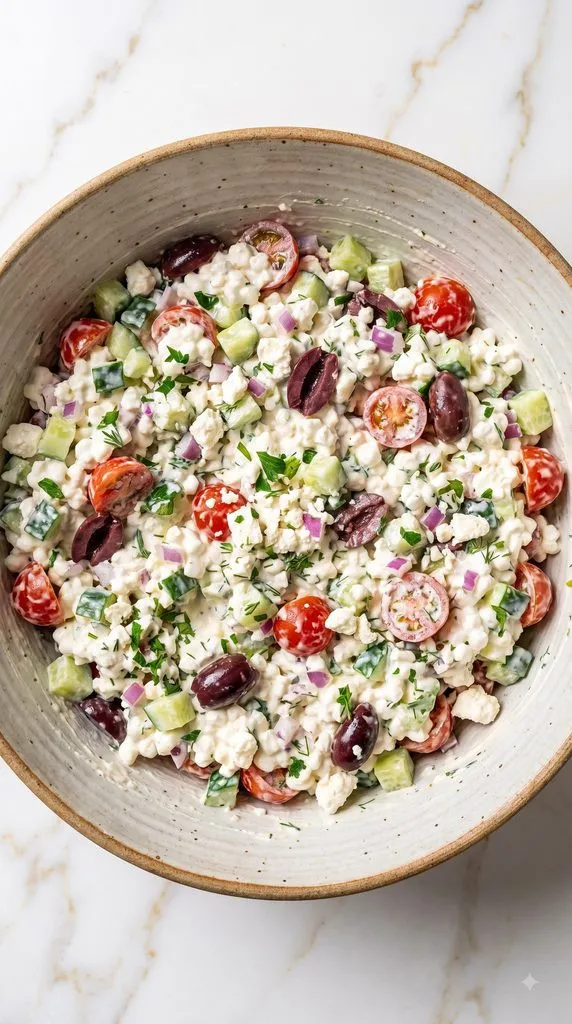
Gently fold in 1/3 cup crumbled feta cheese, saving a small pinch for the top if you like.
Divide the salad between four round bowls, or place it in one round serving bowl. For the best texture, serve it right away or chill it for 10 to 15 minutes first.
Why This Recipe Works (Quick Science)
Cottage cheese contains milk proteins that give the salad a creamy base and make it more filling. The curds also hold onto the olive oil, lemon juice, herbs, and seasonings.
Lemon juice adds acid. Acid makes salty, creamy foods taste brighter and helps balance the richness of the cottage cheese and feta.
Cucumber and tomatoes bring water and crunch. That is why the salad tastes so refreshing. But they also release water after they are cut, which is why this salad has its best texture soon after it is made.
Salt is kept low because feta cheese, cottage cheese, and Kalamata olives can already contain plenty of sodium.
Pro Tips
- Drain watery cottage cheese. If there is a lot of liquid sitting on top, pour some off before making the salad.
- Dry your vegetables. After washing the cucumber and tomatoes, pat them dry. Extra water can make the salad runny.
- Cut everything small. Small pieces give you cottage cheese, vegetables, olives, and herbs in almost every bite.
- Fold instead of stirring hard. Gentle mixing keeps the tomatoes intact and stops the cottage cheese from becoming too loose.
- Taste before adding more salt. Cottage cheese, feta, and olives are already salty.
Common Mistakes
- Adding too much salt: Taste the finished salad before adding extra.
- Using very wet vegetables: Water left from washing can thin the cottage cheese.
- Overmixing: Stirring too hard can crush the tomatoes and make the salad watery.
- Making it too early: Cucumbers and tomatoes release liquid as they sit.
- Using huge vegetable pieces: Smaller pieces make the salad much easier to eat and give you a better mix in every bite.
Substitutions and Variations
- Use small Persian cucumbers instead of one medium cucumber.
- Swap Kalamata olives for green olives.
- Replace dill with extra parsley if you do not like dill.
- Use reduced-fat cottage cheese for a lighter version.
- Add diced bell pepper for more crunch.
- Add chickpeas for extra fiber and a heartier salad.
- Add chopped avocado just before serving for extra creaminess.
- Sprinkle red pepper flakes on top if you want some heat.
- Leave out the feta if you want a milder flavor.
Make-Ahead Tips
You can chop the cucumber, red onion, olives, parsley, and dill several hours ahead. Keep them covered in separate containers in the refrigerator.
For the freshest result, cut the tomatoes and mix everything with the cottage cheese shortly before serving. If you need to make the whole salad ahead, keep it refrigerated and try to serve it within a few hours.
Macros Information
Approximate nutrition for 1 of 4 servings, using 2% cottage cheese:
- Calories: 230
- Protein: 17 g
- Carbohydrates: 10 g
- Fat: 14 g
- Fiber: 2 g
These numbers are estimates. Cottage cheese, feta, and olive brands can change the nutrition quite a bit, especially the sodium and fat.
What to Serve With
This salad is filling enough for a light lunch, but it also makes an easy Mediterranean-style side.
- Warm pita bread or pita chips
- Toasted sourdough
- Grilled chicken
- Grilled salmon
- Chicken kebabs
- Falafel
- Hummus and fresh vegetables
- Roasted potatoes
- Lentil soup
- Grilled shrimp
Leftovers and Storage
Store leftovers in an airtight container in the refrigerator for up to 2 days.
The cucumber and tomatoes will slowly release water, so the salad may look wetter the next day. Give it a gentle stir before eating. If there is a lot of liquid, you can carefully drain some away.
Do not freeze this salad. Cottage cheese and fresh vegetables can develop an unpleasant texture after freezing and thawing.
FAQ
Q: Can I make Mediterranean cottage cheese salad ahead of time?
A: Yes. For the best texture, prepare the vegetables ahead and combine them with the cottage cheese close to serving time.
Q: Can I use full-fat cottage cheese?
A: Yes. A 4% cottage cheese makes the salad richer and creamier.
Q: What size cottage cheese curds work best?
A: Either small or large curds work. Small curds make the salad a little easier to mix, while large curds give it more texture.
Q: Can I leave out the feta?
A: Yes. The cottage cheese still gives the salad plenty of creamy flavor. Taste it after mixing because you may want a little more salt.
Q: Why did my salad become watery?
A: Cucumbers and tomatoes naturally release liquid after they are cut. Wet vegetables and very liquid cottage cheese can add even more moisture. Dry the vegetables well and serve the salad soon after mixing.
Q: Can I turn this into a full meal?
A: Yes. Add chickpeas, grilled chicken, shrimp, or another protein you enjoy. Pita or toasted bread also makes it more filling.
Final Thoughts
Mediterranean Cottage Cheese Salad is one of those simple recipes that gets a lot of flavor from just a handful of fresh ingredients. It is creamy, crunchy, salty, bright, and ready in about 15 minutes.
Serve it for lunch, make it as an easy side, or pile it onto warm pita for a quick meal. Give it a try, then leave a comment about how yours turned out and any questions you have.