
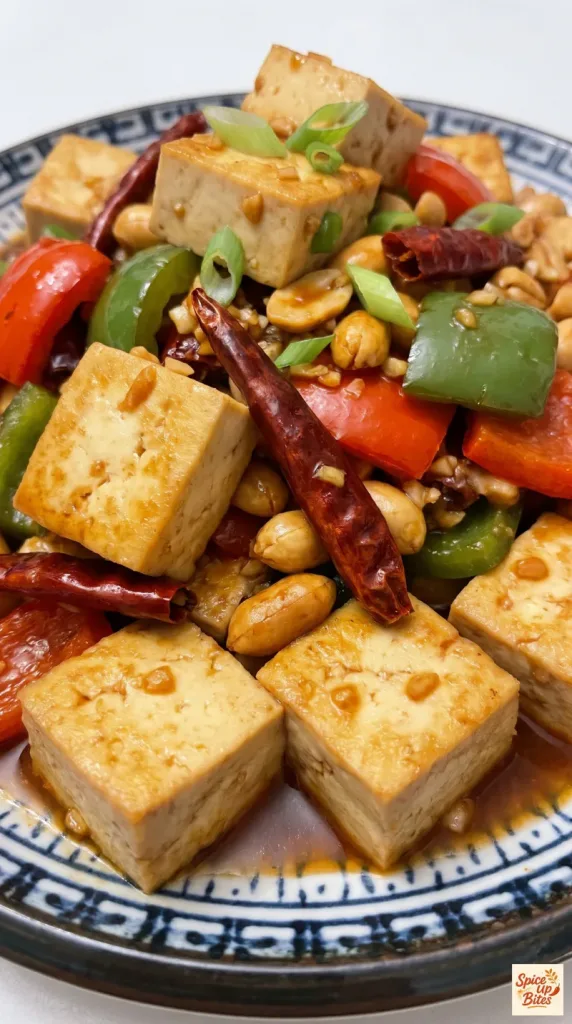
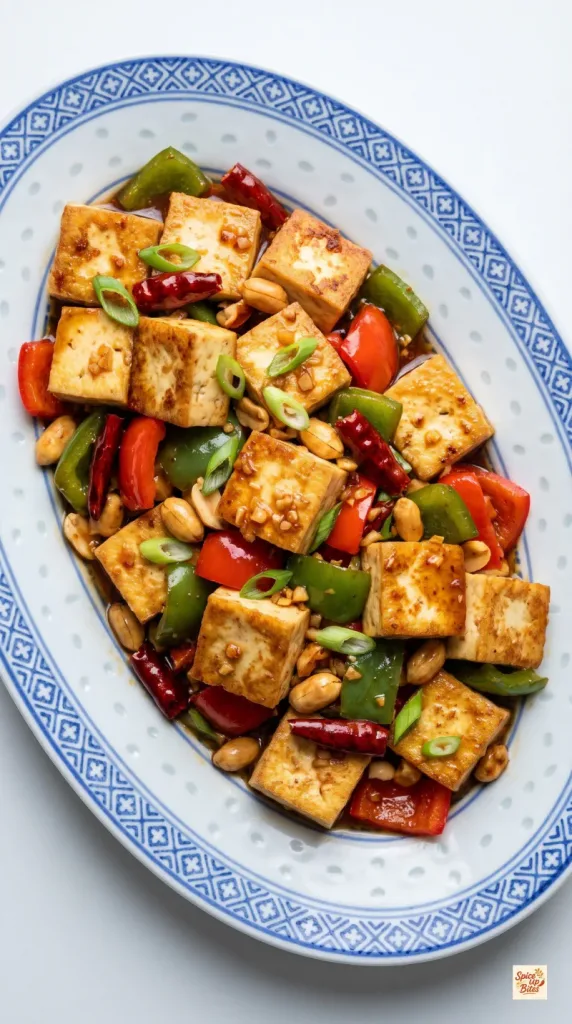
Kung Pao Tofu brings tender tofu, crunchy peppers and roasted peanuts together in a tangy, savory sauce. Dried chilies add warmth, while a little Sichuan pepper gives a gentle tingle. The tofu gets golden in a skillet without a coating. Have everything ready before you start, and the stir-fry comes together quickly.
Why I Love This Recipe
There is plenty to enjoy in a dinner with this much contrast. The tofu stays soft inside, the peppers keep a little bite, and the peanuts add a crisp finish. The sauce has enough vinegar to balance its small touch of sweetness.
- Big flavor: Garlic, ginger and dried chilies build a fragrant base.
- Simple browning: Dry tofu and a roomy pan do the work.
- Flexible heat: Use fewer chilies for a gentler dish.
- Plant-based dinner: No meat, dairy or fish sauce is needed.
What You’ll Need
- Servings: 4
- Prep Time: 25 minutes, including pressing
- Cook Time: 20 minutes
- Total Time: 45 minutes
- Pan: 12-inch nonstick skillet
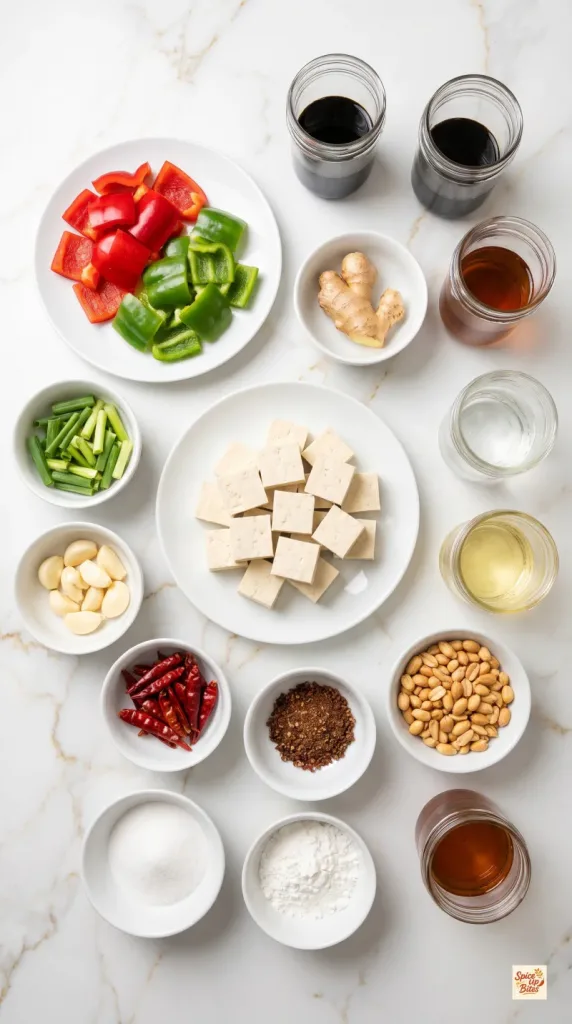
For the stir-fry:
- 20 ounces (567 g) extra-firm tofu, drained
- 2 tablespoons neutral oil, divided
- 1 medium red bell pepper, cut into 1-inch pieces
- 1 medium green bell pepper, cut into 1-inch pieces
- 4 scallions, whites cut into short segments and greens thinly sliced, kept separate
- 3 garlic cloves, minced
- 1 tablespoon finely minced fresh ginger
- 6 small dried red chilies, cut into short segments and seeds shaken out
- 1/2 teaspoon ground Sichuan pepper
- 1/3 cup (45 g) unsalted roasted peanuts
- 1 teaspoon toasted sesame oil
For the sauce:
- 3 tablespoons low-sodium soy sauce
- 1 tablespoon Chinese black vinegar (Chinkiang vinegar)
- 1 tablespoon Shaoxing wine
- 2 teaspoons granulated sugar
- 1 teaspoon cornstarch
- 1/3 cup water
Tools You Need
- 12-inch nonstick skillet
- Tofu press or clean towels and a heavy pan
- Wooden cutting board and knife
- Small mixing bowl and whisk
- Wide spatula
- Measuring cups and spoons
How to Make Kung Pao Tofu
Prepare the vegetables and sauce before turning on the stove.
Step 1: Dry and Cut the Tofu
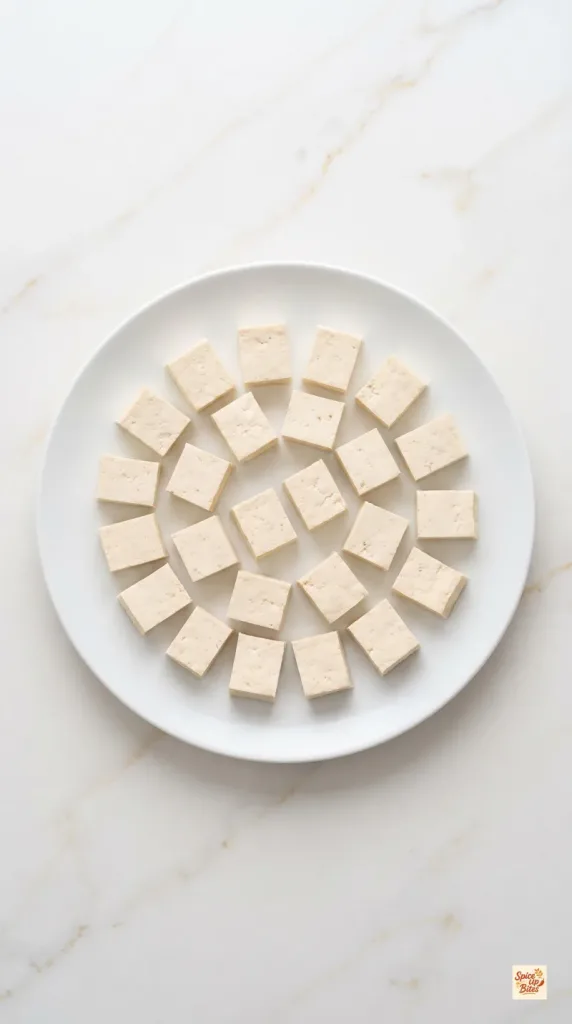
Wrap 20 ounces extra-firm tofu in clean towels and press gently for 15 minutes.
Pat dry, then cut into squares about 1 inch across and 1/2 inch thick. Keep the pieces thick enough to turn without breaking.
Step 2: Mix the Sauce
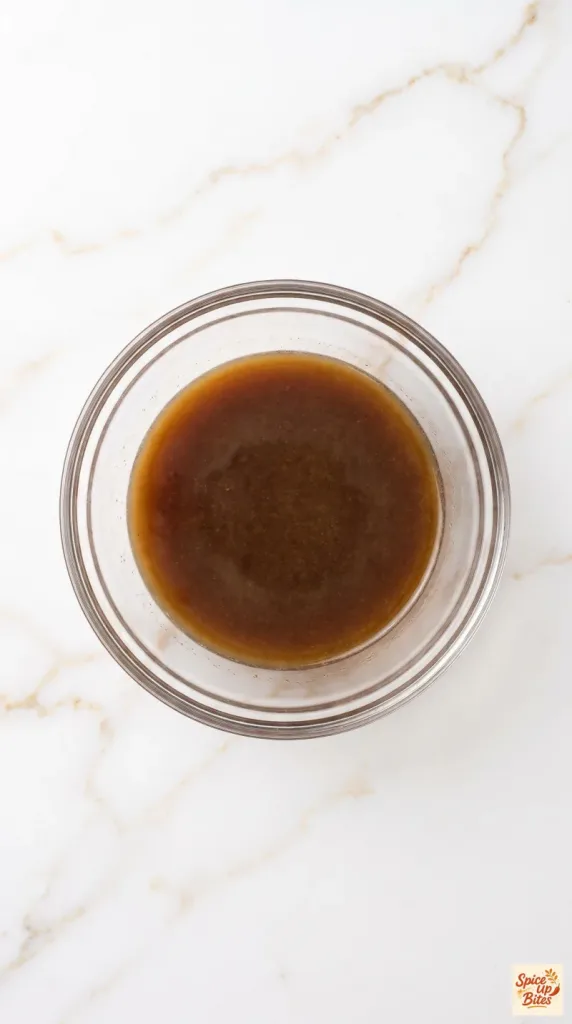
Whisk 3 tablespoons low-sodium soy sauce, 1 tablespoon Chinese black vinegar, 1 tablespoon Shaoxing wine, 2 teaspoons sugar, 1 teaspoon cornstarch and 1/3 cup water in a small bowl.
Mix until the sugar dissolves and no dry starch remains. Stir again just before adding it to the pan.
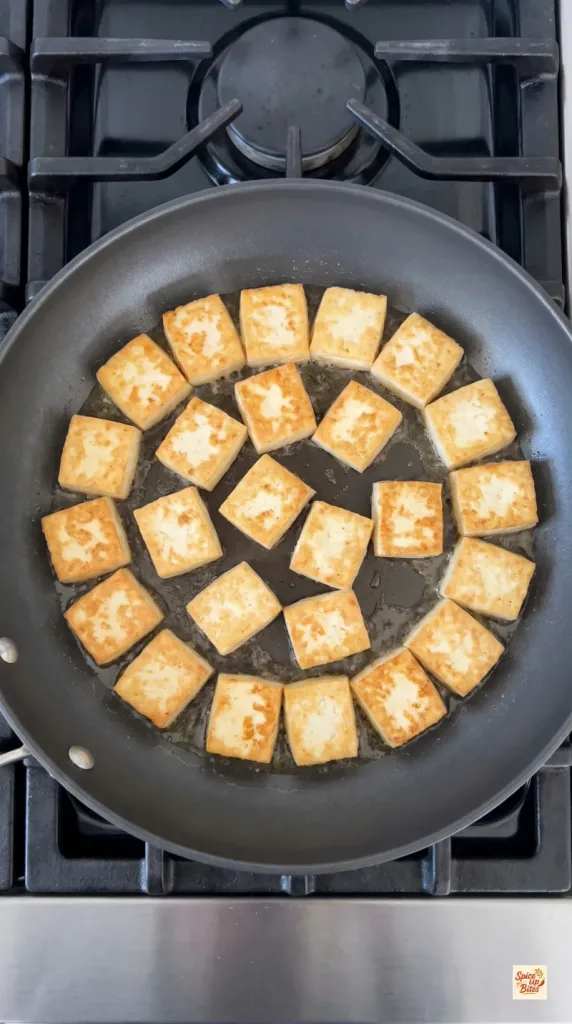
Step 3: Brown the Tofu
Heat 1 tablespoon neutral oil in the 12-inch nonstick skillet over medium-high heat.
Add the dried tofu squares in a single layer. Cook for 10–12 minutes, turning carefully, until golden on both broad faces. Work in batches if needed and divide that tablespoon of oil between them.
Transfer the tofu to a plate. It should have lightly firm edges and a tender middle; it will not have a thick fried shell.
Step 4: Cook the Peppers and Aromatics
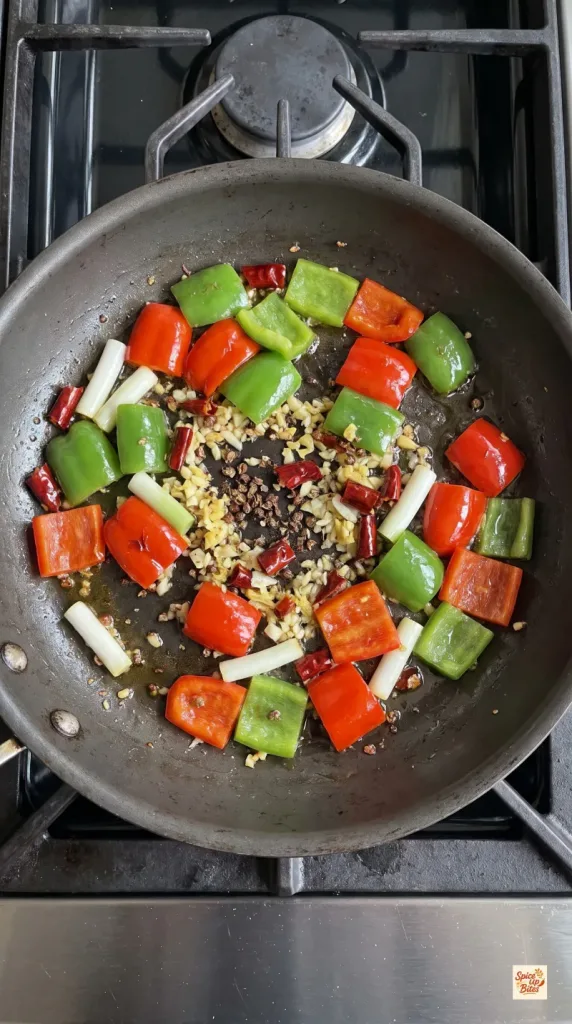
Add the remaining 1 tablespoon neutral oil to the same skillet over medium-high heat.
Add 1 red bell pepper and 1 green bell pepper, both cut into 1-inch pieces. Stir-fry for 3–4 minutes, until bright and crisp-tender.
Reduce the heat to medium. Add the white segments from 4 scallions, 3 minced garlic cloves, 1 tablespoon minced ginger, 6 prepared dried red chilies and 1/2 teaspoon ground Sichuan pepper.
Stir for 30 seconds, just until fragrant. Do not let the garlic or chilies blacken.
Step 5: Glaze the Tofu
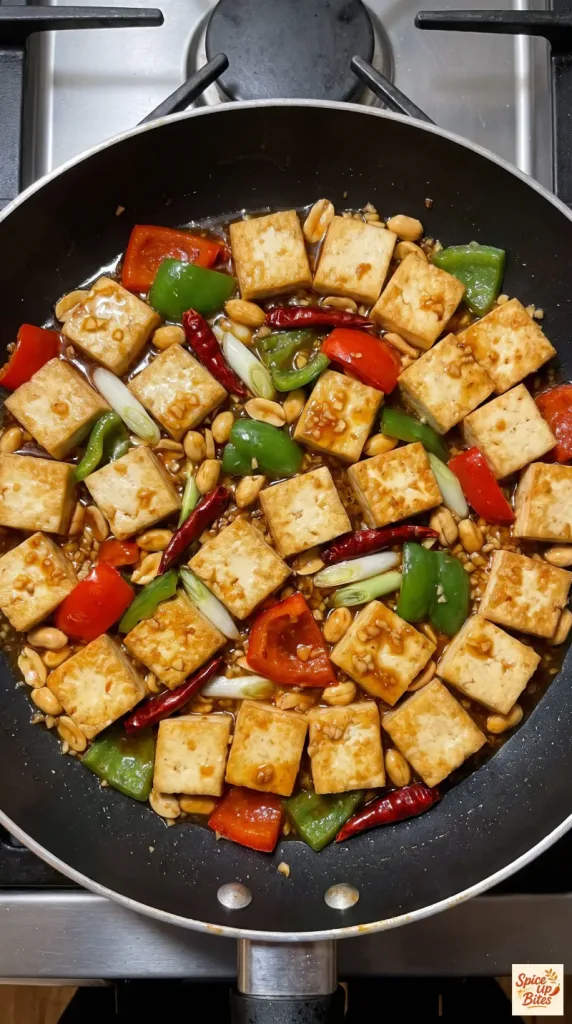
Return all the browned tofu to the peppers and aromatics.
Stir the prepared sauce again, then pour it around the tofu. Fold gently for 1–2 minutes, until glossy and lightly thickened. The reddish-brown sauce should cling to the pieces rather than flood the skillet.
Turn off the heat. Fold in 1/3 cup roasted peanuts and 1 teaspoon toasted sesame oil.
Step 6: Finish and Serve
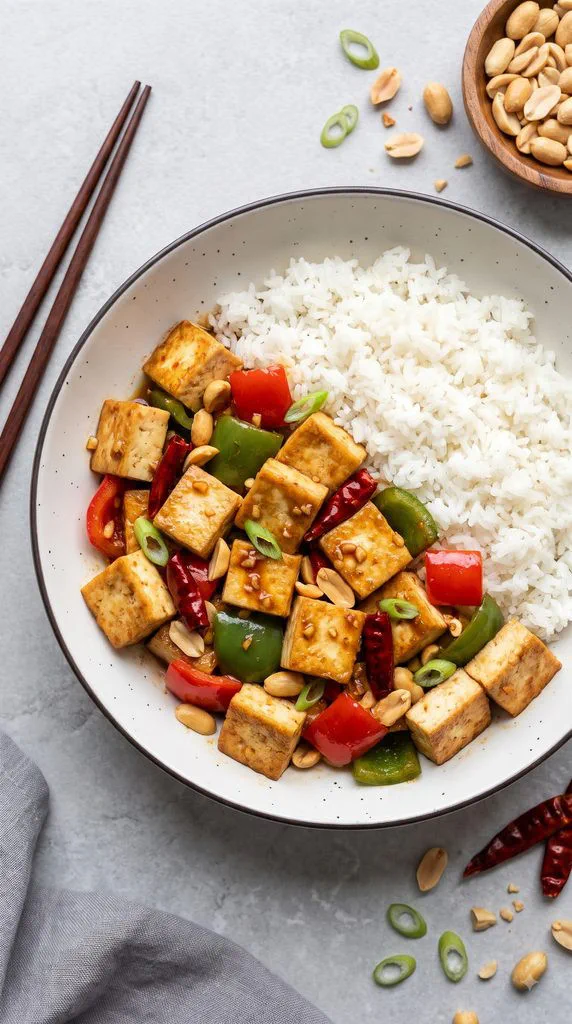
Scatter the reserved sliced greens from 4 scallions over the tofu and divide among 4 servings.
Serve right away while the peanuts are crisp. Steamed rice and a simple cucumber salad are optional sides for a fuller meal. Leave the dried chili pieces on the plate if you prefer their aroma without eating them.
Why This Recipe Works (Quick Science)
Pressing and drying remove surface moisture, so the tofu can brown instead of sitting in released water. A thin layer of oil helps its broad faces make good contact with the pan. The inside stays tender because the pieces are fairly thick.
Cornstarch thickens the sauce when heated with liquid. Stirring it again before pouring keeps settled starch from forming lumps. Adding the peanuts at the end protects their crunch, while vinegar balances the sweet and salty flavors.
Common Mistakes to Avoid
- Starting with wet tofu: Pat it dry after pressing so it browns more readily.
- Crowding the skillet: Leave room between pieces or cook in batches.
- Moving tofu too soon: Let the underside turn golden before flipping.
- Burning the aromatics: Lower the heat before adding garlic and dried chilies.
- Overcooking the sauce: Stop when it coats the food. Long cooking can make it sticky and soften the peppers.
What to Serve With Kung Pao Tofu
Steamed jasmine rice catches the savory sauce. Brown rice works well too. A simple cucumber salad adds a cool, crisp bite beside the chilies. These sides are optional and are not included in the nutrition estimate.
Substitutions and Variations
Use dry sherry in place of the Shaoxing wine, or use the same amount of water for an alcohol-free version. Rice vinegar can replace Chinese black vinegar, though the flavor will be lighter and less rounded.
Cashews can replace the peanuts in the same amount. For a nut-free version, leave out the peanuts and check all packaged ingredients for your needs. Start with fewer dried chilies if you want less heat; dried chili varieties vary widely.
Leftovers and Storage
Refrigerate leftovers in a covered container within 2 hours and use within 3–4 days. Reheat in a skillet with a small splash of water, folding gently until heated through. The tofu and peanuts will soften as they sit in the sauce.
You can press the tofu, cut the peppers and mix the sauce a day ahead. Keep them covered separately in the refrigerator, and stir the sauce well before cooking.
Macros Information
Estimated per serving, based on 4 servings without optional sides. Values vary with the tofu brand and oil left in the pan.
- Calories: 330
- Protein: 22 g
- Carbohydrates: 18 g
- Fat: 21 g
- Saturated Fat: 3 g
- Fiber: 5 g
- Sugar: 7 g
- Sodium: 480 mg
Frequently Asked Questions (FAQ)
Q: Can I use firm tofu?
A: Yes. Press it well and turn it gently. Extra-firm tofu is easier to brown without breaking.
Q: Does the tofu need cornstarch on the outside?
A: No. This version browns the tofu without a coating. The measured cornstarch goes only in the sauce.
Q: Can I use silken tofu?
A: It is too delicate for this method. Choose extra-firm or well-pressed firm tofu.
Q: How spicy is Kung Pao Tofu?
A: That depends on the dried chilies. Removing loose seeds and using fewer chilies makes it gentler. Sichuan pepper adds a tingle as well as flavor.
Q: Do I eat the dried chilies?
A: You can, but they are often left aside after flavoring the oil and sauce. Avoid biting into them if you prefer mild food.
Q: Is this recipe vegan?
A: Yes, with the listed ingredients. Check the labels on your sauces and wine if you follow a strict vegan diet.
Q: Can I make it gluten-free?
A: Use gluten-free tamari and check the vinegar and cooking wine labels. Adjust the sauce to taste because tamari brands differ in saltiness.
Q: Why is my sauce too thick?
A: It may have cooked too long or the starch may have been overmeasured. Add water a teaspoon at a time and fold gently until the sauce loosens.
Final Thoughts
Kung Pao Tofu makes a colorful dinner with soft tofu, crisp peppers and a lively sauce. Dry the tofu well, keep the garlic from burning, and finish with the peanuts just before serving. Leave a comment and share how you like to adjust the heat.
Happy cooking!
1 thought on “Kung Pao Tofu”