
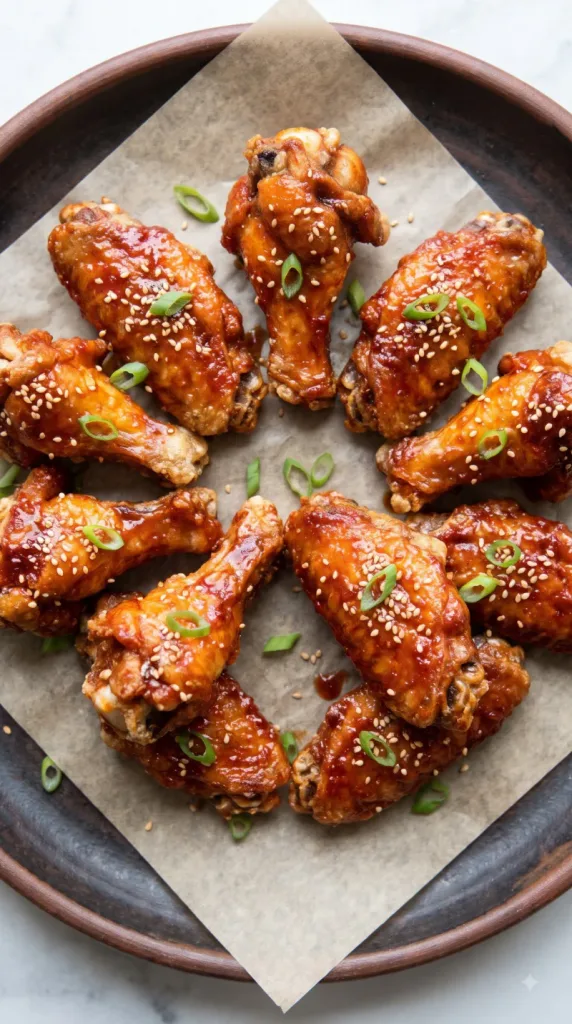
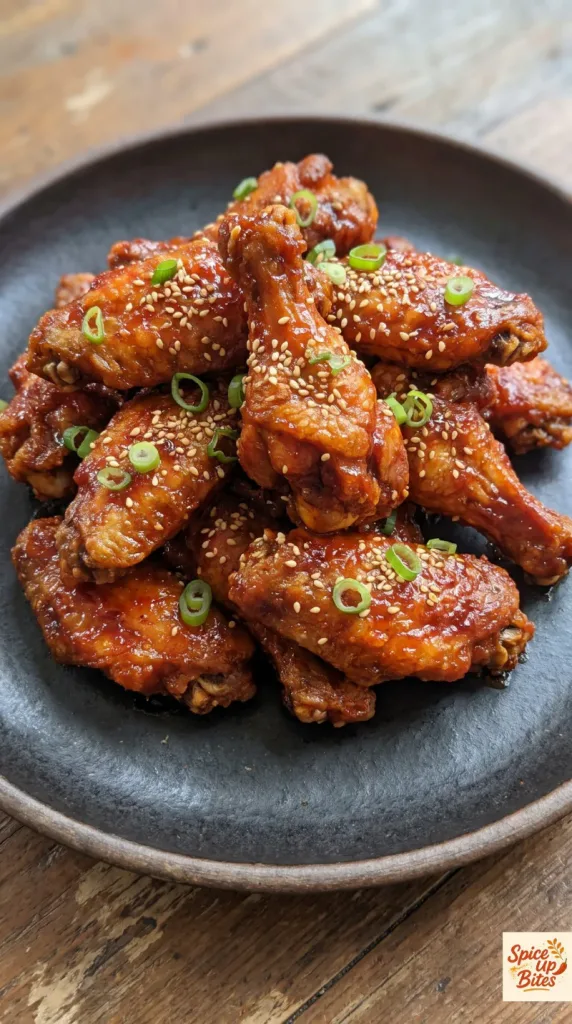
Spicy Korean Fried Chicken Wings bring a thin, crackly crust and a sticky sweet-hot glaze to the table. Gochujang gives the sauce its deep chili flavor, while honey and rice vinegar keep it balanced. A dry potato-starch coating keeps the wings light rather than bread-heavy. Fry them twice, coat them at the last minute, and serve while the crunch is at its best.
Why I Love This Recipe
The appeal is in the mix of textures: juicy wing meat, a delicate shell, and just enough glossy sauce to cling to each piece. There is no wet batter to mix, and the sauce comes together in a small saucepan.
- Light crust: Potato starch makes a thin coating that follows the shape of the wing.
- Big flavor: Fermented chili paste, garlic, honey, and vinegar bring heat, sweetness, and tang.
- Useful timing: Make the glaze before frying so the last steps move quickly.
- Easy portions: Split wings work well as a shared appetizer or a rice-and-chicken dinner.
What You’ll Need
- Servings: 4
- Prep Time: 20 minutes
- Cook Time: 35 minutes
- Total Time: 55 minutes, including the short draining and resting periods while other batches cook
- Frying Pot: Deep, heavy 6-quart Dutch oven; keep oil no more than one-third of its capacity
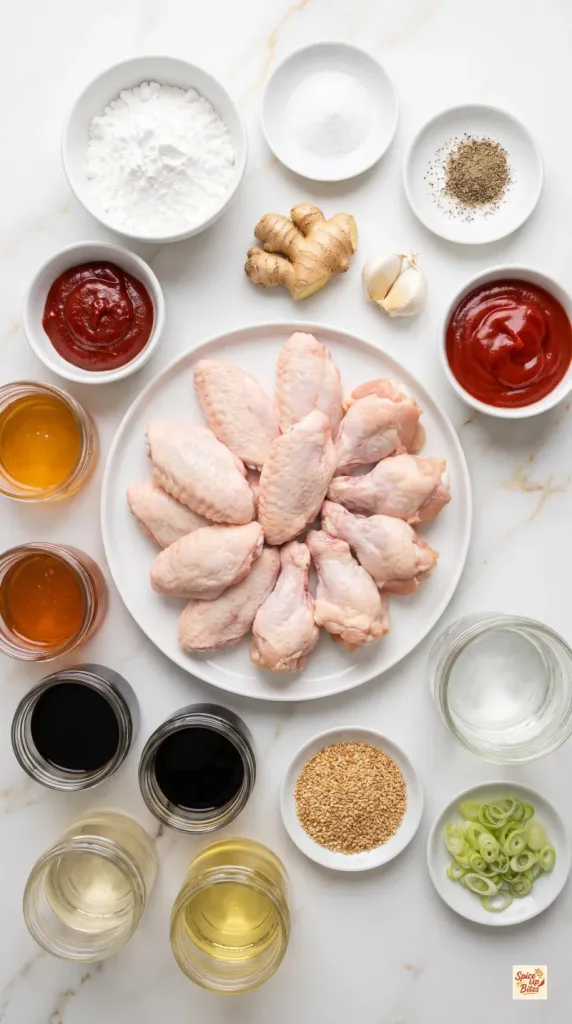
For the chicken
- 2 lb chicken wings, split into flats and drumettes, tips removed
- 3/4 teaspoon fine salt
- 1/4 teaspoon ground black pepper
- 1 teaspoon finely grated fresh ginger
- 3/4 cup potato starch
- 6 cups neutral high-heat oil, such as canola, for deep frying; most is not consumed
For the glaze and garnish
- 3 tablespoons gochujang
- 2 tablespoons ketchup
- 3 tablespoons honey
- 1 tablespoon low-sodium soy sauce
- 1 tablespoon unseasoned rice vinegar
- 1 tablespoon finely minced garlic
- 2 tablespoons water
- 1 teaspoon toasted sesame seeds
- 2 tablespoons thinly sliced scallions
Gochujang varies in heat and saltiness. Choose a heat level you enjoy, and use plain potato starch rather than potato flour. The coating here is dry starch only, without egg, flour batter, or breadcrumbs.
Tools You Need
- Deep, heavy 6-quart Dutch oven
- Clip-on frying thermometer
- Instant-read meat thermometer
- Wire skimmer or long heat-safe tongs
- Freestanding wire cooling rack
- Large mixing bowls and a shallow dredging bowl
- Small stainless steel saucepan
- Clean plate and small dipping bowl
How to Make Spicy Korean Fried Chicken Wings
Have the sauce ready before frying, then work in small batches to keep the oil hot.
Step 1: Dry and Season the Wings
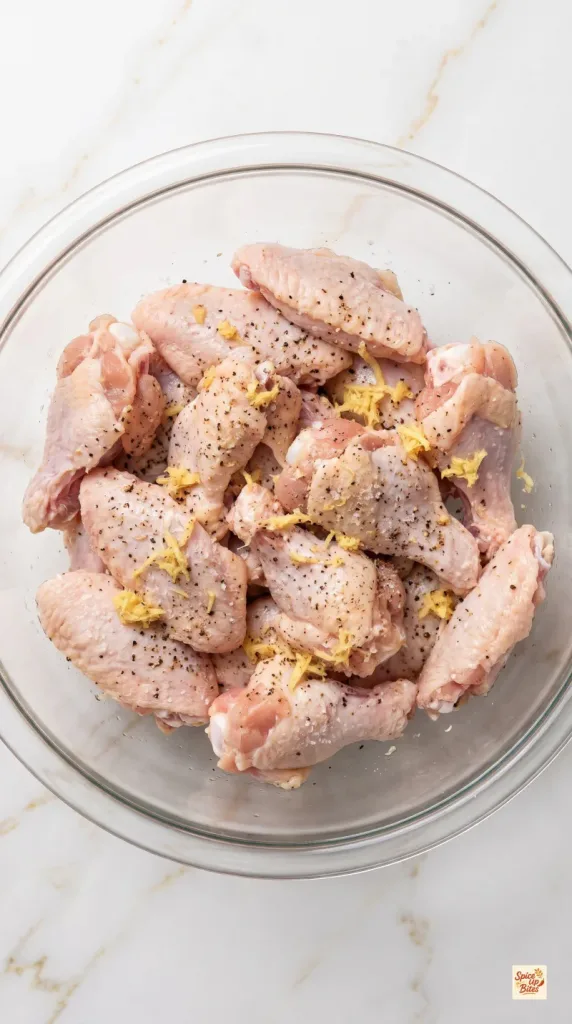
Pat 2 lb split chicken wings very dry with paper towels. Do not rinse raw chicken.
Place the wings in a large bowl and toss with 3/4 teaspoon fine salt, 1/4 teaspoon ground black pepper, and 1 teaspoon finely grated fresh ginger.
Keep refrigerated while you make the sauce.
Step 2: Simmer the Glaze
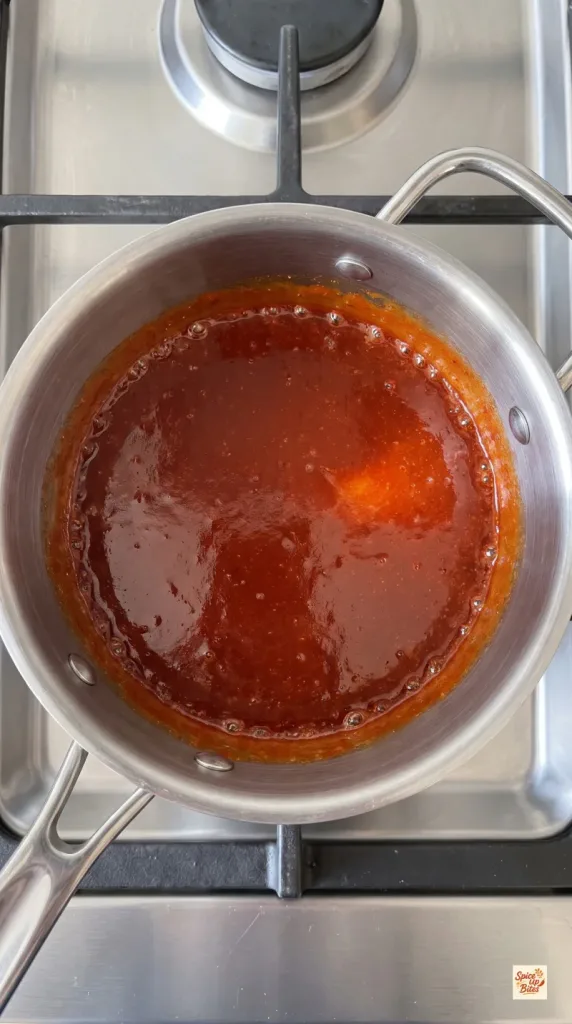
Combine 3 tablespoons gochujang, 2 tablespoons ketchup, 3 tablespoons honey, 1 tablespoon low-sodium soy sauce, 1 tablespoon unseasoned rice vinegar, 1 tablespoon finely minced garlic, and 2 tablespoons water in a small stainless steel saucepan.
Bring to a gentle simmer over medium-low heat. Stir for 3–4 minutes, until glossy and thick enough to coat a spoon, but still pourable. Turn off the heat.
Transfer 2 tablespoons of the cooked glaze to a small clean dipping bowl. Keep the rest in the saucepan for coating the wings.
Step 3: Apply the Dry Starch Coating
Place 3/4 cup potato starch in a shallow bowl. Use potato starch, not potato flour.
Press each seasoned wing into the starch, turn it to cover all sides, and shake off loose powder. The coating should be thin and even, not clumped. Discard any starch left after dredging.
Set the coated wings on a clean plate while the oil heats. This is a dry dredge; do not add egg or water to it.
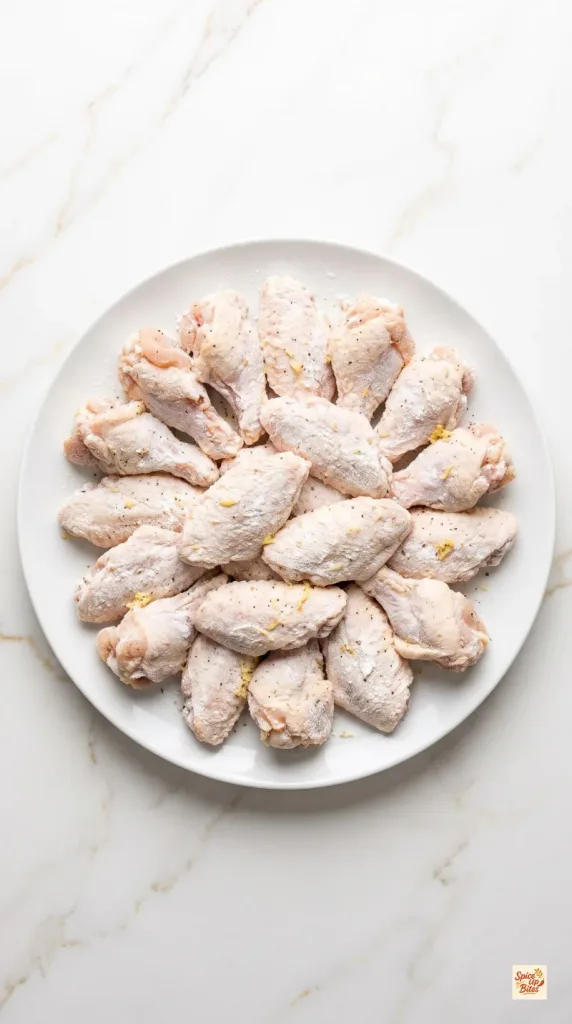
Step 4: Fry the First Batch and Repeat
Pour 6 cups neutral frying oil into a deep, heavy 6-quart Dutch oven. The oil should be about 2 inches deep and the pot no more than one-third full; use a narrower suitable pot if needed.
Heat to 325°F (163°C). Carefully lower half the coated wings into the oil, leaving room between pieces.
Fry for 8–10 minutes, turning as needed, until lightly golden and the thickest part of the meat reaches 165°F (74°C), away from the bone. Size matters more than the clock.
Lift out with a wire skimmer and drain on a freestanding wire rack. Return the oil to 325°F (163°C) and repeat with the remaining wings. Let the wings rest uncovered for at least 5 minutes before the second fry.
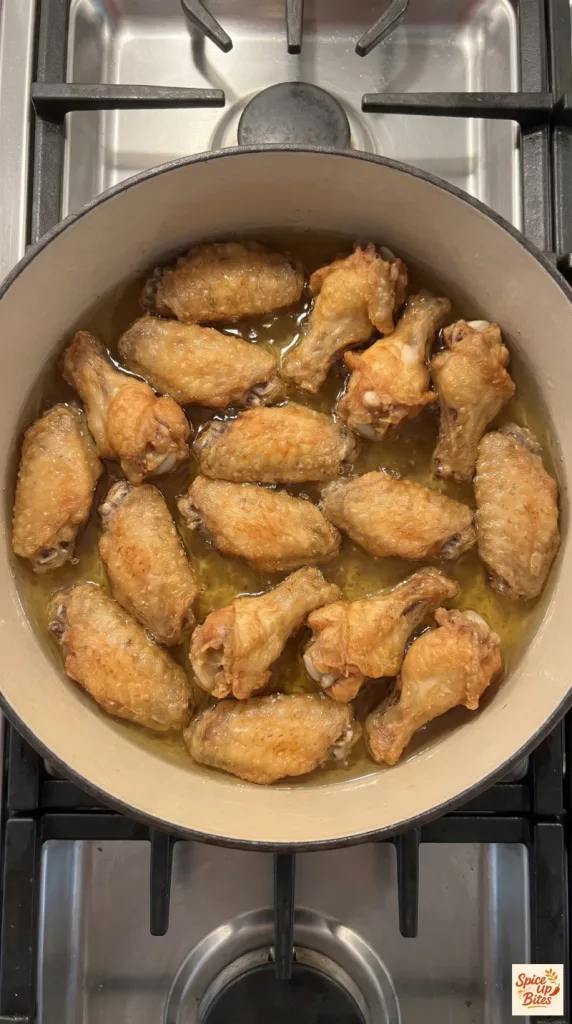
Step 5: Fry Again for Crunch
Raise the same oil to 375°F (190°C). Fry the wings again in two uncrowded batches for 2–3 minutes per batch, until pale golden with slightly deeper golden edges and a firm, crackly crust.
Let the oil recover to 375°F (190°C) between batches. Drain the wings on the freestanding wire rack for 1–2 minutes. Do not cover them.
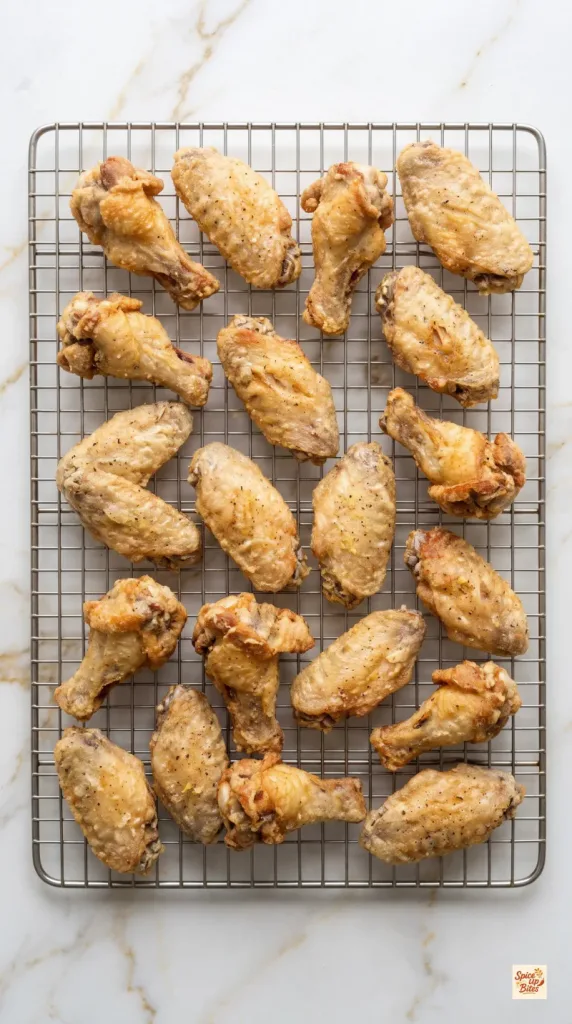
Step 6: Coat With the Warm Glaze
Warm the glaze remaining in the saucepan over low heat just until fluid. Keep the reserved 2 tablespoons glaze separate.
Put all the fried wings in a large clean bowl. Add the warm coating glaze and turn gently until every wing has a thin glossy coating. Avoid leaving the chicken sitting in a pool of sauce.
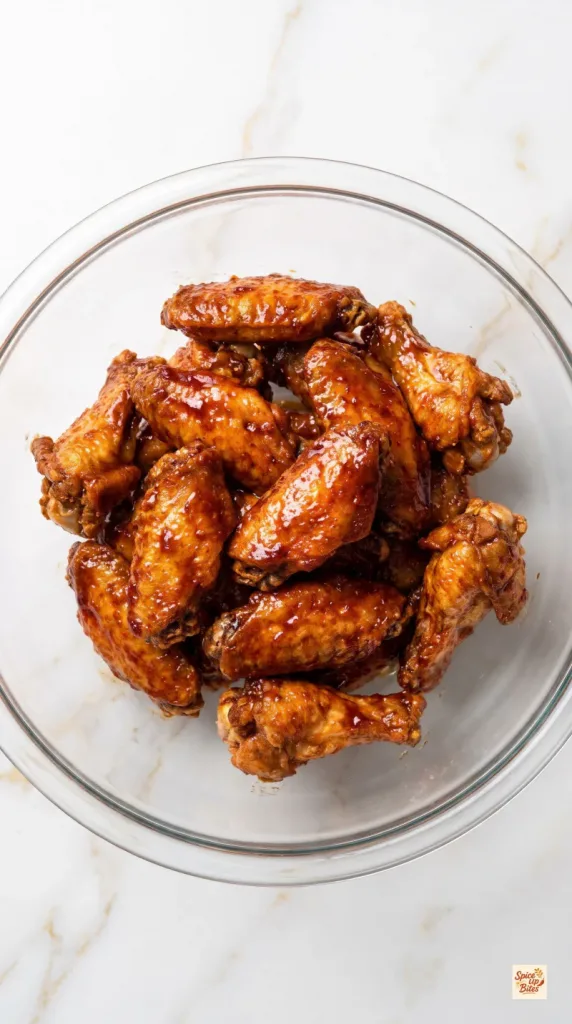
Step 7: Garnish and Serve
Scatter 1 teaspoon toasted sesame seeds and 2 tablespoons thinly sliced scallions over the glazed wings. Divide among 4 servings and serve right away.
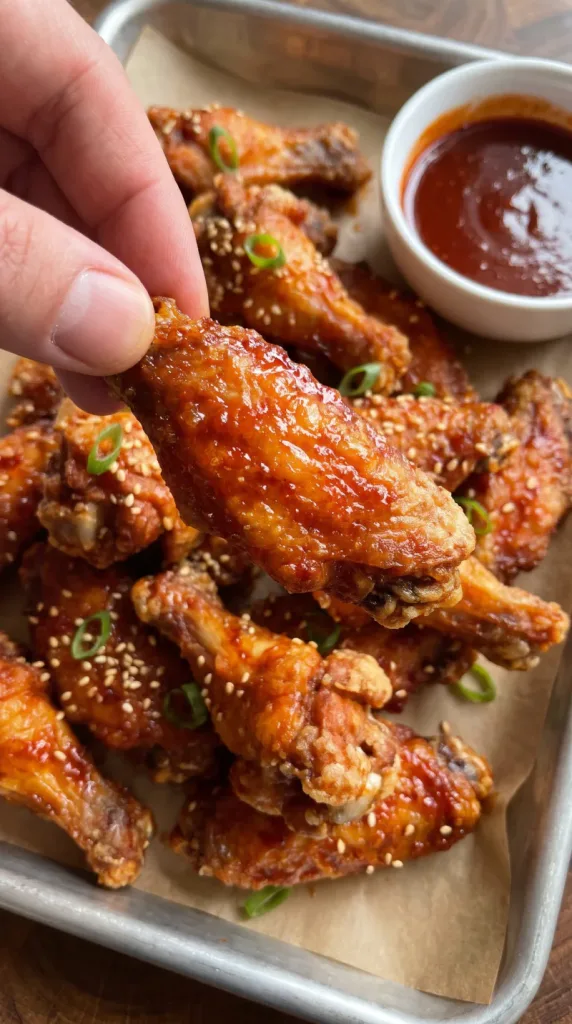
Offer the reserved 2 tablespoons glaze alongside for dipping. For a full meal, add steamed rice and a crisp cucumber salad, or serve pickled radish for a cool, tangy contrast.
Why This Recipe Works (Quick Science)
Potato starch takes up moisture from the wing surface and sets into a thin shell in hot oil. As water escapes, that shell becomes crisp. The first fry cooks the meat; the rest lets more moisture leave the surface. A short, hotter second fry dries and firms the crust further.
Honey helps the glaze cling, while vinegar cuts through the richness. A thin coating of sauce keeps more texture than a deep soak. Even well-fried wings soften over time after glazing, so serve them promptly.
Common Mistakes to Avoid
- Starting with wet wings: Excess water makes starch clump and causes oil to splatter. Pat the chicken dry first.
- Using potato flour: It is not the same as potato starch and gives a different coating.
- Crowding the pot: Too many cold wings drop the oil temperature and slow crisping.
- Trusting color alone: Check the meat with a thermometer, especially on thick drumettes.
- Reducing the glaze too far: A stiff paste is hard to spread and may pull at the crust.
- Covering hot wings: Trapped moisture softens the shell.
What to Serve With Spicy Korean Fried Chicken Wings
Steamed short-grain rice makes the spicy glaze feel less intense. A crisp cucumber salad adds freshness, while Korean pickled radish gives a cool, tangy bite between wings. Kimchi is another good choice if you enjoy more heat and acidity. These sides are optional and are not included in the nutrition estimate.
The small reserved portion of glaze is for dipping. There is no need to make a second sauce.
Substitutions and Variations
Cornstarch can replace potato starch in the same volume, though the crust may feel slightly different. Keep it as a dry dredge. Do not replace gochujang with plain chili flakes; its fermented flavor and thick texture are part of the sauce.
For less heat, use a mild gochujang rather than watering down the glaze. For more heat, choose a hotter paste. Check the labels on gochujang and soy sauce if wheat is a concern; this recipe is not automatically gluten-free.
Leftovers and Storage
Refrigerate leftovers in a shallow airtight container within 2 hours, and use within 3–4 days. Reheat on a rack in a 375°F (190°C) oven for about 10–15 minutes, until the meat reaches 165°F (74°C). A glazed crust will be softer than freshly fried chicken, and the honey can darken, so check early.
You can make the glaze up to 3 days ahead and refrigerate it separately. Rewarm gently before coating freshly fried wings. For the best texture, fry and glaze on the day you serve.
Macros Information
Estimated per serving, based on 4 servings and including glaze, garnish, and an allowance for absorbed frying oil:
- Calories: 540
- Protein: 30 g
- Carbohydrates: 40 g
- Fat: 28 g
- Saturated Fat: 6 g
- Fiber: 1 g
- Sugar: 18 g
- Sodium: 1,030 mg
These are estimates. Wing size, discarded starch, oil absorption, sauce brands, and how much dipping glaze you use will change the numbers.
Frequently Asked Questions (FAQ)
Q: Is this a wet-batter recipe?
A: No. The seasoned wings get a thin dry potato-starch dredge. The recipe uses no egg, breadcrumbs, or liquid batter.
Q: Why fry the wings twice?
A: The first fry cooks the chicken, while the brief second fry firms and dries the crust after its short rest.
Q: Can I use frozen wings?
A: Thaw them fully in the refrigerator, then pat them very dry. Never lower frozen or icy wings into hot oil.
Q: How do I know the chicken is cooked?
A: Insert an instant-read thermometer into the thickest meat without touching bone. It must reach 165°F (74°C).
Q: Can I skip the gochujang?
A: It supplies the main chili flavor and body of the glaze. Use a mild version if needed rather than leaving it out.
Q: Can I use an air fryer instead?
A: This method and its dry coating are written for deep frying. An air fryer needs a different oil application and timing, so it is not a direct swap.
Q: Why did my sauce become too thick?
A: It likely reduced too long. Stir in hot water a teaspoon at a time until it coats a spoon in a thin film again.
Q: How can I keep the wings crisp longer?
A: Drain them uncovered, avoid heavy sauce pooling, and glaze only when you are ready to eat. Do not seal hot wings in a container.
Q: Can I double the recipe?
A: Yes, but use more batches rather than filling the pot with more oil or chicken. Allow extra cooking time and keep checking the oil temperature.
Final Thoughts
Spicy Korean Fried Chicken Wings are all about a thin crust, a bold glaze, and good timing. Keep the oil steady and add the sauce just before serving for the best balance of crunch and stickiness. Leave a comment with your favorite side to serve alongside them. Happy cooking!