
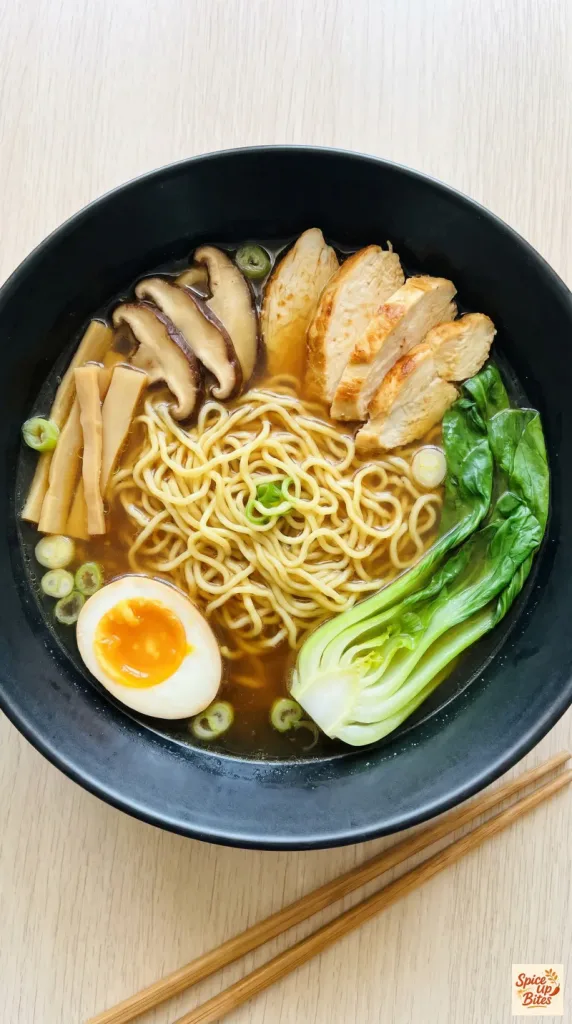
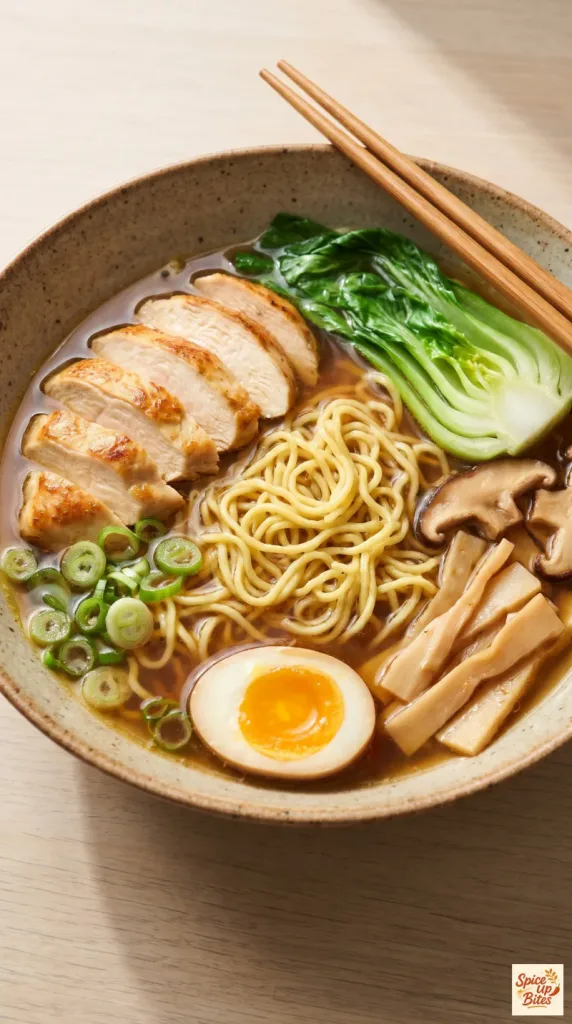
Best Homemade Shoyu Ramen brings together a savory soy broth, bouncy noodles, and simple fresh toppings. This home version starts with unsalted chicken stock, so you can build flavor without simmering bones all day. A separate soy seasoning, called tare, lets you adjust each bowl. Tender chicken, an egg half, and greens make it a filling dinner.
Why I Love This Recipe
A good bowl of ramen has lots of small pleasures: the first sip of broth, a soft egg yolk, and noodles that still have a little bite. This version keeps those details while making the cooking manageable in a home kitchen.
- Balanced broth: Unsalted stock lets the soy sauce shine without taking over.
- Flexible seasoning: Add the tare gradually to suit your stock and soy sauce.
- Simple protein: Pan-seared chicken gives you tender slices without a long braise.
- Fresh finish: Bok choy and scallions brighten each bowl.
What You’ll Need
- Servings: 4 large bowls
- Prep Time: 20 minutes
- Cook Time: 40 minutes, with tasks overlapping
- Total Time: 1 hour
For the broth:
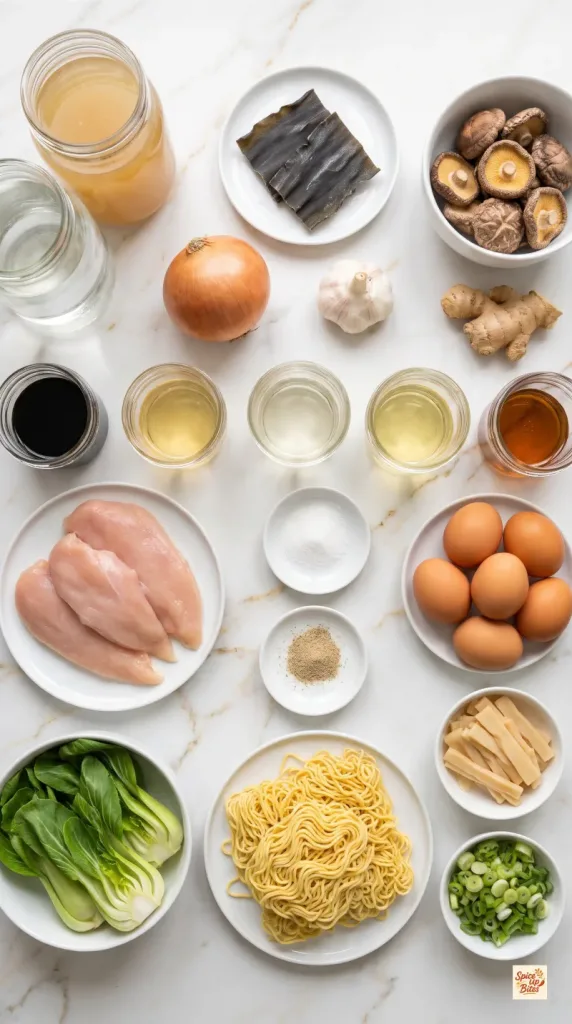
- 6 cups unsalted chicken stock
- 1 cup water, plus extra as needed to restore the broth volume
- 1 piece dried kombu, about 4 inches long
- 4 dried shiitake mushrooms
- 1 small onion, halved
- 3 garlic cloves, lightly crushed
- 1-inch piece fresh ginger, sliced
For the tare:
- 1/3 cup Japanese naturally brewed soy sauce, preferably koikuchi; not Chinese dark soy sauce
- 2 tablespoons mirin
- 2 tablespoons sake
For the chicken, noodles, and toppings:
- 1 pound boneless, skinless chicken breasts, sliced horizontally into 2 thin cutlets
- 1/4 teaspoon fine salt
- 1/4 teaspoon ground white pepper
- 1 tablespoon neutral oil
- 2 large eggs
- 12 ounces baby bok choy, halved lengthwise and rinsed
- 16 ounces fresh medium-thin wavy ramen noodles
- 1/2 cup prepared menma (seasoned bamboo shoots), drained
- 4 scallions, thinly sliced
- 2 teaspoons toasted sesame oil
- Water as needed for boiling and an ice bath
Choose unsalted stock rather than regular broth. Prepared menma is already seasoned; taste it before adding more tare to the bowl.
Tools You Need
- Large stockpot and a separate noodle pot
- Small saucepan
- Large skillet
- Fine-mesh strainer and heatproof jug
- Instant-read thermometer
- Tongs, ladle, and slotted spoon
- Bowl for an ice bath
- Wooden cutting board and sharp knife
- Deep ramen bowls and chopsticks
How to Make Best Homemade Shoyu Ramen
Start the broth first, then prepare the toppings while it gently cooks.
Step 1: Build the Broth
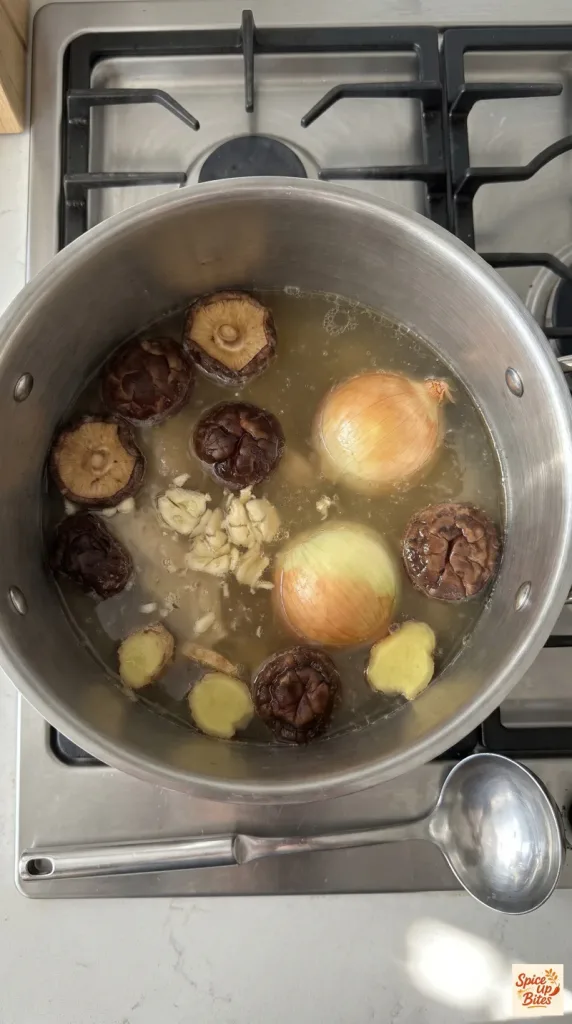
Put 6 cups unsalted chicken stock, 1 cup water, 1 piece dried kombu, 4 dried shiitake mushrooms, 1 small halved onion, 3 crushed garlic cloves, and 1-inch piece sliced ginger in a large stockpot.
Warm over medium-low heat for about 10 minutes, until small bubbles appear around the edges. Remove the kombu before the liquid reaches a full simmer.
Simmer the remaining ingredients gently, partly covered, for 20 minutes. Avoid a rolling boil.
Lift out the mushrooms, trim off their tough stems, and slice the caps thinly. Strain the broth and discard the onion, garlic, and ginger.
Measure the strained broth and add water as needed to make 6 cups. Return it to the stockpot and keep it hot over low heat.
Step 2: Make the Soy Tare
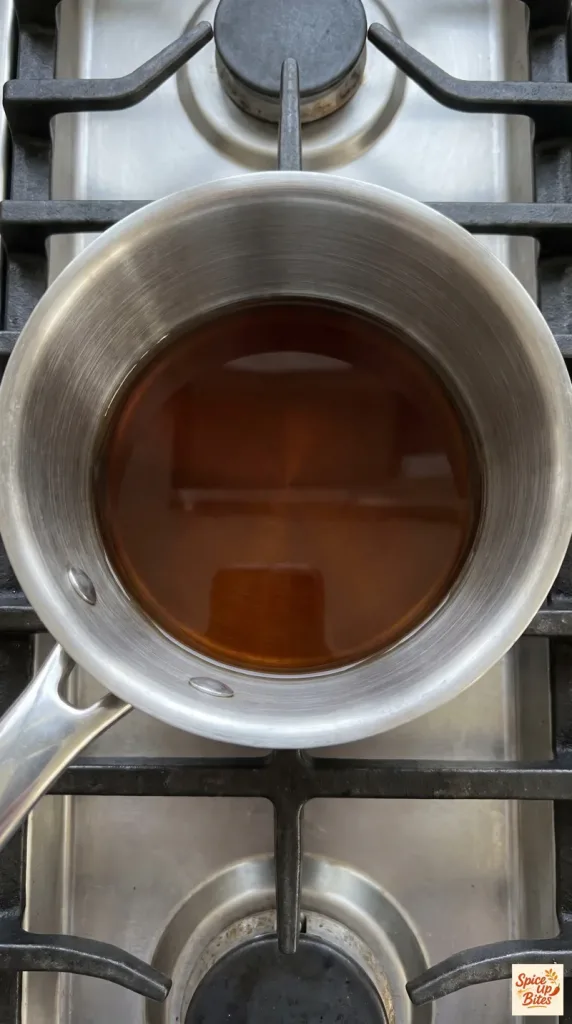
Combine 2 tablespoons mirin and 2 tablespoons sake in a small saucepan. Simmer for 2 minutes over medium-low heat.
Add 1/3 cup Japanese soy sauce and warm gently for 1 minute. Do not reduce it to a thick glaze.
Set the tare aside. You will start with 1 tablespoon per bowl and use more only after tasting.
Step 3: Sear the Chicken
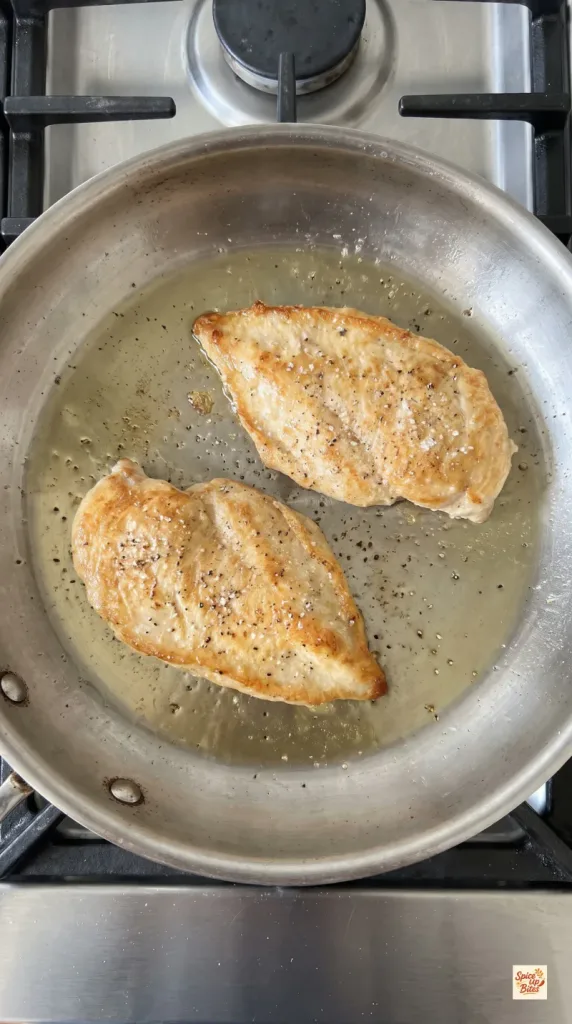
Pat 1 pound chicken breast cutlets dry. Season both sides with 1/4 teaspoon fine salt and 1/4 teaspoon ground white pepper.
Heat 1 tablespoon neutral oil in a large skillet over medium heat. Add the cutlets and cook for about 4–6 minutes per side, depending on thickness, until the center reaches 165°F (74°C).
Rest the chicken on a clean wooden board for 5 minutes, then slice it across the grain. Keep the slices warm while you finish the bowls.
Step 4: Prepare the Eggs and Greens
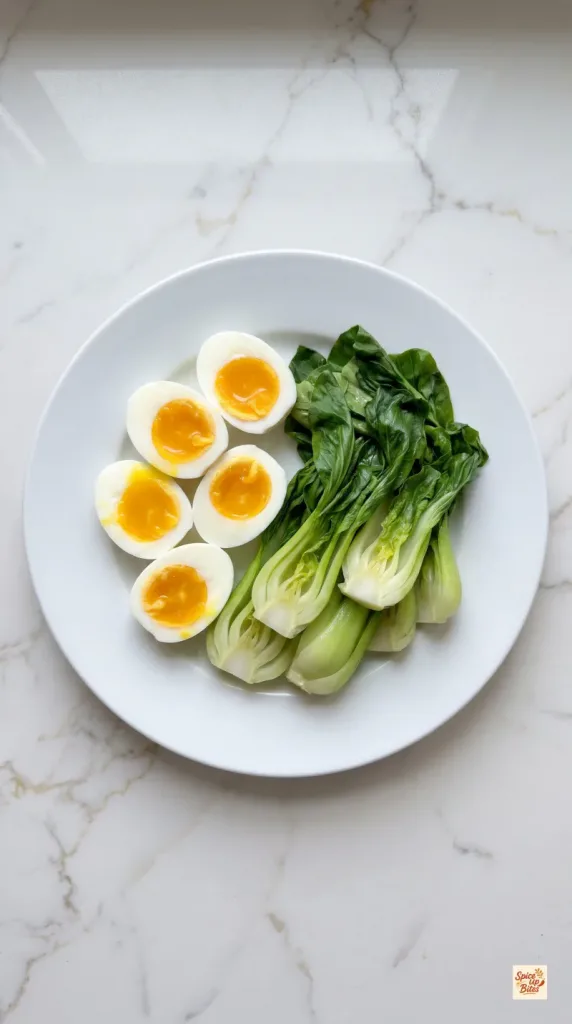
Bring a separate pot of water to a gentle boil. Lower in 2 large eggs and cook for 7 minutes for a jammy center.
Transfer the eggs to an ice bath for 5 minutes, then peel and halve lengthwise to make 4 halves. For fully firm yolks, cook the eggs for 10–12 minutes instead.
In the same boiling water, blanch 12 ounces halved baby bok choy for 2 minutes, or until the stems are tender-crisp. Drain well and set aside.
Step 5: Cook the Noodles
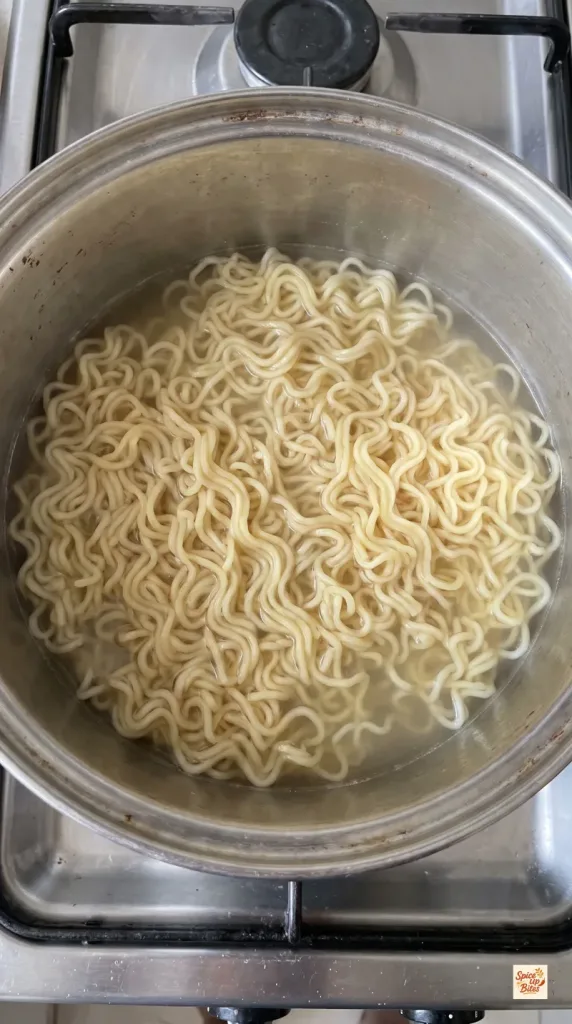
Bring a fresh pot of unsalted water to a rolling boil. Loosen 16 ounces fresh ramen noodles and cook according to the package directions, usually 2–3 minutes, until springy with a little bite.
While the noodles cook, warm 4 deep bowls with hot water, then empty them. Have the hot broth, tare, and toppings ready.
Drain the noodles thoroughly. Do not leave them sitting in the cooking water or cook them in the serving broth.
Step 6: Assemble and Serve
Add 1 tablespoon tare and 1/2 teaspoon toasted sesame oil to each warm bowl. Add 1 1/2 cups hot broth to each and stir.
Taste each bowl before adding noodles. Add more of the remaining tare 1 teaspoon at a time if needed; you may have some left. The broth should taste savory and full, rather than sharply salty.
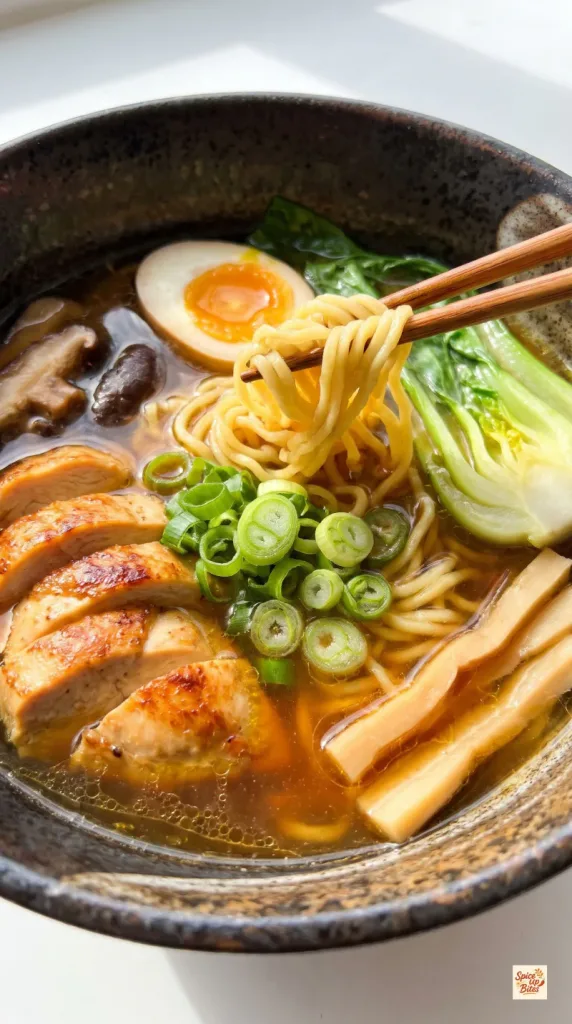
Divide the cooked noodles among the bowls. Divide the sliced chicken, sliced caps from 4 shiitake mushrooms, 12 ounces cooked bok choy, 1/2 cup menma, and 4 sliced scallions evenly among them.
Finish each bowl with 1 egg half. Keep the toppings in loose sections with broth visible around them, and serve right away.
This is a full meal on its own. For a larger dinner, offer an optional cucumber salad alongside.
Why This Recipe Works (Quick Science)
The stock provides savory depth, while the tare controls how salty each bowl becomes. Keeping them separate makes it easier to adjust for different brands of soy sauce.
Kombu and shiitake add savory compounds that work well with chicken stock. Gentle heating keeps the broth clear. Cooking noodles in a separate pot keeps their loose starch out of that clear soup.
Fresh ramen noodles contain alkaline salts that help give them their springy bite. They keep softening in hot broth, so quick assembly matters. A little sesame oil adds aroma without turning the broth thick or creamy.
Common Mistakes to Avoid
- Using salted stock without adjusting: Start with unsalted stock and taste after adding the tare.
- Using Chinese dark soy sauce: It gives a different color and flavor. Choose Japanese naturally brewed soy sauce.
- Boiling the broth hard: Gentle heat gives you a cleaner soup and keeps the liquid from reducing too far.
- Cooking noodles too early: Finish the broth and toppings before draining the noodles.
- Leaving the greens wet: Drain them well so they do not dilute the bowl.
- Overcooking the chicken: Check its center with a thermometer, then let it rest before slicing.
What to Serve With Best Homemade Shoyu Ramen
Each bowl already includes noodles, chicken, vegetables, and an egg half. A simple cucumber salad makes a fresh optional side. Keep extra dishes small so the ramen stays the main meal.
Substitutions and Variations
- Dried noodles: Use 12 ounces dried ramen in place of the fresh noodles and follow the package timing. Discard seasoning packets.
- Different greens: Use the same weight of spinach in place of bok choy, blanching only until wilted.
- No menma: Replace it with 1/2 cup drained canned bamboo shoots, briefly warmed in broth. The flavor will be milder.
- Pork topping: Sliced cooked chashu can replace the chicken. This changes the preparation time and nutrition.
Make-Ahead and Storage
Make the broth and tare up to 3 days ahead and refrigerate them separately in covered containers. Refrigerate cooked chicken and greens for up to 3 days. Cool and refrigerate perishable components within 2 hours, using shallow containers for the broth.
Cook noodles just before eating. For leftovers, store them separately from the soup; soaked noodles become soft. Refrigerate peeled eggs promptly and use within 2 days.
Reheat the broth until piping hot. Reheat leftover chicken to 165°F (74°C), then assemble with freshly cooked noodles. Freeze the broth without noodles or eggs for up to 3 months.
Macros Information
Estimated per large bowl, using fresh noodles and about 1 1/2 tablespoons tare:
- Calories: 670
- Protein: 48 g
- Carbohydrates: 78 g
- Fat: 17 g
- Saturated Fat: 3 g
- Fiber: 5 g
- Sugar: 8 g
- Sodium: 1,650 mg
These are estimates. Noodle brands, menma, stock, and the amount of tare used can change the numbers, especially sodium.
Frequently Asked Questions (FAQ)
Q: What does shoyu mean?
A: Shoyu means Japanese soy sauce. Here it provides the main seasoning for the broth.
Q: Is this a broth made from scratch?
A: This version starts with ready-made unsalted chicken stock, then adds kombu, mushrooms, and aromatics. It is a practical home version rather than an all-day bone broth.
Q: Can I use instant ramen noodles?
A: Yes. Use plain noodles, discard the seasoning packets, and follow their cooking time. The texture will differ from fresh ramen.
Q: Do I need to rinse the cooked noodles?
A: No. For this hot soup, drain them well and move them straight into the prepared bowls.
Q: Can I skip the sake?
A: Replace the 2 tablespoons sake with 2 tablespoons water. The tare will have a little less depth.
Q: Why is my broth too salty?
A: Salted stock or too much tare can overwhelm the bowl. Add hot unsalted stock or water gradually, tasting as you go.
Q: Can I make the eggs firm?
A: Yes. Boil them for 10–12 minutes and cool in an ice bath before peeling.
Q: Is this gluten-free?
A: No. Standard ramen noodles and many soy sauces contain wheat. Gluten-free noodles and tamari can make an adapted version, but check every packaged ingredient.
Q: Can I freeze a complete bowl?
A: Freeze the broth separately. Noodles, eggs, and greens lose their best texture when frozen together in the soup.
Final Thoughts
Best Homemade Shoyu Ramen is a lovely reason to slow down for dinner. Prepare the toppings, taste the broth, and save the noodles for last. Leave a comment with your favorite ramen topping. Happy cooking!