
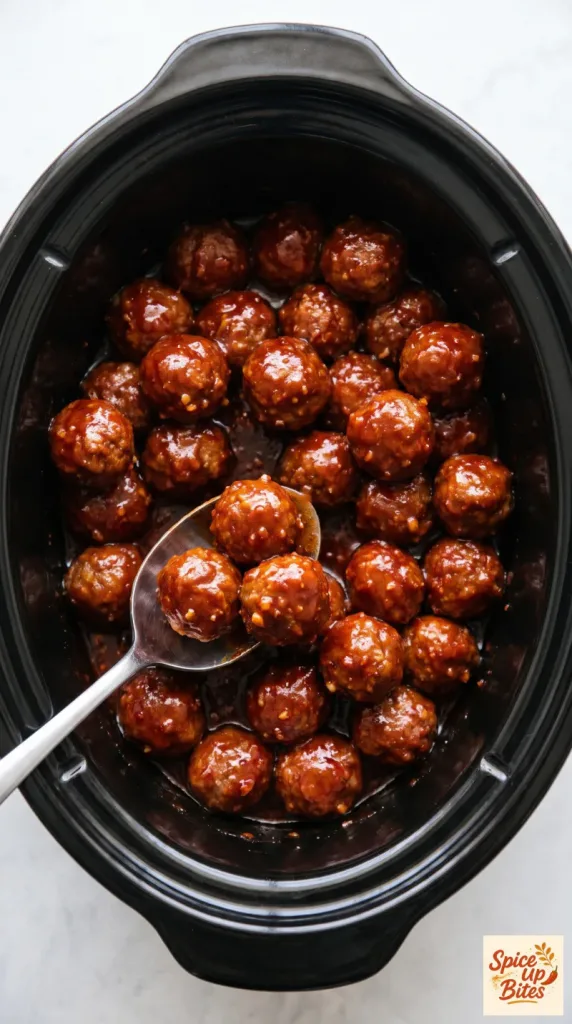
Crockpot Korean Gochujang Meatballs bring sweet heat, savory garlic, and a glossy red-brown sauce to the table. Fully cooked beef meatballs keep the prep simple, while gochujang gives the sauce its rich chili flavor. The slow cooker does most of the work, and a light sprinkle of scallions and sesame seeds finishes the batch. Serve them as an appetizer or turn them into dinner with rice and vegetables.
Why I Love This Recipe
This is the kind of recipe that fits a busy day without asking you to give up bold flavor. The sauce needs a quick whisk, and there is no raw meat to shape. A little honey softens the chili heat, while rice vinegar keeps the sauce from tasting too sweet.
- Simple prep: Start with plain, fully cooked meatballs and a short sauce ingredient list.
- Big flavor: Gochujang, ginger, and garlic make each bite savory and spicy.
- Flexible serving: Set out appetizer portions or add simple sides for dinner.
- Tender finish: Gentle cooking warms the meatballs in sauce without a dry, hard crust.
What You’ll Need
- Servings: 8 appetizer servings, each one-eighth of the batch
- Yield: 2 pounds of meatballs plus sauce; the meatball count depends on the brand
- Prep Time: 15 minutes, using fully thawed meatballs
- Cook Time: 3 hours 20 minutes to 4 hours 20 minutes
- Total Time: 3 hours 35 minutes to 4 hours 35 minutes, plus overnight thawing if needed
- Slow Cooker Size: 4-quart oval slow cooker
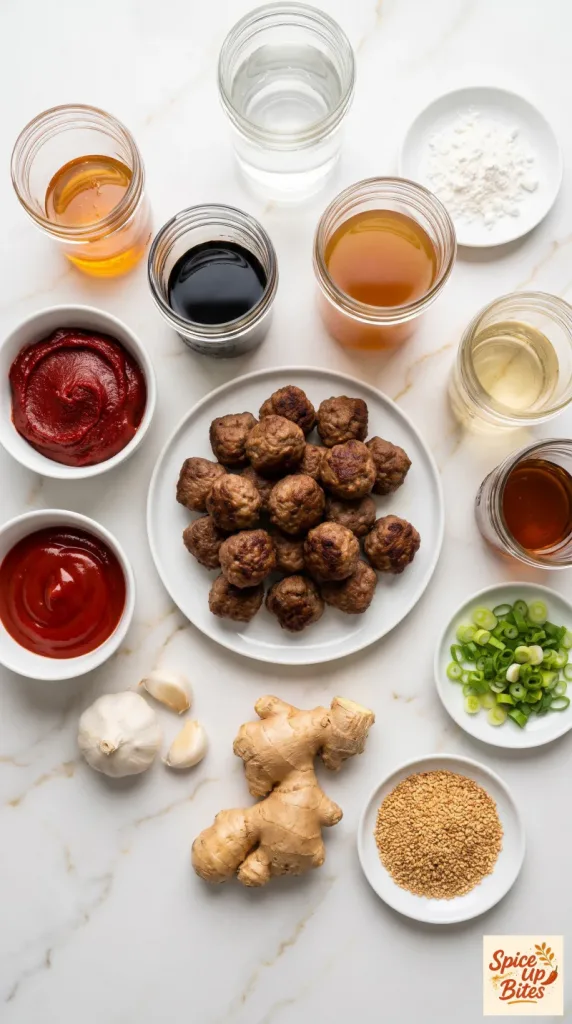
Ingredients:
- 2 pounds plain fully cooked beef cocktail meatballs, about 1 inch across, thawed in the refrigerator and drained
- 1/3 cup gochujang paste, mild or medium heat
- 1/3 cup honey
- 1/3 cup ketchup
- 1/4 cup low-sodium soy sauce
- 1/3 cup unsalted beef broth
- 2 tablespoons unseasoned rice vinegar
- 2 teaspoons toasted sesame oil
- 3 garlic cloves, finely minced
- 1 tablespoon finely grated fresh ginger
- 1 tablespoon cornstarch
- 1 tablespoon cold water
- 2 tablespoons thinly sliced scallion greens, for finishing
- 1 teaspoon toasted sesame seeds, for finishing
Choose meatballs without Italian herbs or cheese. Use gochujang paste rather than a bottled gochujang dipping sauce; the two have different thicknesses and seasoning levels. Taste the paste before you start, since heat and salt vary by brand.
Tools You Need
- 4-quart oval slow cooker with a lid
- Glass mixing bowl
- Small bowl for the slurry
- Measuring cups and spoons
- Whisk and silicone spatula
- Fine grater
- Instant-read food thermometer
- Serving spoon
How to Make Crockpot Korean Gochujang Meatballs
Start with thawed meatballs so the batch heats evenly. Keep them chilled until you are ready to load the cooker.
Step 1: Mix the Sauce
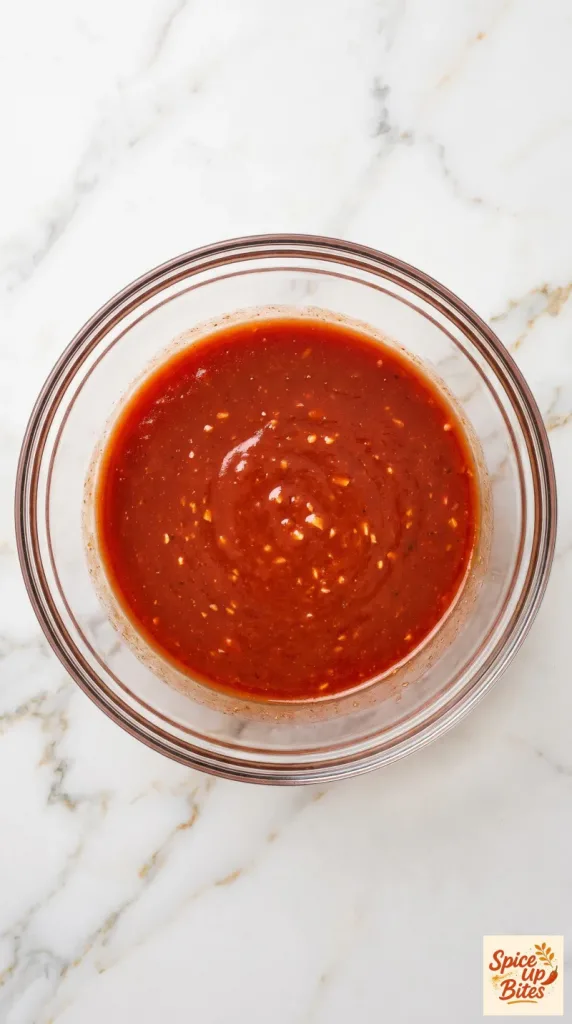
Whisk 1/3 cup gochujang paste, 1/3 cup honey, 1/3 cup ketchup, 1/4 cup low-sodium soy sauce, and 1/3 cup unsalted beef broth in a glass bowl.
Add 2 tablespoons unseasoned rice vinegar, 2 teaspoons toasted sesame oil, 3 finely minced garlic cloves, and 1 tablespoon finely grated fresh ginger.
Whisk until smooth, with the garlic and ginger evenly spread through the sauce.
Step 2: Coat the Meatballs
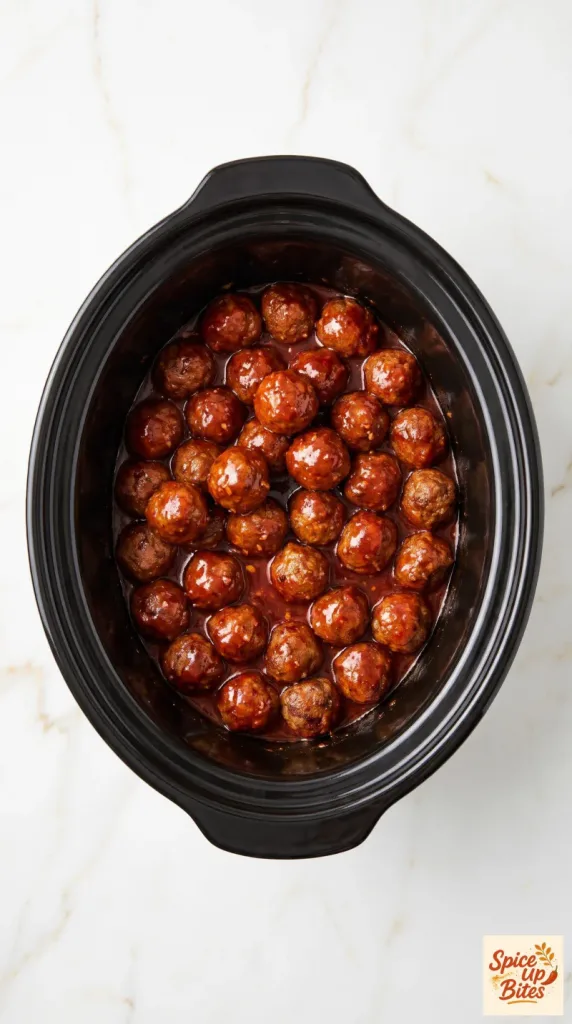
Place 2 pounds thawed, drained, fully cooked beef cocktail meatballs in the 4-quart slow cooker.
Pour in all the prepared sauce and fold gently until every meatball is coated.
Spread the meatballs into an even, loosely nestled layer with natural overlaps.
Step 3: Cook Until Hot and Tender
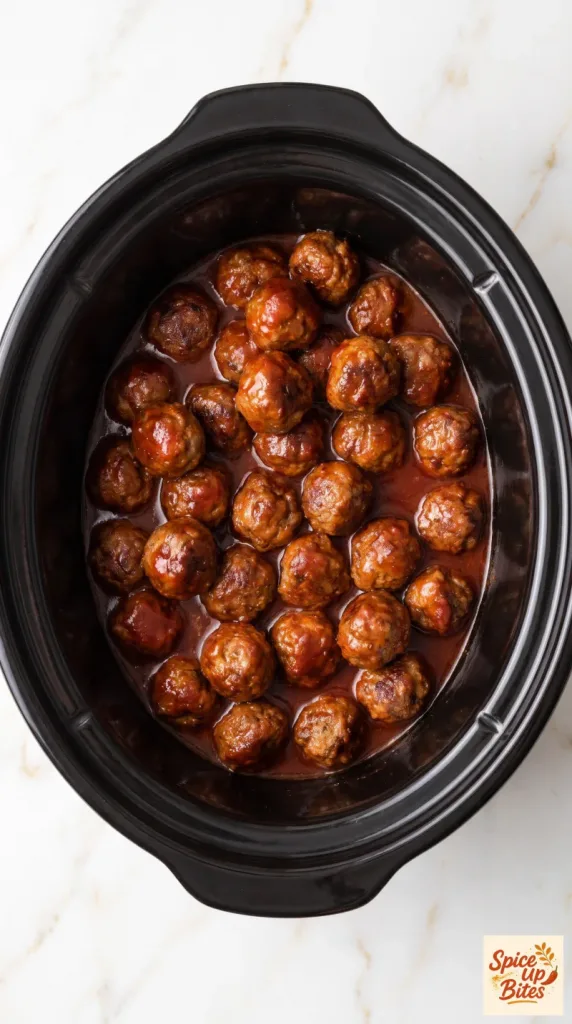
Cover and cook on LOW for 3 to 4 hours, stirring gently once around the halfway point and replacing the lid promptly.
Check several meatballs in the center of the cooker with a thermometer. They should reach 165°F (74°C) and feel hot and tender all the way through.
If needed, continue cooking with the lid on until they reach that temperature. The sauce will still be fairly loose before thickening.
Step 4: Thicken the Glaze
Stir 1 tablespoon cornstarch with 1 tablespoon cold water in a small bowl until smooth.
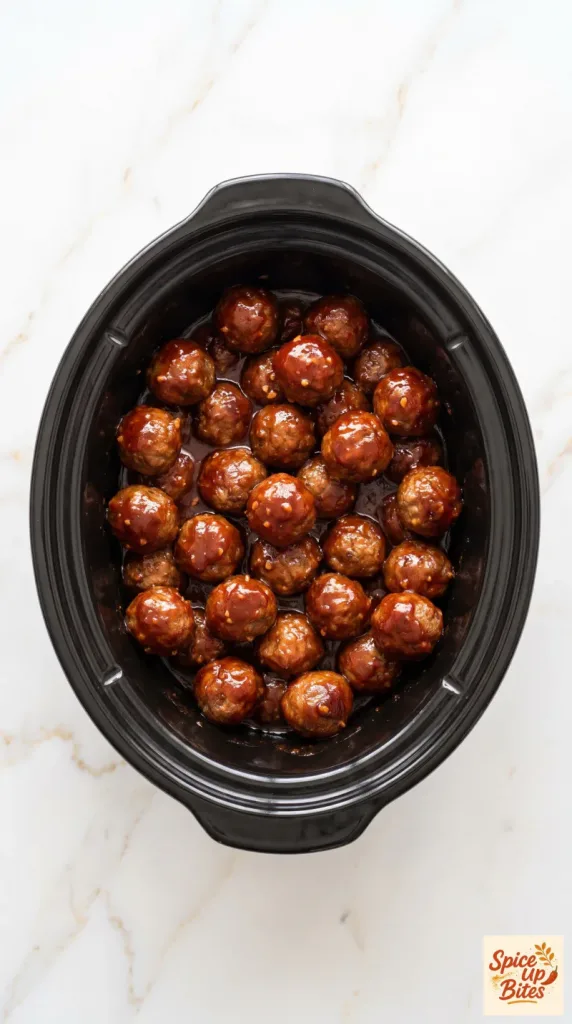
Fold the slurry into the hot meatballs and sauce, then cover and cook on HIGH for 20 minutes, or until the sauce clings to the meatballs and lightly coats a spoon.
Stir gently once more. The finished glaze should be glossy red-brown with a brick-red undertone, thick enough to coat but still easy to spoon.
Step 5: Finish and Serve
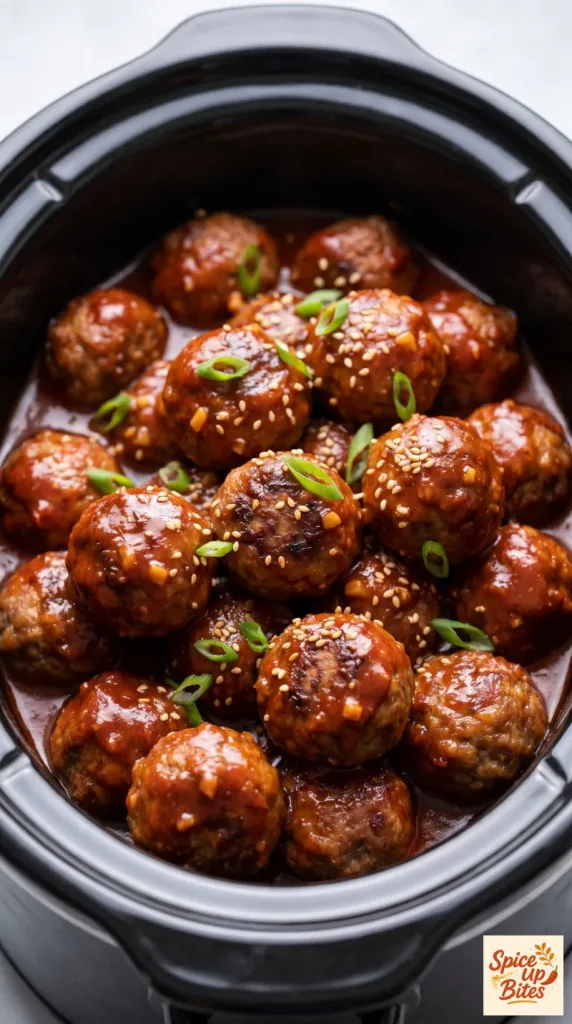
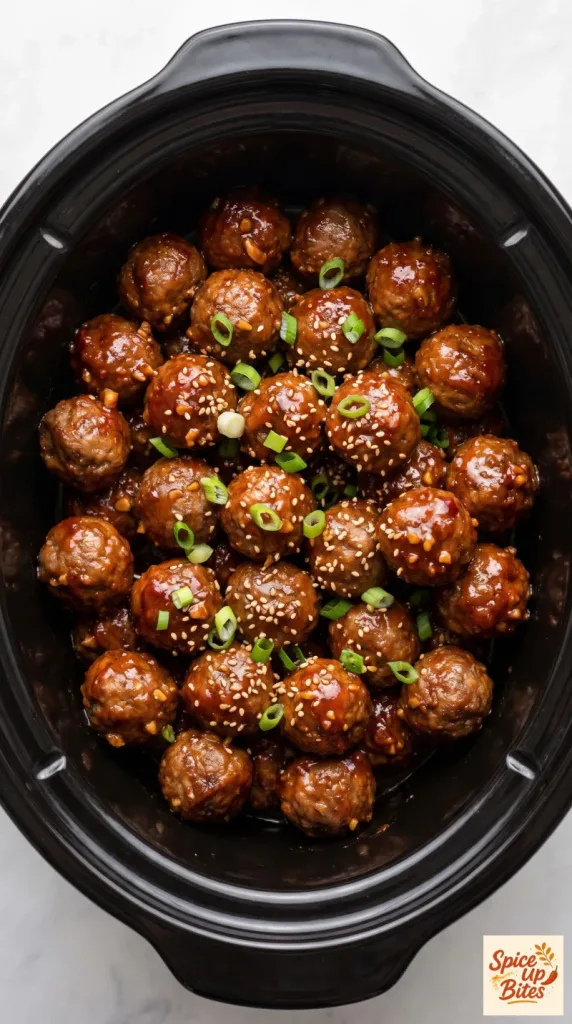
Switch to WARM and sprinkle 2 tablespoons thinly sliced scallion greens and 1 teaspoon toasted sesame seeds lightly over the finished batch in the crockpot.
Keep the garnish sparse so the meatballs and glaze stay visible. Serve hot as an appetizer, or pair with steamed rice and broccoli for dinner.
For a gathering, keep the batch at 140°F (60°C) or hotter and check the temperature during serving. Use WARM only to hold already-hot food.
Why This Recipe Works (Quick Science)
Gochujang brings chili heat, salt, and fermented savory flavor in a thick paste. Honey rounds out that heat, while rice vinegar adds a bright edge. Ketchup helps the sauce coat the meatballs and adds a little tang.
The covered cooker holds moisture around the meatballs. Since they are already cooked, the goal is to heat them through gently rather than build a new crust. Cornstarch thickens the hot sauce near the end, so you get a glossy coating without a long reduction that could dry out the meat.
Common Mistakes to Avoid
- Using raw meatballs: This method and timing are written for fully cooked meatballs. Raw meat needs a different cooking plan.
- Choosing strongly seasoned meatballs: Italian herbs can compete with the gochujang sauce. Plain beef meatballs work better here.
- Adding dry cornstarch: Mix it with the cold water first so it does not form lumps.
- Leaving the lid off: Repeated peeking lets heat escape and changes the cooking time.
- Cooking long after the meatballs are hot: Extra hours can make precooked meatballs firm and dry.
- Adding garnish early: Scallion greens taste fresher and look brighter when added at the end.
What to Serve With Crockpot Korean Gochujang Meatballs
Steamed rice catches the extra glaze, and broccoli adds a mild, crisp-tender side. A cucumber salad also helps balance the heat. For an appetizer spread, serve small portions with cocktail picks set out separately.
The meatballs and sauce are the recipe; these optional sides are not included in the nutrition estimate.
Substitutions and Variations
- Meatballs: Use the same weight of plain fully cooked turkey or chicken meatballs, thawed first. Check their package directions and heat through to the same target temperature.
- Milder flavor: Use a mild gochujang. Reducing the paste will also change the salt level, body, and flavor of the sauce.
- Sweetener: Maple syrup can replace the honey in the same amount, though the glaze will taste a little different.
- Gluten-free needs: Use certified gluten-free meatballs, gochujang, and tamari in place of soy sauce. Regular gochujang and meatballs may contain wheat.
Make-Ahead Tips
Whisk the sauce up to 2 days ahead and refrigerate it in a covered container. Keep the meatballs separate until cooking day. If starting with frozen meatballs, thaw them in the refrigerator according to the package directions; do not leave them on the counter overnight.
Do not fill the crock the night before and leave it at room temperature. Load the cooker when you are ready to start heating.
Leftovers and Storage
Refrigerate leftovers in shallow covered containers within 2 hours, or within 1 hour when the temperature is above 90°F (32°C). Use within 3 to 4 days.
Freeze cooled meatballs with their sauce for up to 2 months for best quality. Thaw in the refrigerator before reheating.
Reheat in a covered saucepan over gentle heat or in the microwave until the centers reach 165°F (74°C). Stir as needed. If the sauce has become too thick, add a small splash of water. Reheat before transferring to a slow cooker for hot holding.
Macros Information
Estimated per appetizer serving, based on 8 servings with all the sauce and garnish, without optional sides:
- Calories: 375
- Protein: 18 g
- Carbohydrates: 29 g
- Fat: 21 g
- Saturated Fat: 7 g
- Fiber: 2 g
- Sugar: 21 g
- Sodium: 1,080 mg
These are estimates. Meatball and gochujang brands can change the numbers, especially sodium, fat, and serving size.
Frequently Asked Questions (FAQ)
Q: Is this a traditional Korean meatball recipe?
A: This is a Korean-inspired slow cooker recipe built around gochujang. It uses prepared meatballs for convenience rather than a traditional handmade meatball mixture.
Q: How spicy are these meatballs?
A: Expect noticeable sweet heat with a mild or medium paste. The exact heat depends on the gochujang brand, so choose one you already enjoy.
Q: Can I use frozen meatballs straight from the bag?
A: Thaw them in the refrigerator first for this recipe. This timing is based on thawed, fully cooked cocktail meatballs, not a frozen batch.
Q: Can I use homemade meatballs?
A: Yes, if they are fully cooked first and similar in size. Cook homemade ground beef meatballs to 160°F (71°C), or ground poultry meatballs to 165°F (74°C), before chilling or using them here. Follow the recipe’s final heating target.
Q: Can I replace gochujang with sriracha?
A: It is not a direct swap. Sriracha is thinner and has a different flavor. Gochujang paste gives this sauce much of its body and savory taste.
Q: Why is my sauce thin?
A: The slurry needs enough heat and time to thicken. Keep the cooker on HIGH with the lid on for the thickening step. The glaze also gains a little body as it settles after stirring.
Q: Can I double the recipe?
A: Use a larger cooker and follow its fill limits. Heating can take longer, so check the center temperature rather than doubling the clock time. Keep the sauce ratios the same.
Q: Can I serve these for dinner?
A: Yes. Divide the batch into 4 larger portions and add rice and broccoli. Each larger portion has about twice the listed appetizer nutrition before adding sides.
Q: Can I leave them on WARM all afternoon?
A: Only hold them once fully heated, and verify they stay at 140°F (60°C) or hotter. Follow your cooker’s hot-holding guidance and refrigerate leftovers promptly when serving ends.
Final Thoughts
Crockpot Korean Gochujang Meatballs make a bold appetizer with very little hands-on work. Keep the meatballs tender, let the glaze thicken, and finish with a light touch of scallions and sesame. Leave a comment with your favorite way to serve them. Happy cooking!