
Apple Cider & Maple Glazed Ham brings sweet apple flavor, rich maple syrup, and a little mustard tang to the table. The ham warms gently under foil before a glossy glaze turns golden in the oven. It makes a lovely holiday main dish with simple sides. Start with a fully cooked ham so you can focus on keeping it juicy and building that sticky finish.
Why I Love This Recipe
This recipe has the kind of sweet and savory balance that makes ham feel special without a long shopping list. Cider gives the glaze a fruity base, while mustard and vinegar keep the maple syrup from tasting too sweet. Most of the oven time is hands-off, leaving room to get the sides ready.
- Big flavor: Apple cider and pure maple syrup add more depth than sugar alone.
- Gentle heating: A foil cover helps protect the ham from drying out.
- Glossy finish: Three thin coats build a sticky glaze without a thick, burned sugar crust.
- Useful leftovers: Extra slices work well in sandwiches, omelets, and soups.
What You’ll Need
- Servings: 16
- Prep Time: 15 minutes
- Cook Time: About 2 hours 30 minutes, including glaze preparation during baking
- Rest Time: 15 minutes
- Total Time: About 3 hours
- Oven Temperature: 325°F (163°C), then 400°F (204°C)
- Pan Size: Deep white 9×13-inch rectangular ceramic baking dish with two built-in side handles, rated for 400°F (204°C); the ham must fit without touching the sides
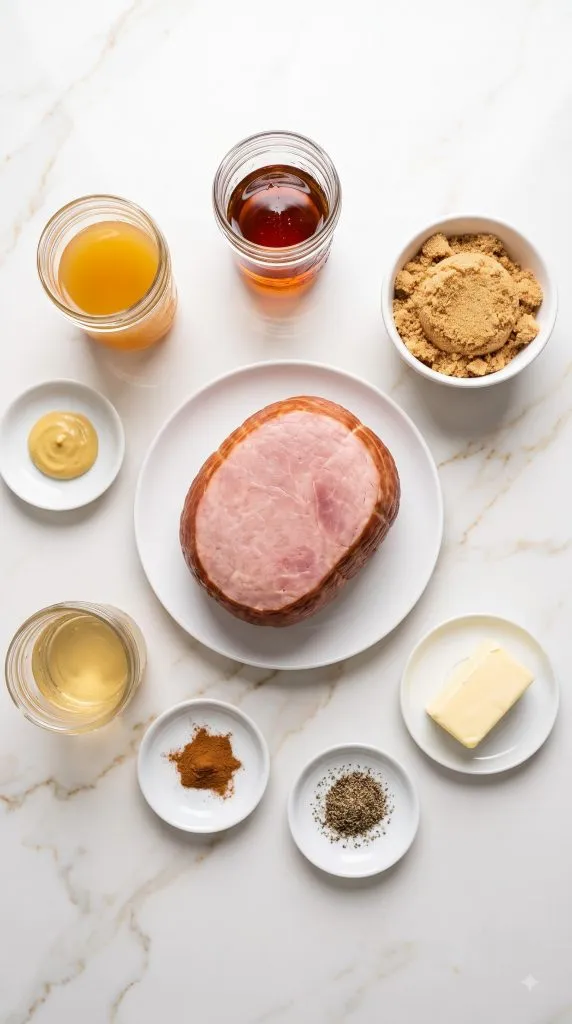
- 1 fully cooked, unsliced boneless ham, 6 lb, preferably in its original USDA-inspected package
- 2 cups nonalcoholic apple cider, divided
- 1/2 cup pure maple syrup
- 1/4 cup packed light brown sugar
- 2 tablespoons Dijon mustard
- 1 tablespoon apple cider vinegar
- 2 tablespoons unsalted butter
- 1/4 teaspoon ground cinnamon
- 1/2 teaspoon ground pepper
Use drinking apple cider, not hard cider or apple cider vinegar, for the 2 cups of cider. The separate tablespoon of vinegar adds tang. Discard any glaze packet that comes with the ham. No extra salt is needed because ham is already salty.
Tools You Need
- Deep white 9×13-inch rectangular ceramic baking dish with two built-in side handles, oven-safe to 400°F (204°C)
- Aluminum foil
- Small stainless steel saucepan
- Measuring cups and spoons
- Whisk and silicone pastry brush
- Instant-read meat thermometer
- Small glass bowl for reserved glaze
- Wooden cutting board and carving knife
- White ceramic round serving plates
How to Make Apple Cider & Maple Glazed Ham
Warm the ham first, then add the glaze near the end so the sugars have time to brown gently.
Step 1: Prepare the Ham
Heat the oven to 325°F (163°C).
Remove all packaging and any plastic cap from 1 fully cooked, unsliced 6 lb boneless ham.
Set the ham flat-side down in the deep white 9×13-inch rectangular ceramic baking dish with two built-in side handles.
Pour 1 cup apple cider into the bottom of the dish, around the ham.
Step 2: Warm the Ham Gently
Cover the dish tightly with foil and bake the 6 lb ham with 1 cup apple cider for about 2 hours, checking the center after 90 minutes.
For a fully cooked ham in its original USDA-inspected package, aim for about 130–135°F (54–57°C) before glazing; it must reach 140°F (60°C) by the end of baking.
If your fully cooked ham was repackaged outside the inspected plant, use a final temperature of 165°F (74°C) instead and allow extra time; follow any stricter package directions.
Remove the foil to check the temperature, placing the thermometer in the thickest center, then cover again if more heating is needed.
Step 3: Make the Cider Maple Glaze
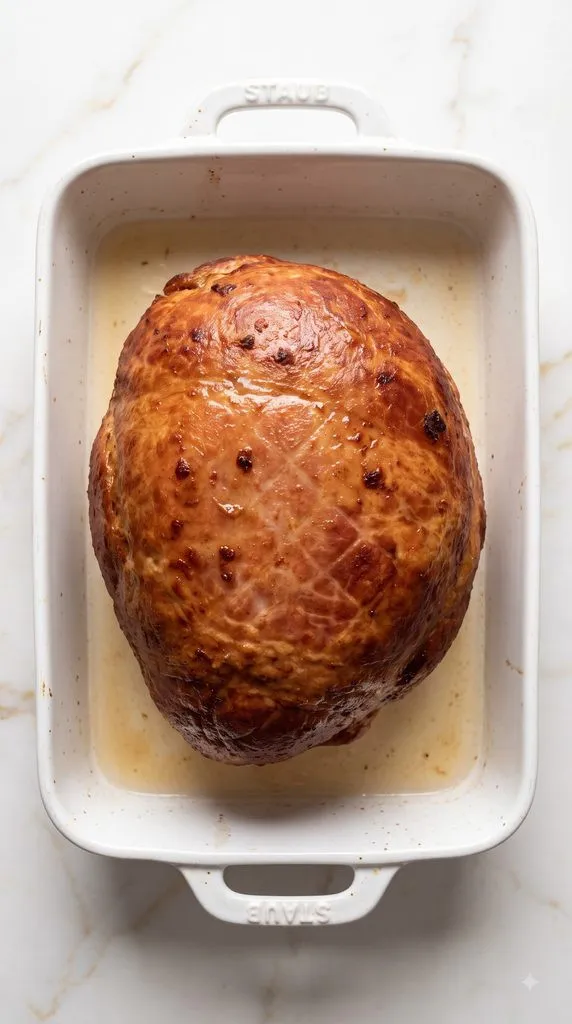
While the ham bakes, whisk the remaining 1 cup apple cider, 1/2 cup pure maple syrup, 1/4 cup packed light brown sugar, 2 tablespoons Dijon mustard, 1 tablespoon apple cider vinegar, 2 tablespoons unsalted butter, 1/4 teaspoon ground cinnamon, and 1/2 teaspoon ground pepper together in a small stainless steel saucepan.
Bring to a gentle simmer over medium heat, then lower the heat and cook for 15–20 minutes, stirring often, until reduced to about 1 cup and thick enough to coat the back of a spoon lightly.
Pour 1/4 cup finished glaze into a clean glass bowl for serving, keeping it separate from the brush used on the ham.
Keep the remaining 3/4 cup finished glaze in the saucepan for three coats of 1/4 cup each.
Step 4: Glaze and Finish Baking
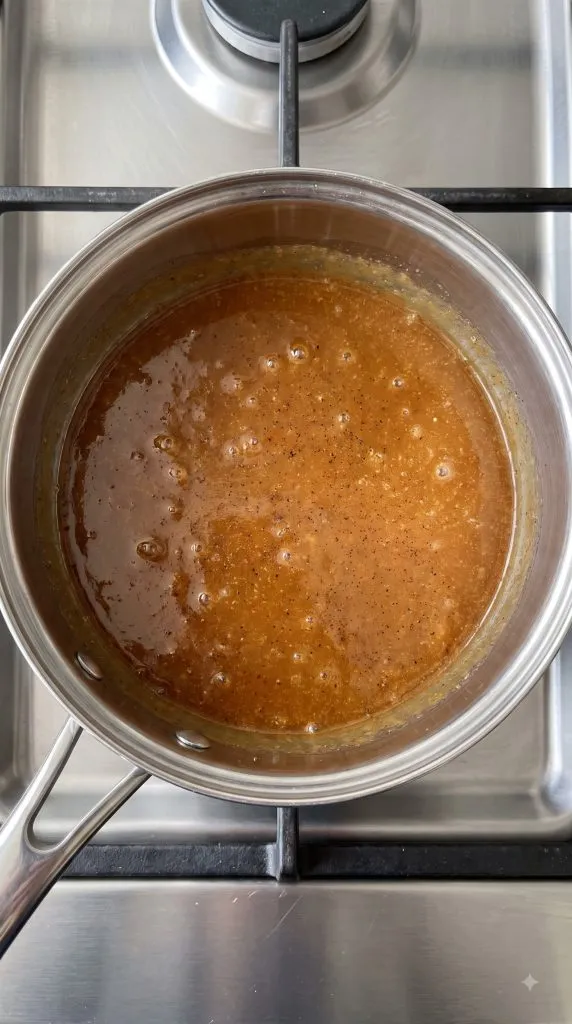
Once the ham reaches the pre-glazing temperature, uncover it and raise the oven to 400°F (204°C).
Brush 1/4 cup finished glaze over the exposed surface of the 6 lb ham, then bake uncovered for 10 minutes.
Brush on another 1/4 cup finished glaze and bake for 10 minutes.
Brush on the final 1/4 cup finished glaze and bake for about 10 minutes, until the outside is glossy and golden brown and the center reaches 140°F (60°C) for original USDA-inspected packaged ham, or 165°F (74°C) for repackaged ham.
If the glaze darkens too quickly, loosely cover the ham with foil and lower the oven to 325°F (163°C) until it reaches the required temperature.
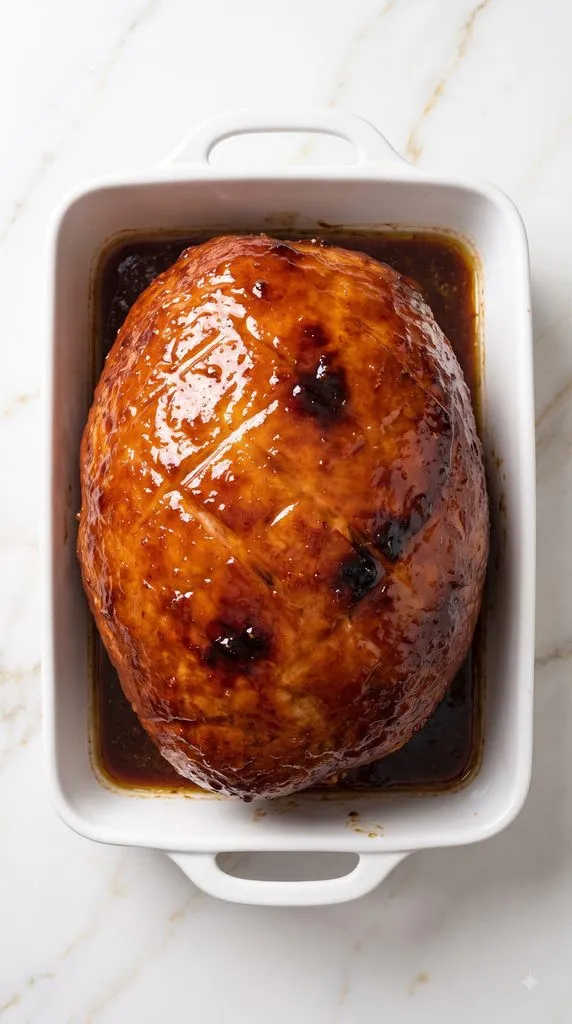
Step 5: Rest the Ham
Let the glazed 6 lb ham rest in its dish for 15 minutes, loosely tented with foil so the sticky surface is not pressed against it.
Keep the reserved 1/4 cup finished glaze separate for serving; do not replace it with glaze left on the pastry brush.
Step 6: Slice and Serve
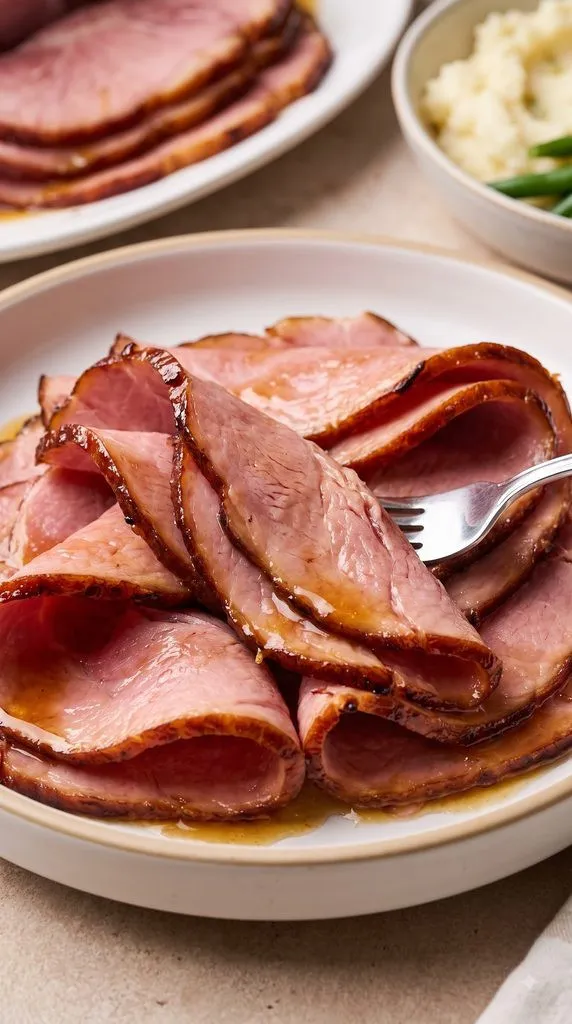
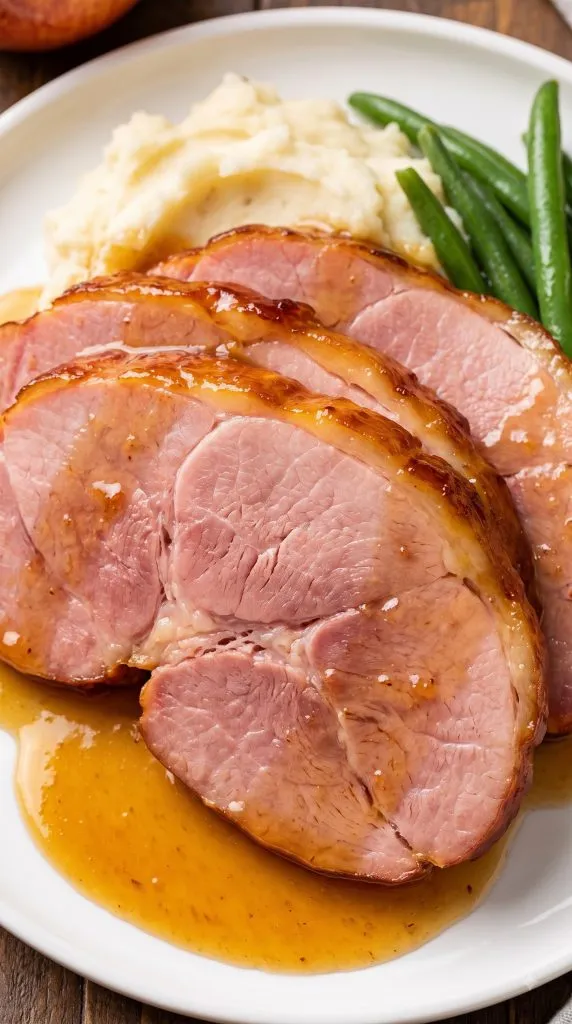
Move the rested 6 lb ham to a wooden cutting board and cut across it into broad oval slices about 1/4 inch thick.
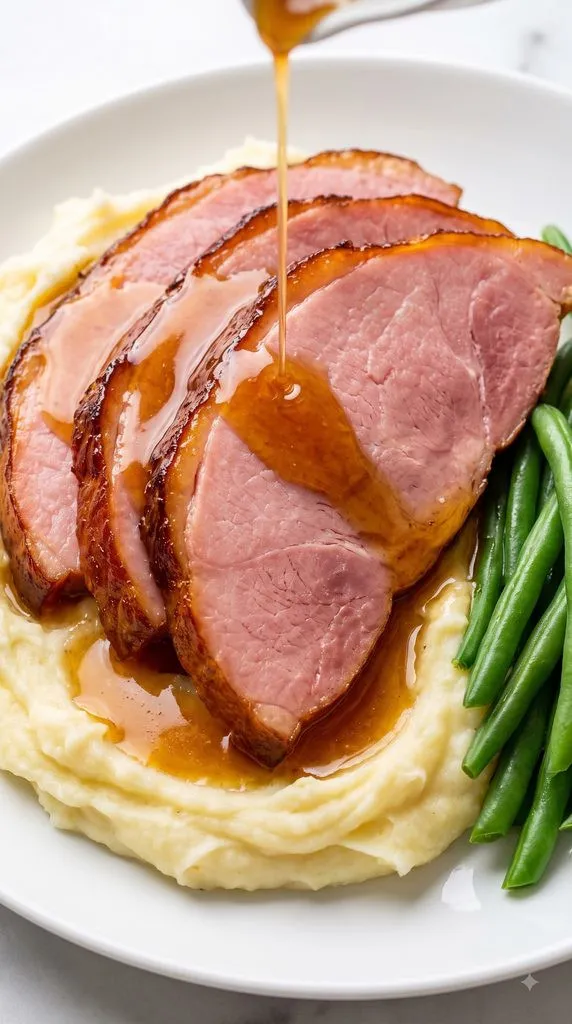
Arrange the slices on plates and spoon the reserved 1/4 cup finished glaze across the servings.
Serve with creamy mashed potatoes and cooked green beans for a complete meal; these sides are optional and are not included in the recipe’s nutrition estimate.
Why This Recipe Works (Quick Science)
A fully cooked ham only needs reheating. The foil cover limits moisture loss while the center warms. Cider in the dish adds flavor to the pan juices, but the gentle heat and careful temperature check do most of the work to protect the meat.
Reducing the glaze drives off water, so the sauce clings instead of sliding off. Maple syrup and brown sugar brown during the uncovered finish. Mustard and vinegar add sharpness to balance the sweetness, while butter gives the glaze a smoother finish. Thin coats set more evenly than one heavy layer.
Common Mistakes to Avoid
- Buying the wrong ham: This method is for fully cooked, unsliced boneless ham. A fresh ham needs a different cooking method.
- Glazing from the start: Sugars can burn during the long covered heating stage. Save the glaze for the end.
- Trusting the clock alone: Ham shape, starting temperature, and oven accuracy affect the timing. Check the center with a thermometer.
- Boiling the glaze hard: A gentle simmer is easier to control and less likely to scorch the sugar.
- Using pancake syrup: Pure maple syrup has a richer flavor and works better with cider.
- Skipping the rest: A short rest makes slicing easier and keeps more moisture in the meat.
What to Serve With Apple Cider & Maple Glazed Ham
Creamy mashed potatoes and cooked green beans are the pairings shown in the serving photos. Their mild flavors balance the sweet glaze and salty ham.
- Creamy mashed potatoes: Spoon extra glaze over the ham rather than soaking the potatoes.
- Cooked green beans: Keep them bright and just tender for a fresh contrast.
- Roasted carrots: Their earthy sweetness fits the apple and maple flavors.
- Dinner rolls: A soft roll rounds out a holiday plate.
- A crisp green salad: A tangy dressing helps balance a rich meal.
Make-Ahead Tips and Leftovers
Make the glaze up to 3 days ahead and refrigerate it in a covered container. Warm it gently in a saucepan until brushable, stirring well. Keep the serving portion separate before brushing the ham.
Refrigerate leftover ham in shallow, covered containers within 2 hours of serving. Use it within 3–4 days or freeze meal-size portions for 1–2 months for best quality. Thaw frozen portions in the refrigerator.
Reheat leftover slices covered, with a small splash of water, until they reach 165°F (74°C). Add a little leftover glaze near the end so it does not scorch.
Macros Information
Estimated per serving, based on 16 servings of ham and glaze, without optional sides. Values vary with the ham brand, fat content, and how much glaze and pan liquid is eaten.
- Calories: 360 kcal
- Protein: 35 g
- Carbohydrates: 16 g
- Fat: 17 g
- Saturated Fat: 6 g
- Fiber: 0 g
- Sugar: 15 g
- Sodium: 1,900 mg
Frequently Asked Questions (FAQ)
Q: What kind of ham should I buy?
A: Choose a fully cooked, unsliced boneless ham weighing about 6 lb. Read the label carefully; fresh ham and ham labeled “cook before eating” are not suitable for this method.
Q: Can I use a spiral-cut ham?
A: You can use the same glaze, but follow the spiral ham’s package heating directions. Its thin exposed slices dry out faster, so keep it well covered and check the temperature early.
Q: Is apple cider the same as apple cider vinegar?
A: No. Apple cider is a nonalcoholic apple drink. Vinegar is much more acidic. Use cider for the 2 cups in the recipe and vinegar only for the separate tablespoon.
Q: Can I use apple juice instead?
A: Yes. Replace the cider with the same amount of unsweetened apple juice. The glaze will have a milder apple flavor.
Q: Can I leave out the cinnamon?
A: Yes. It adds a gentle sweet spice note, but the cider, maple syrup, and mustard still make a flavorful glaze without it.
Q: How do I know when the ham is ready?
A: Check the thickest center with a meat thermometer. Fully cooked ham in its original USDA-inspected package should reach 140°F (60°C). Fully cooked ham repackaged elsewhere should reach 165°F (74°C). Follow stricter package directions if provided.
Q: What if the glaze is too thin?
A: Simmer it a little longer, stirring often, until it lightly coats a spoon. It thickens more as it cools, so stop before it becomes syrupy and stiff.
Q: What if the glaze starts to burn?
A: Loosely tent the ham with foil and lower the oven to 325°F (163°C). Continue heating until the center reaches the required temperature.
Q: Do I need to score the ham?
A: No. Thin coats of glaze cling well to the smooth surface. Leaving the ham intact also keeps the preparation simple.
Final Thoughts
Apple Cider & Maple Glazed Ham is a simple way to bring a sweet, tangy finish to a holiday main dish. Keep the ham covered while it warms, add the glaze near the end, and let the thermometer guide you. Pair it with mashed potatoes and green beans, then leave a comment with your favorite side dish.
Happy cooking!