
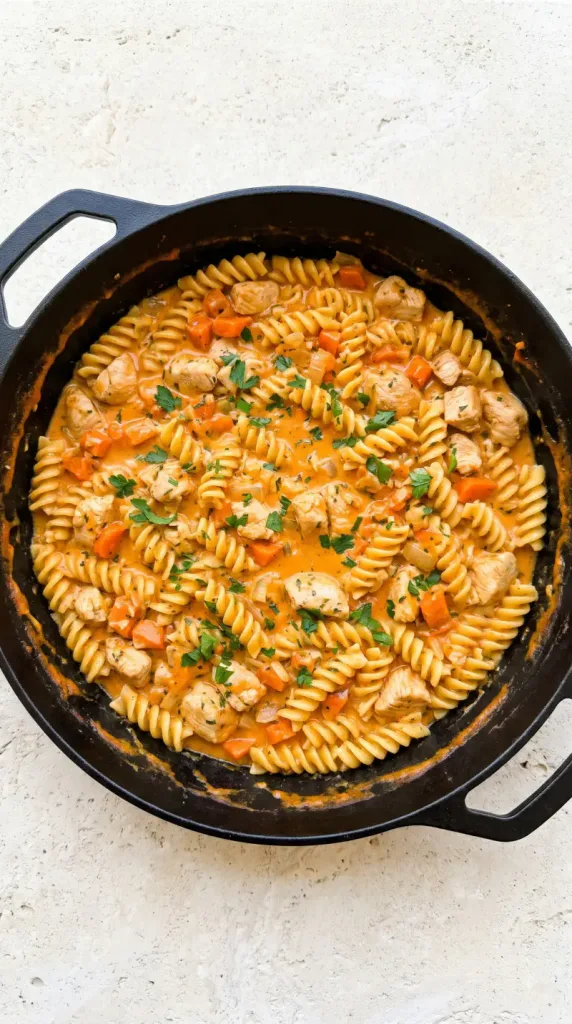
Creamy Turkey Pasta turns cooked turkey into a cozy one-pot dinner. Short pasta cooks right in the tomato sauce, so it picks up flavor as it softens. Garlic and herb cream cheese makes the sauce rich without a separate cream sauce. Finish with parsley and bring it straight to the table.
Why I Love This Recipe
This is a useful dinner for the days when cooked turkey is waiting in the fridge. The tomato keeps the sauce lively, while the cream cheese softens its sharp edge. There is just enough hands-on work to build flavor without making a pile of dishes.
- One pot: The pasta cooks with the turkey and sauce.
- A fresh use for leftovers: Tomato, garlic and herbs give cooked turkey a different flavor.
- Easy to adjust: Add a splash of stock when the pasta needs more liquid.
- Rich and filling: Turkey and cream cheese make each serving satisfying.
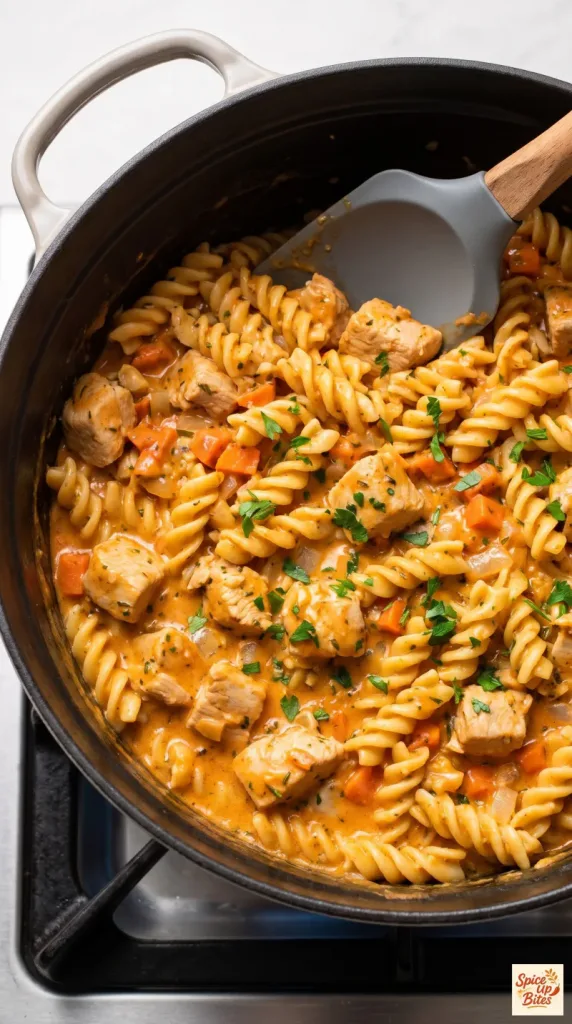
What You’ll Need
- Servings: 4
- Prep Time: 10 minutes
- Cook Time: 25 minutes
- Total Time: 35 minutes
- Pot: A wide 5- to 6-quart Dutch pot
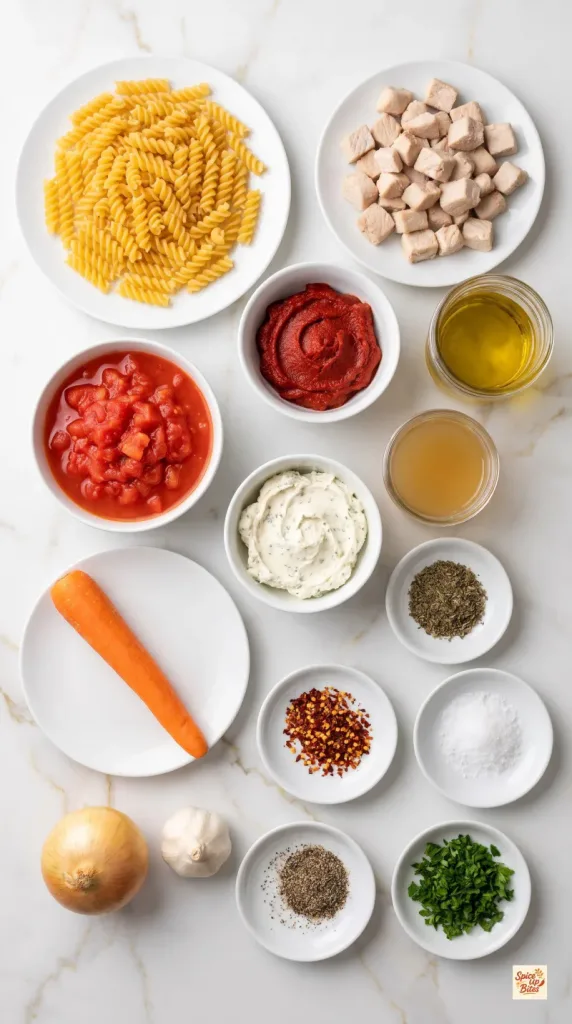
Ingredients
- 250 g dry fusillata pasta, a short, gently twisted tubular shape
- 1.1 lb (about 500 g) cooked leftover turkey, cut into irregular bite-size chunks; weigh it for accuracy, since cup measures vary
- 400 g canned chopped tomatoes, with their juices
- 2 tablespoons tomato paste
- 200 g garlic and herb cream cheese, softened and cut into small pieces
- 1 large carrot, peeled and finely diced
- 2 tablespoons olive oil
- 1 medium onion, diced, a little under 1 cup
- 4 garlic cloves, finely chopped
- 1 teaspoon dried basil
- 1/4 teaspoon red chili flakes, optional, or to taste
- 800 ml low-sodium chicken stock, plus up to 200 ml more only if needed
- 1/4 teaspoon salt, plus more to taste
- 1/4 teaspoon ground black pepper, plus more to taste
- 2 tablespoons chopped fresh parsley, for garnish
Tools You Need
- Wide 5- to 6-quart Dutch pot
- Wooden spoon or silicone spatula
- Kitchen scale and measuring jug
- Measuring spoons
- Cutting board and knife
- Instant-read food thermometer
How to Make Creamy Turkey Pasta
Keep the stock close by so you can loosen the sauce as the pasta cooks.
Step 1: Soften the Vegetables
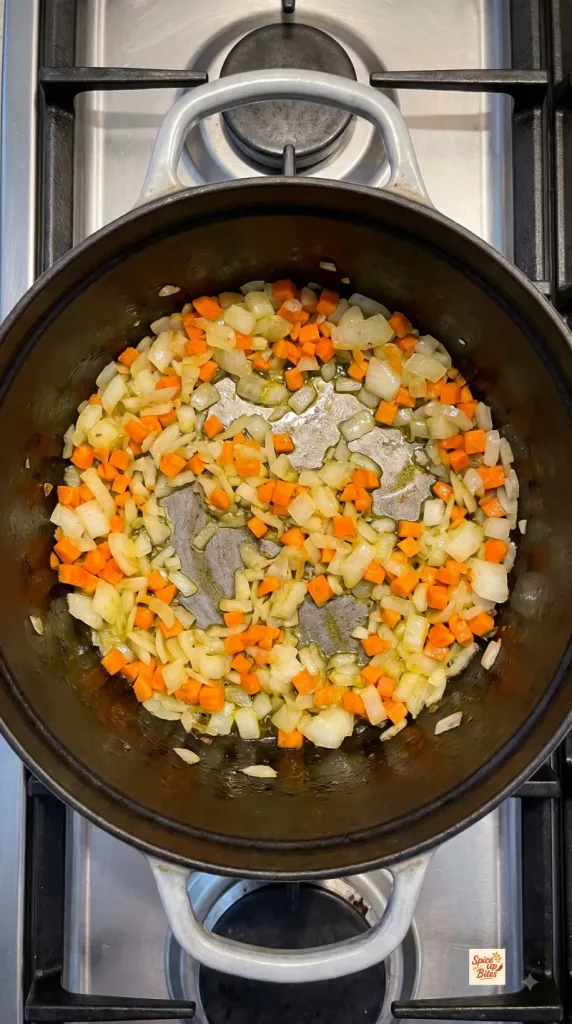
Heat 2 tablespoons olive oil in the Dutch pot over medium heat.
Add 1 medium diced onion and 1 large finely diced carrot. Cook for 5–6 minutes, stirring often, until the onion is soft and the carrot has begun to soften.
Step 2: Cook the Tomato Paste and Garlic
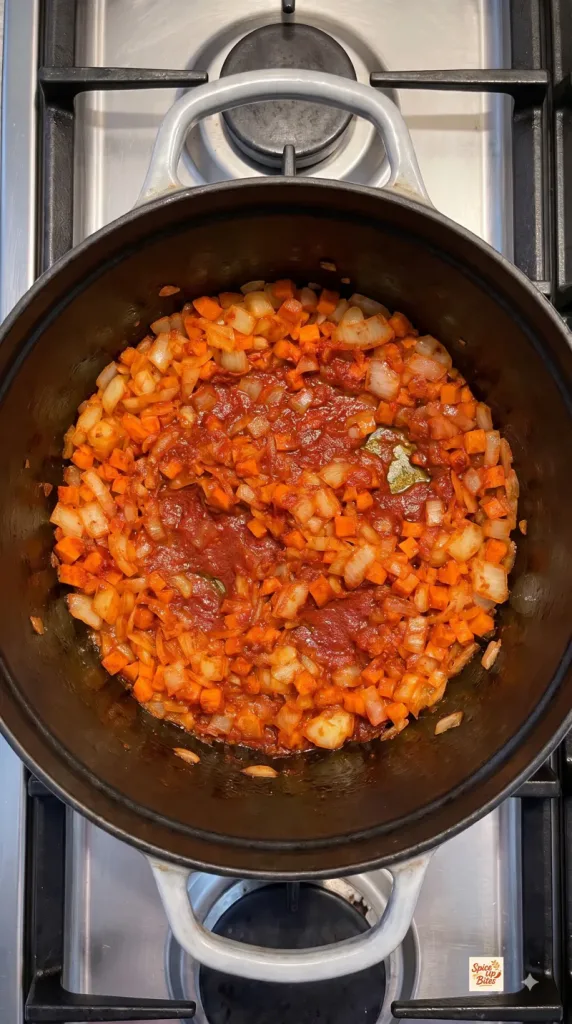
Stir in 2 tablespoons tomato paste and 4 finely chopped garlic cloves.
Cook for 1 minute, stirring so the garlic does not burn. The paste should coat the vegetables and smell rich.
Step 3: Build the Turkey Sauce
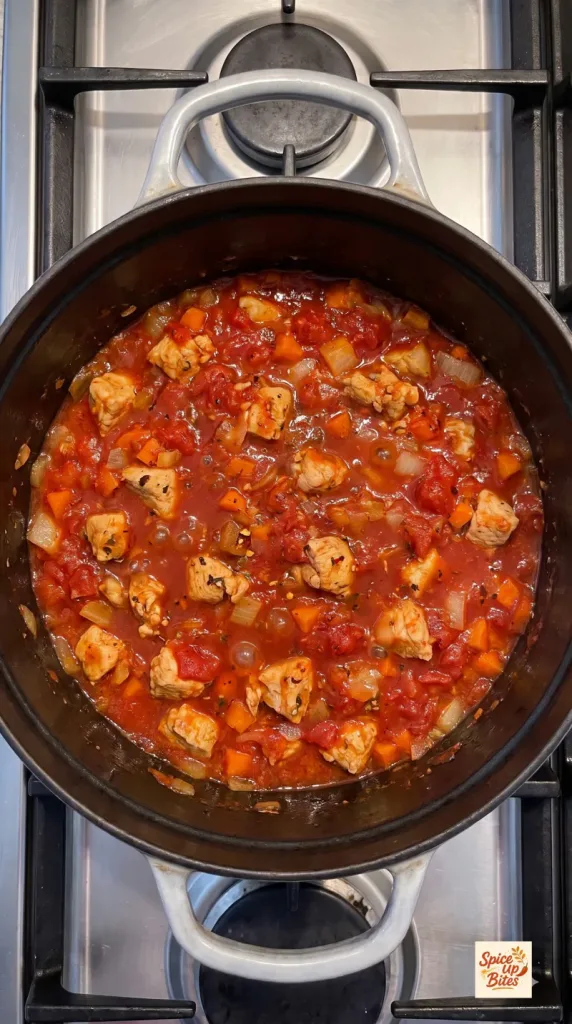
Add 400 g chopped tomatoes with their juices, 1.1 lb (about 500 g) cooked turkey chunks, 1 teaspoon dried basil, 1/4 teaspoon optional chili flakes, 1/4 teaspoon salt and 1/4 teaspoon ground black pepper.
Stir well and simmer for 3 minutes. Keep the heat gentle enough that the tomatoes do not catch on the bottom.
Step 4: Cook the Pasta in the Pot
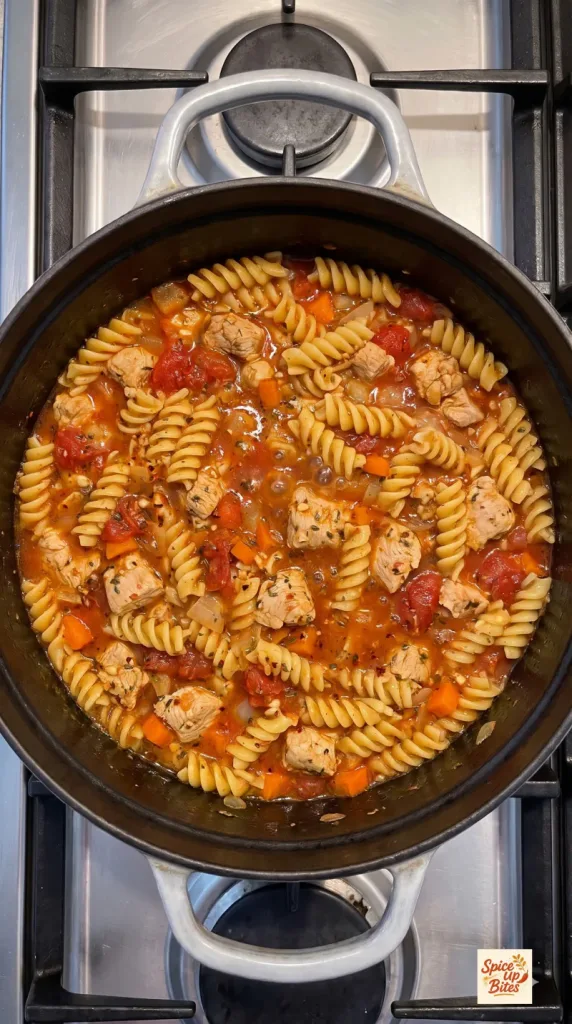
Stir in 250 g dry fusillata pasta and 800 ml chicken stock. Press the pasta into the liquid and bring to a steady, gentle simmer.
Cook uncovered for about 10–12 minutes, following the pasta package as a guide. Stir often, scraping along the bottom, until the pasta is just shy of al dente.
If the liquid reduces before the pasta softens, add some of the up to 200 ml extra stock, a small splash at a time. If plenty of liquid remains, let it reduce briefly before adding the cheese.
Step 5: Melt in the Cream Cheese
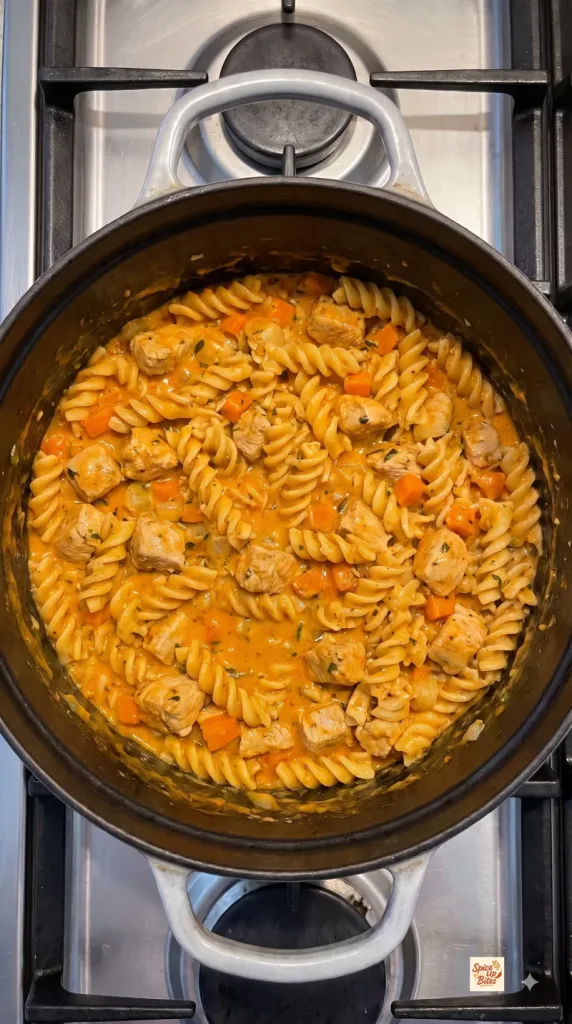
Reduce the heat to low and stir in 200 g garlic and herb cream cheese until it melts completely.
Simmer gently for 3–5 minutes, until the pasta is al dente and the sauce coats it generously. Check that the turkey and sauce reach 165°F (74°C) throughout.
Taste before adding any extra salt or pepper. Remove from the heat while the sauce is still a little loose; it thickens as it stands.
Step 6: Garnish and Serve
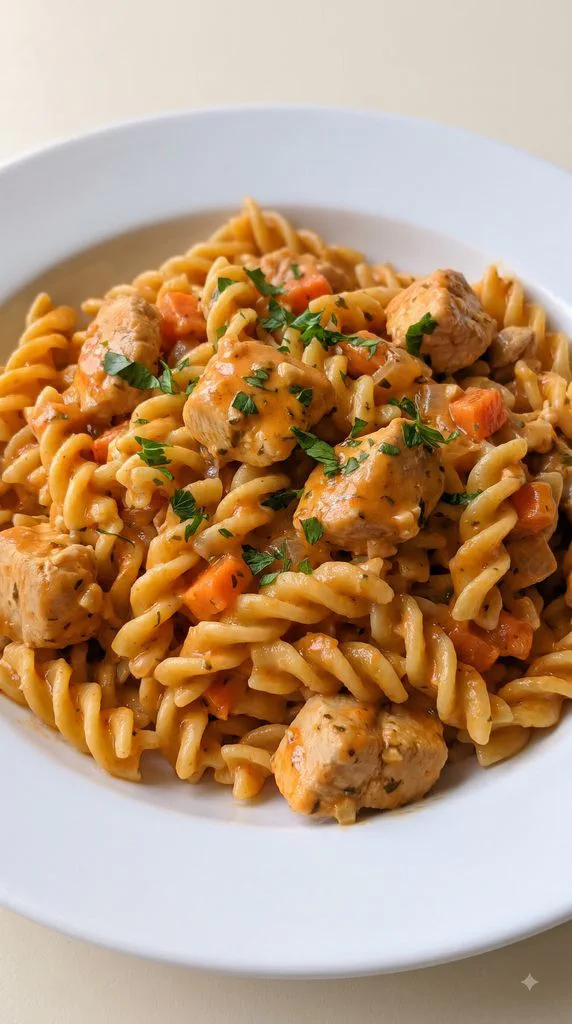
Sprinkle 2 tablespoons chopped fresh parsley over the finished pasta, then divide among 4 bowls or plates.
Serve promptly, while the sauce is creamy. A green salad or steamed green beans makes a simple optional side.
Why This Recipe Works (Quick Science)
Cooking pasta in the sauce releases starch into the liquid. That starch helps the tomato and stock turn into a sauce that clings to the pasta instead of running to the bottom of the bowl.
Cream cheese adds fat and milk solids, giving the sauce body and mellowing the tomatoes. Gentle heat helps it melt smoothly. Since the turkey is already cooked, it only needs reheating; a hard boil can make it dry.
Common Mistakes to Avoid
- Using raw turkey: This method starts with fully cooked turkey, not raw poultry.
- Leaving the pot unstirred: Pasta can stick before it has absorbed enough stock.
- Adding all the extra stock at once: Use small splashes so the finished sauce stays creamy rather than soupy.
- Boiling the cheese hard: Lower the heat before stirring it in.
- Cooking until the sauce looks dry: It will keep thickening after the pot comes off the burner.
Substitutions and Variations
Use 200 g Boursin in place of the garlic and herb cream cheese for a richer sauce. Its salt level differs, so taste before adjusting the seasoning.
Replace 2 tablespoons olive oil with 2 tablespoons unsalted butter if preferred. Keep the heat moderate so the butter does not brown too far.
Cooked chicken can replace the same weight of turkey. Other short pasta shapes work, but their cooking time and liquid needs may differ. Leave out the optional chili flakes for a milder sauce.
What to Serve With Creamy Turkey Pasta
A crisp green salad with a light vinaigrette balances the creamy sauce. Steamed green beans or roasted broccoli also work well. These are optional sides; the pasta is filling on its own.
Leftovers and Storage
Refrigerate in shallow airtight containers within 2 hours. Keep at 40°F (4°C) or below and use within 3 days, without extending the original cooked turkey’s safe storage window. Making pasta does not reset the age of the turkey.
Reheat only the portion needed with a splash of stock, stirring over gentle heat until it reaches 165°F (74°C). The pasta will be softer after reheating. Freezing is possible, but the cream cheese sauce may separate and the noodles may soften further.
Macros Information
Estimated per serving, based on four servings, regular garlic and herb cream cheese, lean cooked turkey and the initial stock amount; optional sides are excluded. Brands, turkey cuts and added salt change the values.
- Calories: 650 kcal
- Protein: 48 g
- Carbohydrates: 59 g
- Fat: 25 g
- Saturated Fat: 11 g
- Fiber: 5 g
- Sugar: 10 g
- Sodium: 850 mg
Frequently Asked Questions (FAQ)
Q: Can I use raw turkey?
A: Use fully cooked turkey for this recipe. Raw turkey needs a different cooking process and timing.
Q: What is fusillata?
A: It is a short tubular pasta with a gentle twist. Its ridges and curves hold the creamy sauce well.
Q: Do I boil the pasta first?
A: No. Add it dry so it cooks in the stock and tomato mixture.
Q: Can I use Boursin?
A: Yes. Replace the cream cheese with the same weight of Boursin and adjust the salt after it melts.
Q: Why is my sauce too thick?
A: The pasta keeps absorbing liquid. Stir in a small splash of stock until the sauce loosens.
Q: Why is my sauce thin?
A: The pot may have retained more liquid. Simmer gently for a little longer, stirring often, and remember that it thickens off the heat.
Q: Can I leave out the chili flakes?
A: Yes. They add gentle heat but are not needed for the sauce to work.
Q: Can I make this ahead?
A: It is creamiest just after cooking. If making it ahead, stop before the pasta gets too soft and loosen it with stock when reheating.
Final Thoughts
Creamy Turkey Pasta makes good use of cooked turkey with a simple tomato sauce and a creamy finish. Keep the simmer gentle and let the pasta tell you when it needs more stock. Leave a comment with your favorite way to use leftover turkey. Happy cooking!