
This Butternut Squash Cottage Cheese Soup is thick, creamy, and packed with cozy roasted flavor. The butternut squash gets roasted first until sweet and golden, then blended with cottage cheese for a smooth soup with much more protein than a classic squash soup.
Makes: 4 servings
Prep time: 15 minutes
Roast time: 35–40 minutes
Cook time: 15 minutes
Total time: About 1 hour 10 minutes
Protein: About 18–20g per serving, depending on your cottage cheese

Why I Love This Recipe
I love butternut squash soup, but there is one thing that always bugs me: a bowl can look rich and filling, then you realize it does not have much protein.
That is why I started adding more cottage cheese.
Instead of adding just a small scoop, this recipe uses 2 full cups. Once blended, the curds disappear into the soup. You get a thick, creamy texture without needing heavy cream.
And I do not skip the roasting. Roasting the squash until the edges turn brown makes a huge difference. It brings out its sweetness and gives the finished soup a deeper flavor.

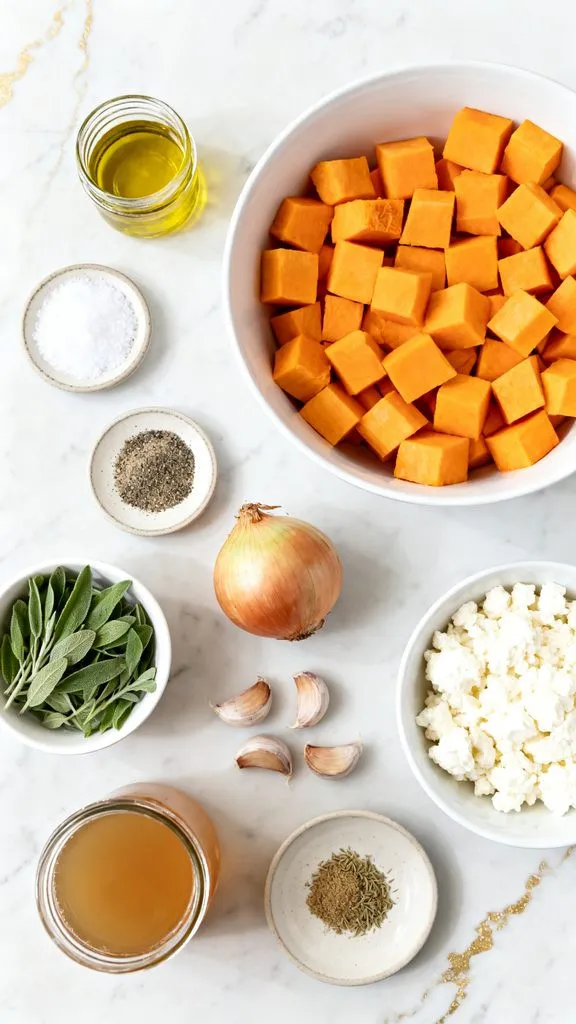
What You’ll Need
- 2 pounds butternut squash, peeled, seeded, and cut into 1-inch cubes
- 2 tablespoons extra-virgin olive oil, divided
- 1 teaspoon kosher salt, divided, plus more to taste
- 1/4 teaspoon ground black pepper, plus more for serving
- 1 medium onion, diced, about 1 1/2 cups
- 3 garlic cloves, minced
- 1 teaspoon chopped fresh sage, plus more for serving
- 3 cups low-sodium vegetable broth
- 2 cups full-fat cottage cheese
- 1/8 teaspoon ground nutmeg
Tools You’ll Need
- Large rimmed baking sheet
- Parchment paper
- Cutting board
- Chef’s knife
- Measuring cups
- Measuring spoons
- Large soup pot or Dutch oven
- Wooden spoon
- Immersion blender or high-speed blender
- Ladle
- Round serving bowls
Recipe and Instructions
Step 1: Roast the Butternut Squash
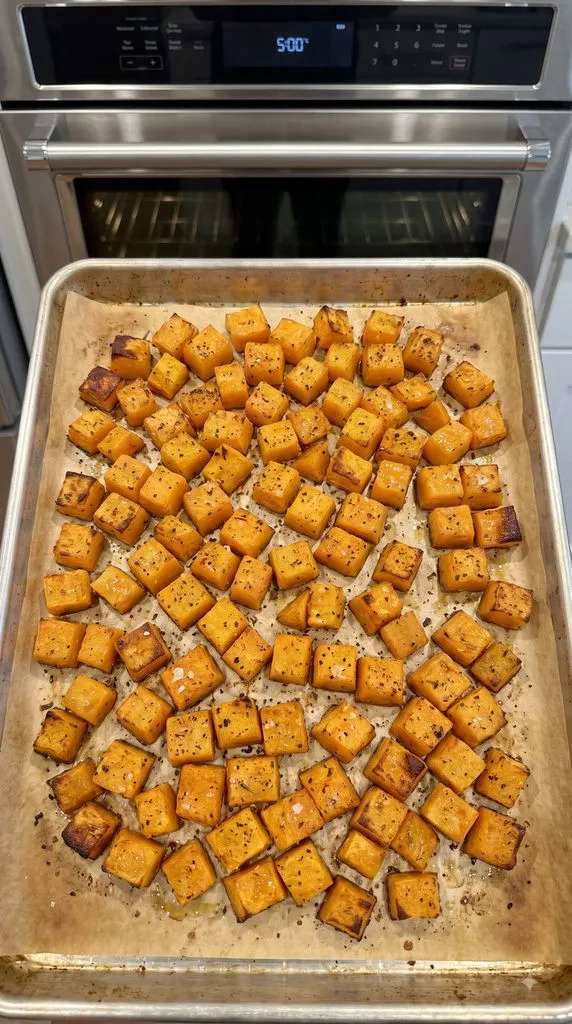
Heat the oven to 425°F (220°C). Line a large rimmed baking sheet with parchment paper.
Add 2 pounds peeled, seeded, 1-inch cubed butternut squash to the baking sheet. Drizzle with 1 tablespoon extra-virgin olive oil. Sprinkle with 1/2 teaspoon kosher salt and 1/4 teaspoon ground black pepper.
Toss until every piece has a light coating of oil and seasoning. Spread the squash into one layer. Leave a little space between the pieces when possible.
Roast for 35–40 minutes, turning the squash after about 20 minutes.
Do not pull it out just because it is soft. You want to see golden-brown, caramelized edges. That roasting is where a lot of the flavor comes from.
Step 2: Soften the Onion
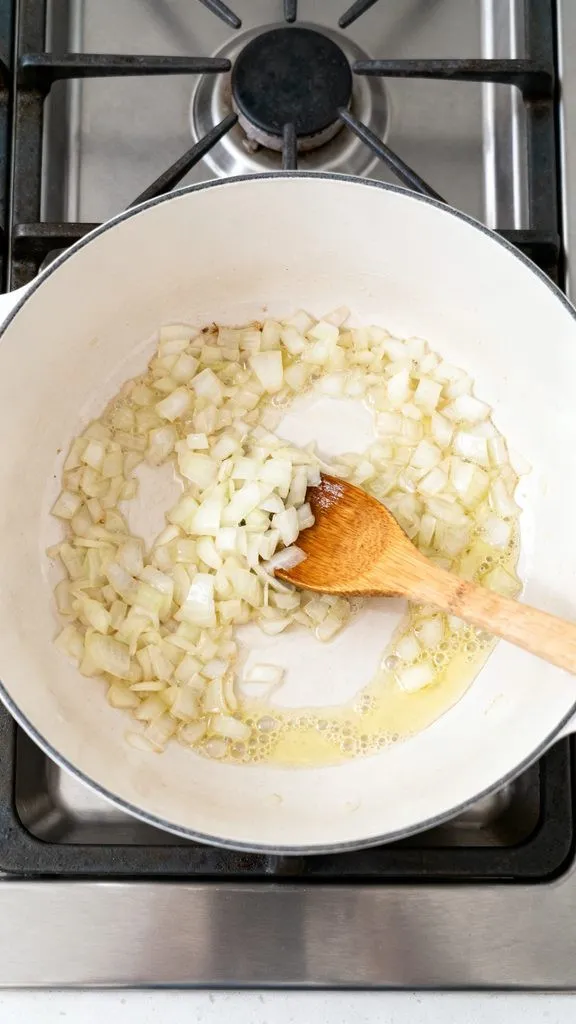
While the squash finishes roasting, place a large soup pot or Dutch oven over medium heat.
Add the remaining 1 tablespoon extra-virgin olive oil and 1 medium diced onion, about 1 1/2 cups.
Cook for 5–6 minutes, stirring often. The onion should become soft and translucent. A little golden color is fine, but do not let it burn.
Step 3: Add the Garlic and Sage
Add 3 minced garlic cloves and 1 teaspoon chopped fresh sage to the softened onion.
Cook for 30–60 seconds, stirring the whole time.
As soon as you can smell the garlic and sage, move on to the next step. Garlic burns quickly.
Step 4: Add the Roasted Squash and Broth
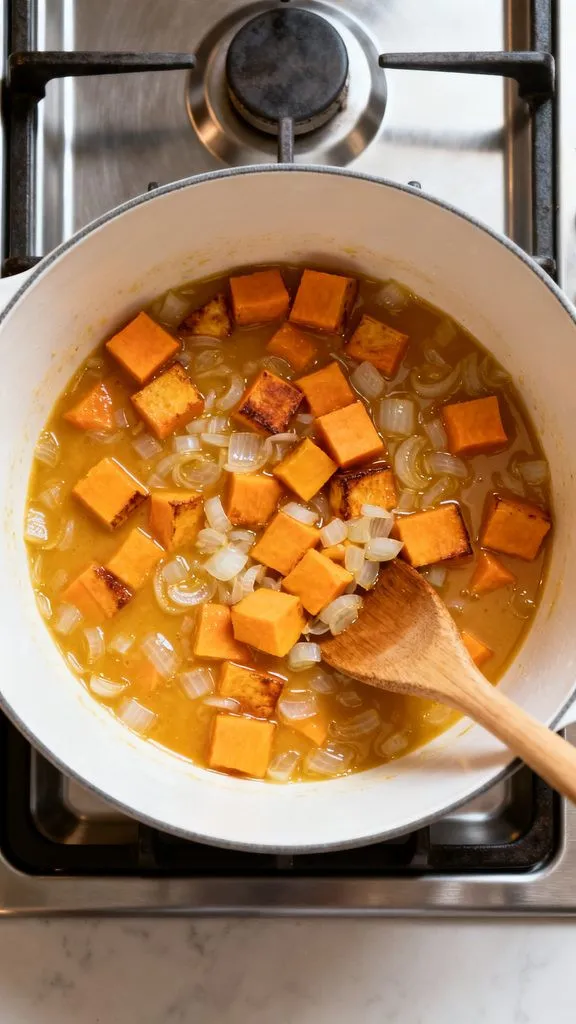
Add all of the roasted butternut squash from Step 1 to the onion mixture.
Pour in 3 cups low-sodium vegetable broth and stir.
Bring the soup to a gentle boil. Lower the heat and simmer for 8–10 minutes. The roasted squash should become extremely soft and easy to mash with the spoon.
Step 5: Add the Cottage Cheese
Take the pot off the heat.
Add 2 cups full-fat cottage cheese, the remaining 1/2 teaspoon kosher salt, and 1/8 teaspoon ground nutmeg.
Stir once so the cottage cheese is spread through the hot squash mixture.
Do not boil the soup after adding the cottage cheese. Gentle heat helps keep the finished soup smooth.

Step 6: Blend Until Silky Smooth
Use an immersion blender to blend the soup for 1–2 minutes, or until no cottage cheese curds or pieces of squash remain.
Keep blending until the soup is thick, silky, and evenly golden-orange.
If it feels too thick, add a little extra broth 1–2 tablespoons at a time. Do not add a large amount at once.
Taste and add a small pinch of extra salt only if needed.

Step 7: Warm and Serve
If needed, return the pot to the stove over low heat.
Warm for 2–3 minutes, stirring often. Do not bring it to a hard boil.
Divide the soup between 4 round serving bowls.
Finish with a little cream, chopped fresh chives, and extra ground black pepper.

Why This Recipe Works (Quick Science)
Roasting makes the squash taste better. At high heat, the outside of the squash starts to brown. This creates deeper, sweeter, more savory flavors that you will not get from simply boiling it.
Two cups of cottage cheese matter. One cup spread over several servings does not add much protein to each bowl. Using 2 cups for 4 servings gives each serving a much more useful protein boost.
Cottage cheese can become very smooth. Cottage cheese looks lumpy at first, but those curds break down when blended with the hot soup.
Less broth keeps it creamy. Because we increased the cottage cheese to 2 cups, the recipe uses 3 cups of broth. This keeps the soup thick instead of watery.
Gentle heat is better for dairy. Once the cottage cheese goes in, there is no need for a hard boil. Gentle heat helps keep the texture creamy.
Pro Tips
- Really roast the squash. Soft is not enough. Look for brown, caramelized edges.
- Do not crowd the baking sheet. Squash needs space for moisture to escape so it can roast instead of steam.
- Use full-fat cottage cheese for the creamiest result.
- Blend it well. If you can still see little white cottage cheese bits, keep blending.
- Check your cottage cheese label. Protein varies by brand, so choose one with more protein per serving if protein is important to you.
Common Mistakes
- Not roasting the squash long enough: Pale squash means less roasted flavor.
- Using too much broth: This can turn a thick, creamy soup into a thin one.
- Burning the garlic: Garlic only needs 30–60 seconds.
- Adding cottage cheese while the soup is boiling hard: Remove the pot from the heat first.
- Stopping the blender too soon: Give it enough time to break down the cottage cheese curds.
- Adding extra salt before tasting: Cottage cheese and broth both contain salt.
Substitutions and Variations
- Chicken broth: Replace the 3 cups vegetable broth with 3 cups low-sodium chicken broth.
- Lower-fat cottage cheese: You can use it, but full-fat gives a richer texture.
- Sage substitute: Use 1 teaspoon fresh thyme.
- Spicy version: Add 1/4 teaspoon red pepper flakes with the garlic.
- Sweeter roasted flavor: Roast a diced carrot with the squash.
- Extra protein: Choose a cottage cheese brand with around 14–15g protein per 1/2 cup.
What to Serve With
- Grilled chicken
- Turkey sandwich
- Crusty sourdough bread
- Garlic toast
- Grilled cheese
- Simple green salad
- Roasted Brussels sprouts
- Apple and walnut salad
- Toasted pumpkin seeds
Make-Ahead Tips
The squash can be roasted up to 2 days ahead. Let it cool and store it covered in the refrigerator.
You can also make the whole soup ahead. Keep it refrigerated and warm it gently when you are ready to eat.
The soup gets thicker as it sits. Add a splash of vegetable broth when reheating if needed.
Macros Information
The exact numbers depend heavily on the cottage cheese and broth you buy. Using full-fat cottage cheese with about 13g protein per 1/2 cup, one of 4 servings is roughly:
- Calories: 350–380
- Protein: 18–20g
- Carbohydrates: 40–43g
- Fat: 15–17g
- Fiber: 6–7g
- Sugar: 9–11g
For the most accurate macros, use the nutrition labels from your exact cottage cheese, broth, and other ingredients.
Leftovers and Storage
- Refrigerator: Store cooled soup in an airtight container for up to 4 days.
- Freezer: Freeze individual portions for up to 3 months.
- Thawing: Thaw overnight in the refrigerator when possible.
- Reheating: Heat slowly over low to medium-low heat and stir often.
- If it separates: Give it a strong whisk or quickly blend it again.
- If it gets too thick: Add vegetable broth a tablespoon or two at a time.
FAQ
Q: Does this soup actually have a good amount of protein?
A: Yes. This version uses 2 cups of cottage cheese and makes only 4 servings. Depending on the brand you use, each bowl should have roughly 18–20g of protein.
Q: Can you taste the cottage cheese?
A: The taste is mild. The roasted squash, onion, garlic, sage, and nutmeg are much more noticeable. Once blended, the cottage cheese mainly adds creaminess.
Q: Why do I have to roast the butternut squash?
A: Roasting browns the squash and brings out its natural sweetness. It gives the soup much more flavor than boiling the squash in broth.
Q: Can I use frozen butternut squash?
A: Yes. Roast it straight from frozen. It may need a little longer because frozen squash releases more water.
Q: Can I use pre-cut squash?
A: Yes. Measure out 2 pounds and make sure the pieces are close to 1 inch.
Q: Why is my soup grainy?
A: Blend it longer. The cottage cheese needs time to become completely smooth. Also, avoid boiling the soup hard after adding it.
Q: Can I use a regular blender?
A: Yes. Let the soup cool slightly first and work in batches. Be very careful when blending hot liquids.
Q: My soup is too thick. What should I do?
A: Add warm vegetable broth 1–2 tablespoons at a time, blend, and check the texture before adding more.
Q: Can I make it even higher in protein?
A: Yes. The easiest way is to choose cottage cheese with a higher protein count on the nutrition label. You can also serve the soup with grilled chicken or another protein-rich side.
Final Thoughts
This version gives cottage cheese a real job to do. Using 2 full cups makes the soup creamy while giving each bowl a much better protein boost.
The most important step is still the squash: roast it until you see those golden-brown edges. Then blend everything really well and keep the heat gentle once the cottage cheese goes in.
You will end up with a thick, silky bowl of roasted butternut squash soup that feels cozy but still brings a solid amount of protein to the meal. If you make it, leave a comment and share how yours turned out or any changes you tried.