
Loaded Baked Potatoes turn a simple oven potato into a hearty, cheesy meal. The skins bake up crisp while the centers stay soft and fluffy. Butter, sharp cheddar, bacon, sour cream, and green onions give every forkful a little of everything. Serve them as a filling lunch or a generous side for dinner.

Why I Love This Recipe
The best part of this recipe is the contrast: a salty, crisp skin around a tender center, with cool sour cream against warm melted cheese. You can prepare the toppings while the oven does most of the work.
- Simple ingredients: Everyday groceries make a filling plate.
- No scooping needed: The potatoes stay whole, with their centers fluffed right inside the skins.
- Easy to scale: Bake fewer potatoes for lunch or more for a shared dinner.
- Flexible serving: Enjoy a potato on its own or pair it with a main dish.

What You’ll Need
- Servings: 4, with 1 loaded potato per serving
- Prep Time: 15 minutes
- Cook Time: 63–80 minutes, including melting the cheese; bacon cooks during baking
- Total Time: 78–95 minutes
- Oven Temperature: 425°F (220°C)
- Baking Sheet: Large rimmed metal baking sheet, unlined
Ingredients
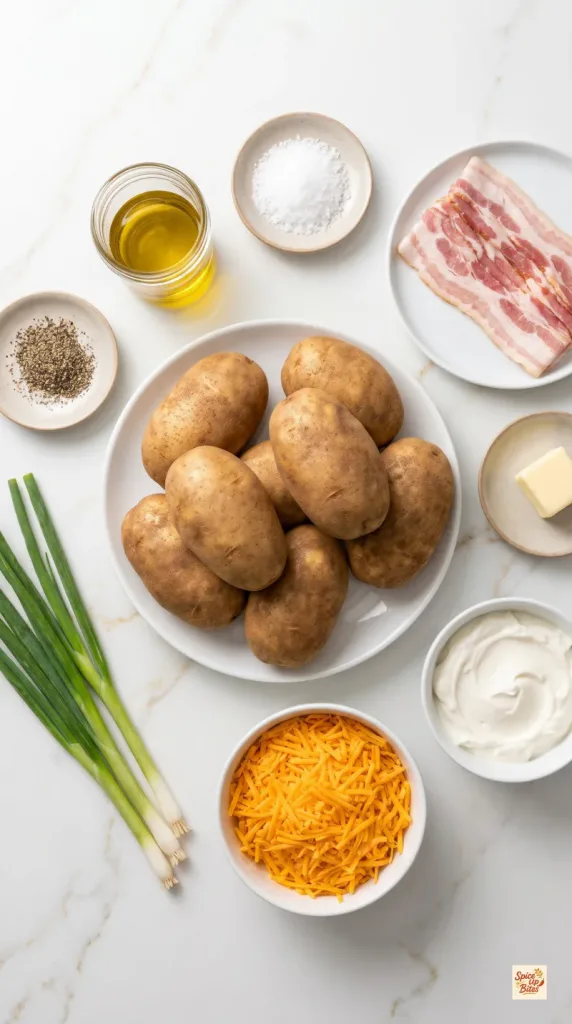
- 4 large russet potatoes, 10–12 ounces each, about 2 1/2–3 pounds total
- 1 tablespoon olive oil
- 1 teaspoon kosher salt, divided
- 1/4 teaspoon ground black pepper
- 6 slices regular-cut bacon, about 6 ounces raw
- 4 tablespoons unsalted butter, cut into 4 portions
- 1 cup freshly shredded sharp cheddar cheese, about 4 ounces
- 1/2 cup sour cream
- 2 green onions, thinly sliced, about 1/4 cup
Tools You Need
- Oven
- Large rimmed metal baking sheet
- Large skillet
- Tongs and a paper towel-lined plate
- Fork and small sharp knife
- Box grater
- Measuring spoons and cups
- Oven mitts
How to Make Loaded Baked Potatoes
Start the potatoes first, then get the toppings ready while they bake.
Step 1: Prepare the Potatoes
Heat the oven to 425°F (220°C) with a rack in the middle.
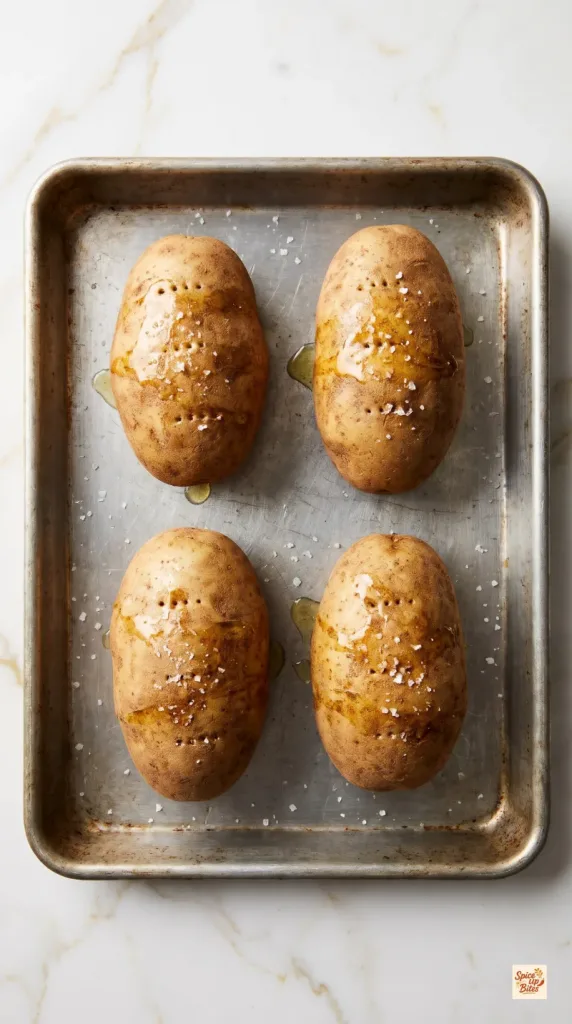
Scrub 4 large russet potatoes, 10–12 ounces each, then dry them thoroughly. Pierce each potato several times with a fork.
Rub the skins with 1 tablespoon olive oil and sprinkle them evenly with 3/4 teaspoon kosher salt.
Place the potatoes apart on a large, unlined rimmed metal baking sheet. Leave them uncovered; do not wrap them in foil.
Step 2: Bake Until Tender
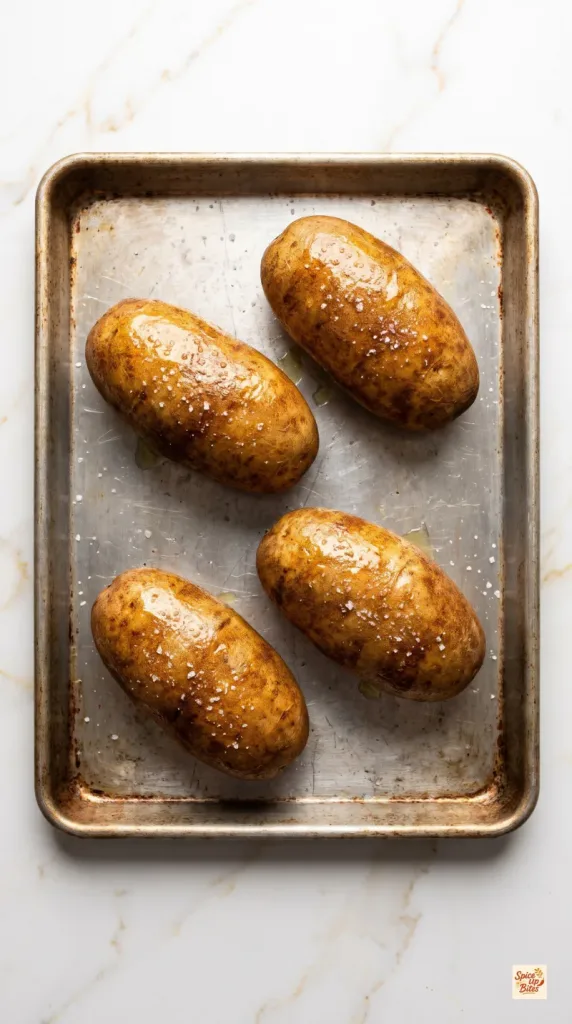
Bake the prepared 4 russet potatoes for 60–75 minutes, turning them once after 30 minutes.
Check the largest potato: a thin knife should slide into its center with very little resistance, and the skin should feel dry and crisp. Add 5–10 minutes if the center is still firm; larger potatoes may need extra time.
Step 3: Cook the Bacon
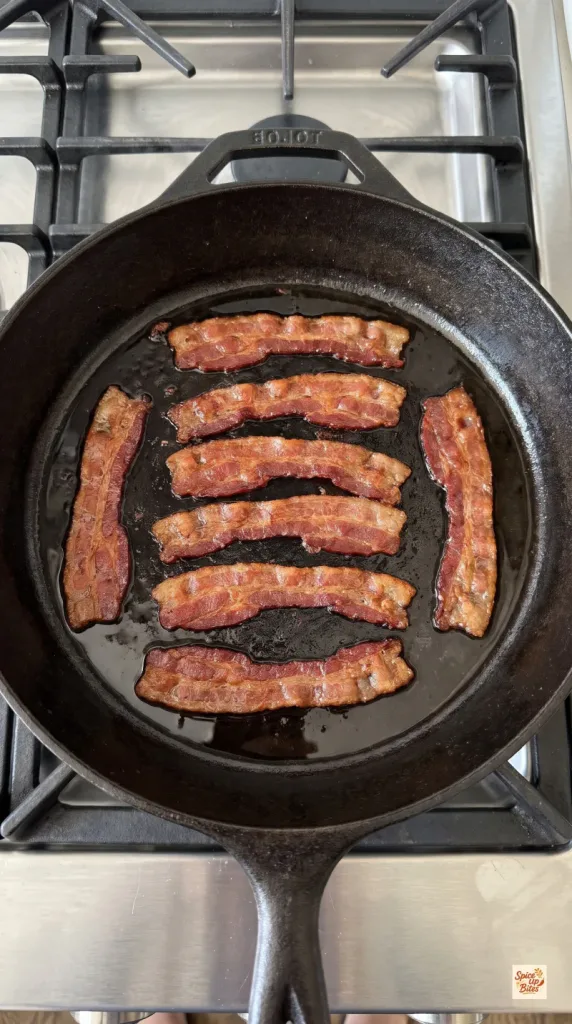
While the potatoes bake, lay 6 slices regular-cut bacon, about 6 ounces, in a large cold skillet. Set it over medium heat.
Cook for 8–12 minutes, turning as needed, until the bacon is browned and crisp. Adjust the heat if it browns too quickly.
Transfer the bacon to a paper towel-lined plate to drain, then crumble it. Keep the cooked bacon separate from raw bacon packaging and utensils.
Step 4: Open and Add Cheese
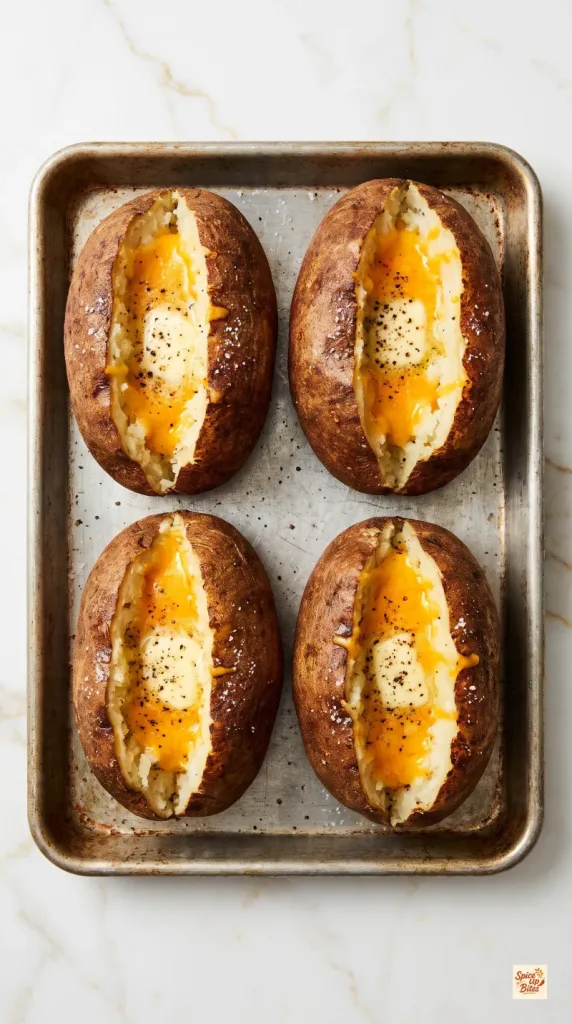
Keep the oven at 425°F (220°C). Carefully cut a lengthwise slit into the top of each hot potato, leaving the bottom skin connected. Use a folded towel to gently press the ends toward each other.
Fluff the flesh inside each opening with a fork without scooping it out. Divide 4 tablespoons unsalted butter, the remaining 1/4 teaspoon kosher salt, and 1/4 teaspoon ground black pepper among the potatoes.
Divide 1 cup shredded sharp cheddar cheese among the openings. Return the same baking sheet to the oven for 3–5 minutes, until the cheese is melted and glossy.
Step 5: Load and Serve
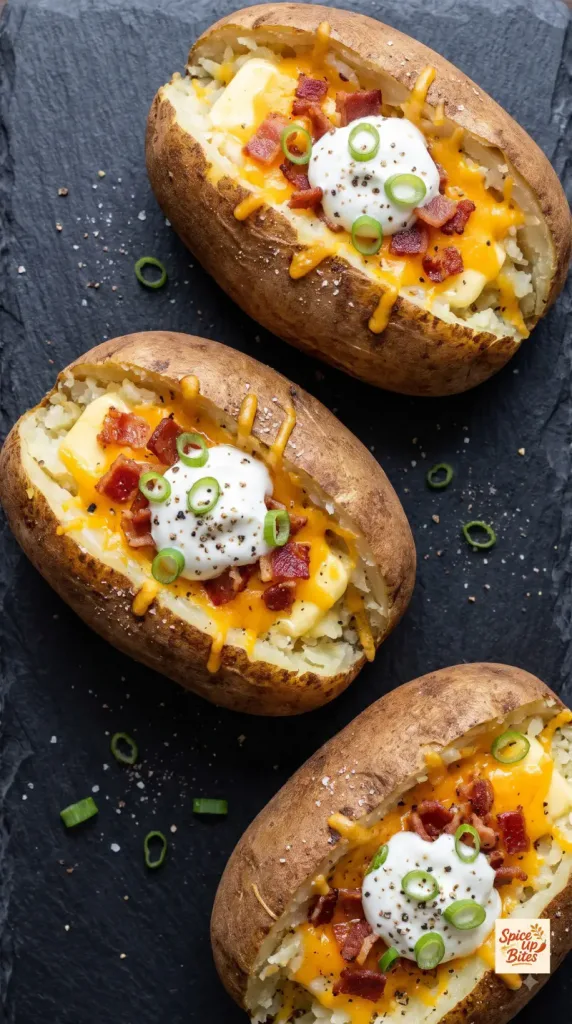
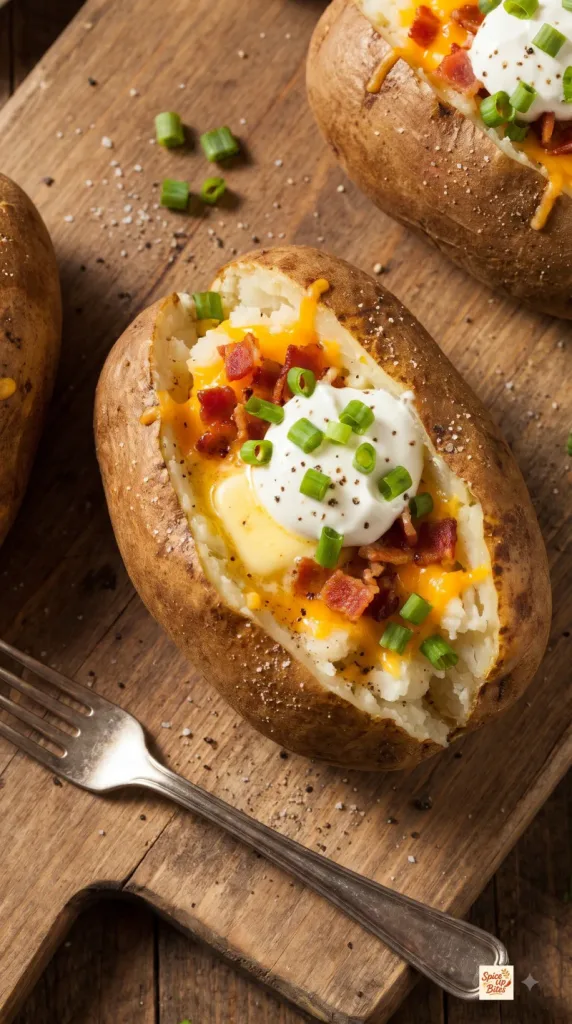
Divide the cooked crumbles from 6 slices bacon among the potatoes. Add 2 tablespoons sour cream to each potato, using 1/2 cup total.
Scatter 2 thinly sliced green onions, about 1/4 cup, over the tops. Serve right away while the centers are hot and the bacon is crisp.
For a fuller meal, offer a simple green salad, grilled chicken, or roasted broccoli alongside. These extras are optional.
Why This Recipe Works (Quick Science)
Russets have plenty of starch, which helps their cooked flesh separate into fluffy flakes. Baking them uncovered lets surface moisture escape, so the skins become crisp instead of soft and damp.
Opening the potatoes while hot releases trapped moisture. Gentle fluffing keeps the flesh light; heavy stirring can make it sticky. Butter melts into the warm centers, and a brief return to the oven melts the cheddar without heating the sour cream or softening the bacon.
Common Mistakes to Avoid
- Leaving the skins wet: Dry the potatoes before adding oil so the skins can crisp.
- Wrapping in foil: Foil traps moisture and softens the skin.
- Trusting the clock alone: Size affects baking time. Check that the center is fully tender.
- Scooping out the flesh: This recipe needs a simple split and fluff, not a twice-baked filling.
- Adding all toppings before baking: Sour cream and green onions taste fresher when added at the end.
- Overworking the center: Fluff lightly instead of beating the flesh into a paste.
Pro Tips
Choose potatoes of similar size so they finish close together. Grate the cheddar from a block for easy melting. Have the toppings ready before opening the potatoes so the centers stay hot while you load them.
What to Serve With Loaded Baked Potatoes
A green salad brings a fresh, crisp contrast to the rich toppings. Grilled chicken works well when you want extra protein, and roasted broccoli adds a simple vegetable side. You can also serve a smaller potato beside steak. The potato itself is filling enough for a casual lunch.
Leftovers and Storage
For the best texture, keep leftover potatoes and toppings separate. Refrigerate within 2 hours in covered containers and use within 3–4 days.
Reheat potatoes without sour cream or green onions in a 350°F (175°C) oven until the center reaches 165°F (74°C), usually 20–30 minutes, depending on size. Add fresh cold toppings after reheating. A microwave is quicker, but the skin will soften.
Macros Information
Estimated per loaded potato, based on 4 servings. Brands, potato size, and how much bacon fat drains off will change these estimates.
- Calories: 690
- Protein: 22 g
- Carbohydrates: 73 g
- Fat: 35 g
- Saturated Fat: 18 g
- Fiber: 5 g
- Sugar: 4 g
- Sodium: 1,020 mg
Frequently Asked Questions (FAQ)
Q: Which potatoes work best?
A: Large russets are a good choice because their centers bake up fluffy and their skins hold the toppings well.
Q: Should I wrap the potatoes in foil?
A: Leave them uncovered for crisp skins. Foil holds moisture against the potatoes and gives softer skins.
Q: How do I know they are fully cooked?
A: A thin knife should slide easily into the center. If there is a firm spot, keep baking and check again.
Q: Can I make them ahead?
A: Yes. Bake and refrigerate the potatoes promptly, then reheat them thoroughly before adding cheese and fresh toppings. The skins are best just baked.
Q: Can I use pre-shredded cheese?
A: Yes, though freshly grated cheese usually melts more smoothly. Use the same amount.
Q: Can I leave out the bacon?
A: Yes. The butter, cheese, sour cream, and green onions still make a tasty topping. The nutrition estimates will change.
Q: Are these twice-baked potatoes?
A: No. The flesh stays inside the whole potato and is gently fluffed. The short second oven visit only melts the cheese.
Q: Can I use smaller potatoes?
A: Yes. Start checking them earlier and divide the toppings to suit their size. Smaller servings will have different nutrition values.
Final Thoughts
Loaded Baked Potatoes bring crisp skins, fluffy centers, and favorite savory toppings to the same plate. Set out the toppings before the potatoes finish, and dinner comes together with very little fuss. Leave a comment and share what you like to add to yours.
Happy cooking!