
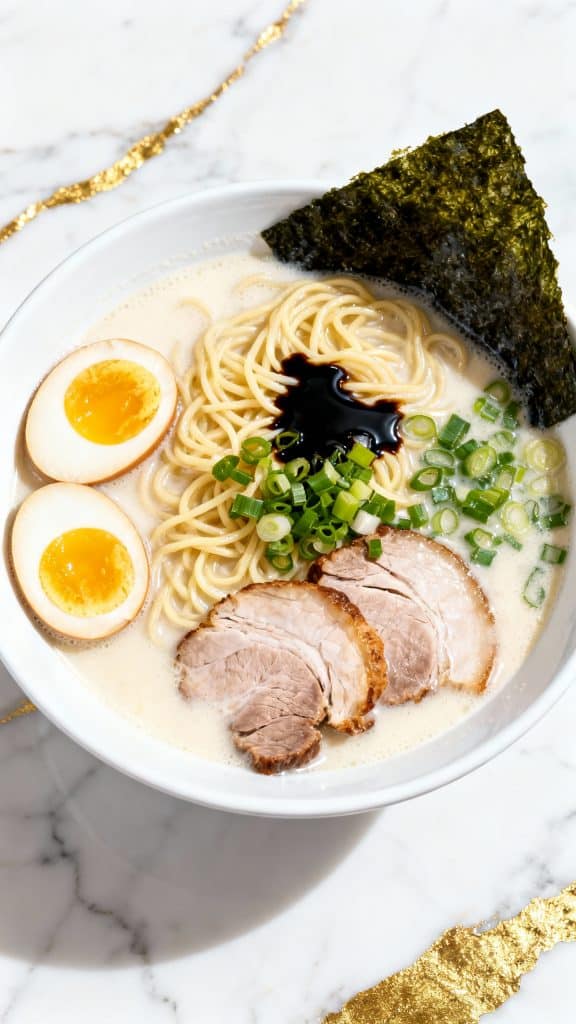
There’s just something magical about a big, warm bowl of tonkotsu ramen. It’s rich, creamy, savory, and totally satisfying.
The broth is the star—it’s made by simmering pork bones for hours until it turns milky white and deeply flavorful.
This recipe is a little bit of a project, but it’s so worth it. You’ll feel like you just made restaurant-quality ramen right in your own kitchen.

Why I Love This Recipe
This recipe takes me back to the first time I tried real ramen at a tiny spot in Tokyo. I couldn’t believe how deep the flavor was—it felt like the broth had been made with care and time, not just ingredients.
- The broth is creamy without using any cream—just pork bones and time
- The noodles soak up all that umami-rich flavor
- The toppings are super customizable
- It’s honestly impressive to make at home and so satisfying
What You’ll Need
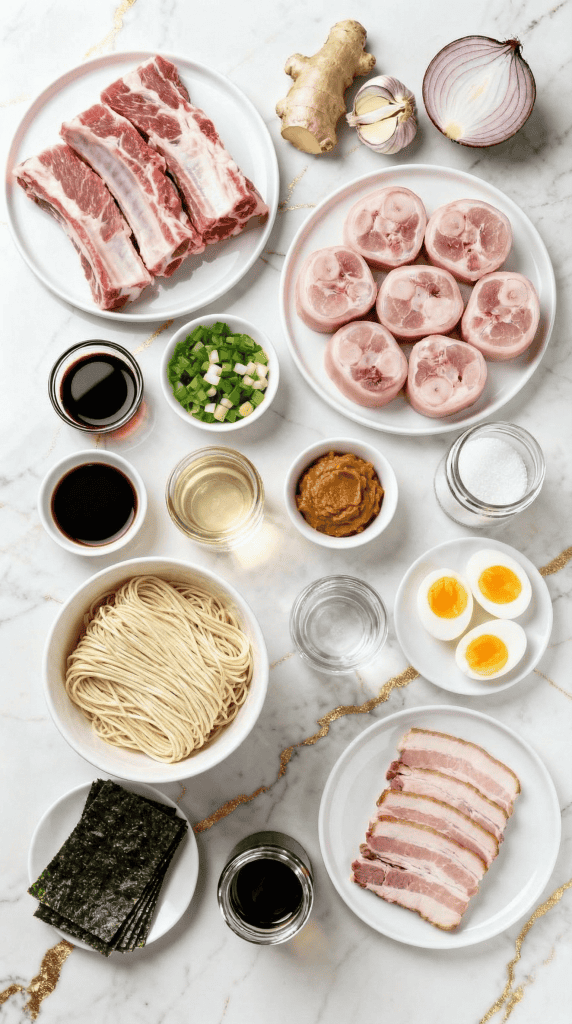
Broth Ingredients:
- 4 lbs pork neck bones
- 1 lb pig trotters (cut into pieces)
- 1 onion, halved
- 1 head garlic, halved crosswise
- 2-inch piece of ginger, sliced
- 2 green onions (scallions), cut into chunks
- Water (enough to cover)
Tare (Seasoning Sauce):
- 1/4 cup soy sauce
- 2 tbsp mirin
- 1 tbsp sake
- 1 tbsp miso paste
- 1 tsp sugar
Noodles & Toppings:
- 4 servings fresh ramen noodles
- 4 soft-boiled eggs, halved
- 8 slices chashu pork (homemade or store-bought)
- 2 green onions, finely sliced
- 4 sheets nori (seaweed)
- Black garlic oil (optional)
Tools You’ll Need
- Large stock pot (minimum 8-quart)
- Fine mesh strainer
- Cutting board
- Chef’s knife
- Ramen bowls
- Slotted spoon
- Small saucepan
- Tongs
- Ladle
Pro Tips
- Boil bones first to get a cleaner broth. It makes a big difference in taste and look.
- Don’t skip the tare—it’s what gives the broth its seasoning.
- Make your soft-boiled eggs a day ahead and marinate them in soy sauce for extra flavor.
- Keep the broth simmering hard. A rolling boil breaks the bones down best.
- You can freeze extra broth for future bowls.
Substitutions and Variations
- No chashu? Use sliced roast pork or even rotisserie chicken
- No black garlic oil? Toast some garlic in sesame oil for a quick hack
- Vegetarian version? Use miso broth with mushroom and seaweed
- Can’t find ramen noodles? Use thin spaghetti in a pinch
Make-Ahead Tips
- The broth can be made 2–3 days ahead and stored in the fridge or frozen
- Tare keeps in the fridge for up to 2 weeks
- Eggs can be made 1–2 days ahead
Servings and Time
Servings: 4
Total Time: 12 hours (most of it simmering)
Active Time: 45 minutes
Macros (per serving – estimate)
- Calories: ~700
- Protein: 35g
- Fat: 40g
- Carbs: 45g
Why This Recipe Works (Quick Science)
Tonkotsu ramen broth gets its creamy white look and deep flavor from emulsification. Simmering pork bones at a hard boil breaks down collagen, marrow, and fat. These particles stay suspended in the broth, giving it that signature milky texture without needing dairy. The high heat is key—it forces everything to break down quickly.
Common Mistakes
- Simmering too gently: You need a rolling boil, not just a simmer
- Skipping the pre-boil: This helps remove impurities that make the broth cloudy in a bad way
- Under-seasoning: The broth on its own is mild—you need tare to bring it to life
- Not skimming foam early on: This keeps the broth cleaner
What to Serve With
- Japanese pickles
- Gyoza (pan-fried dumplings)
- Seaweed salad
- Iced green tea or barley tea
Instructions
Step 1: Boil and Clean the Bones
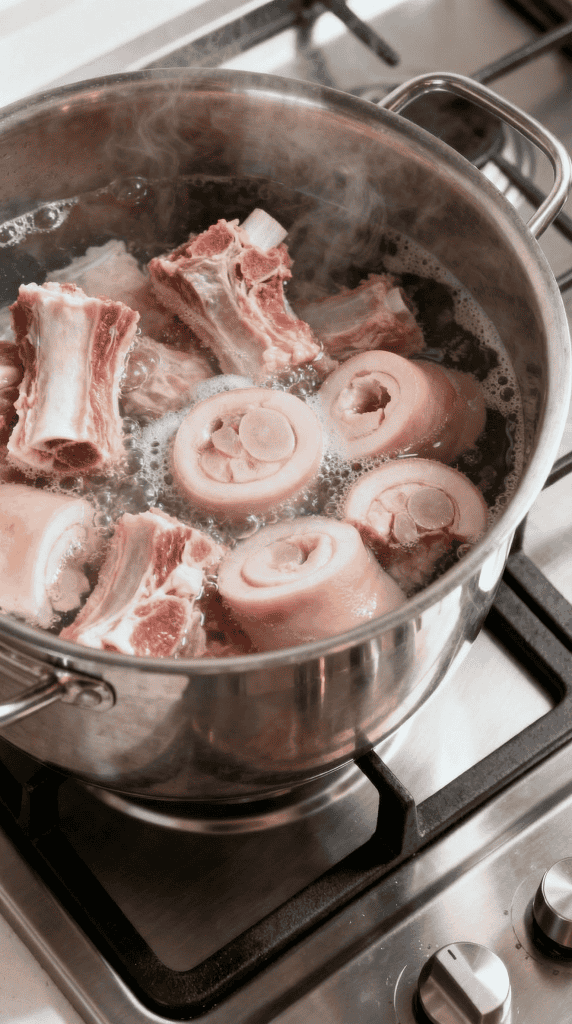
Place 4 lbs pork neck bones and 1 lb pig trotters in a large stock pot. Cover with cold water and bring to a boil. Once boiling, let it go for 10 minutes. Skim off scum, then drain and rinse bones under cold water.
Step 2: Simmer the Broth
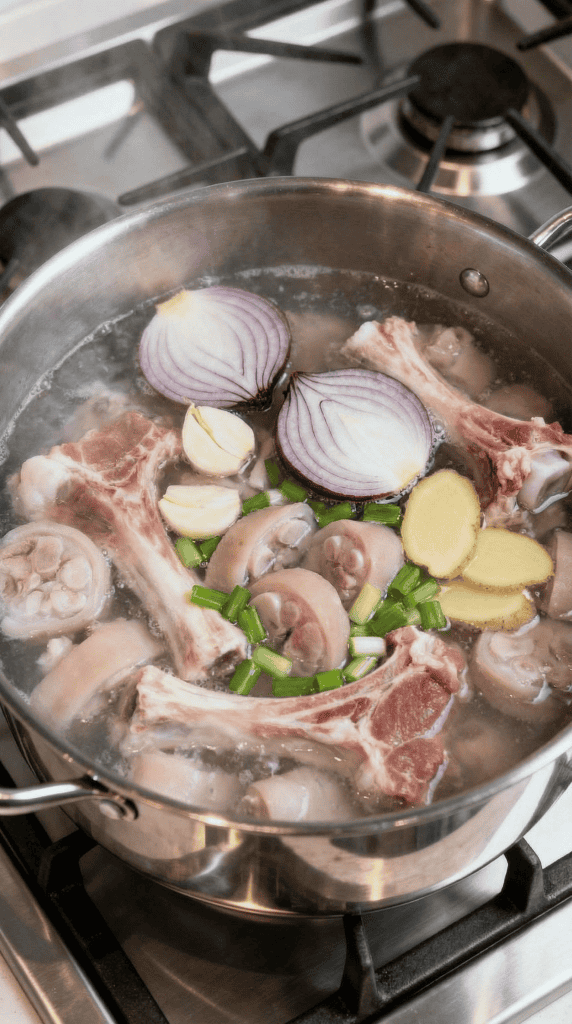
Add cleaned bones back to the pot. Add enough water to fully cover. Toss in 1 halved onion, 1 halved head of garlic, 2-inch sliced ginger, and 2 green onions. Bring to a hard boil and keep it there for 10–12 hours, topping off water as needed.
Step 3: Strain the Broth
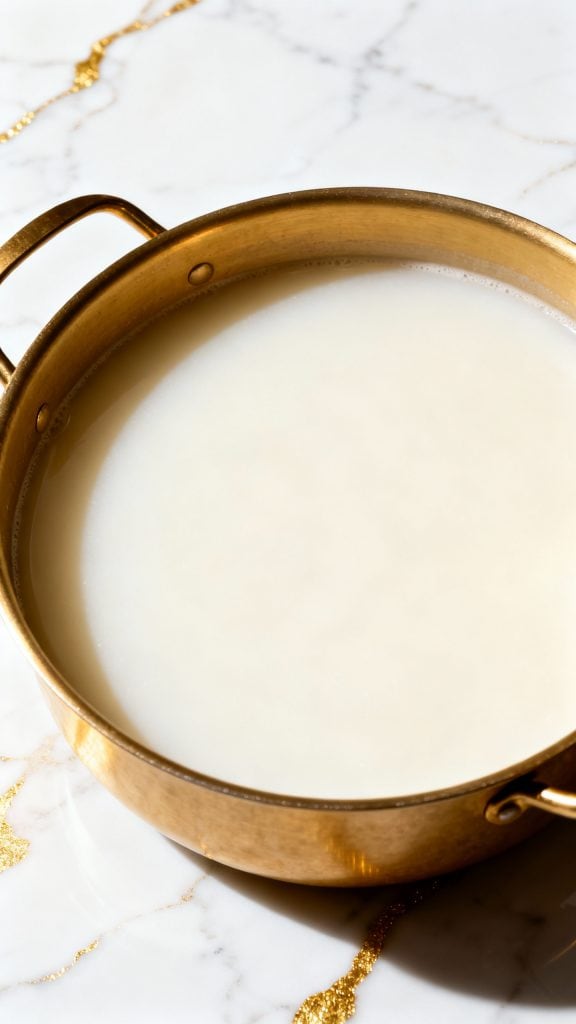
After simmering, pour the broth through a fine mesh strainer into a clean pot. Discard solids. You should have a creamy white broth.
Step 4: Make the Tare
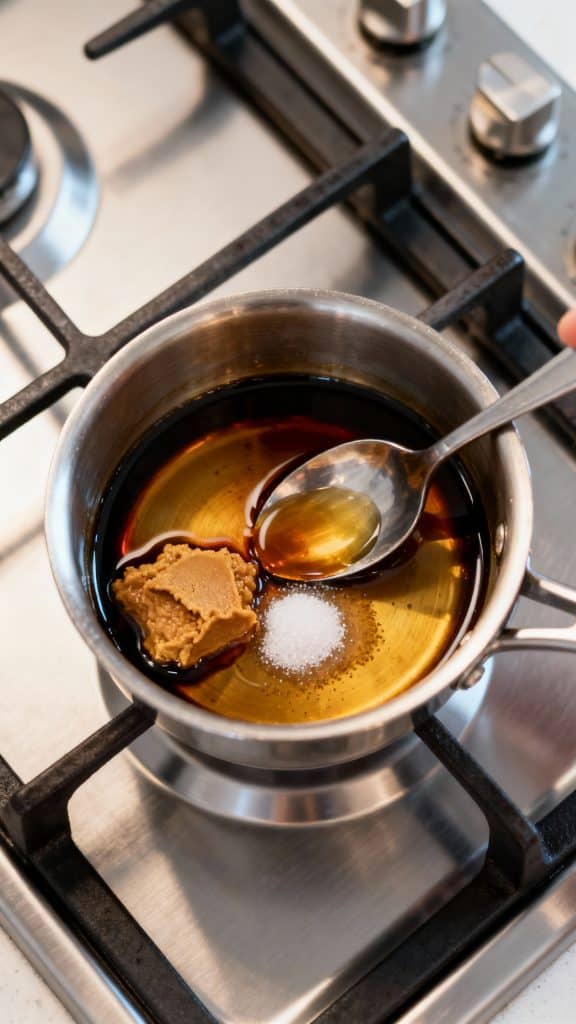
In a small saucepan, mix 1/4 cup soy sauce, 2 tbsp mirin, 1 tbsp sake, 1 tbsp miso paste, and 1 tsp sugar. Warm over low heat until combined.
Step 5: Cook the Noodles
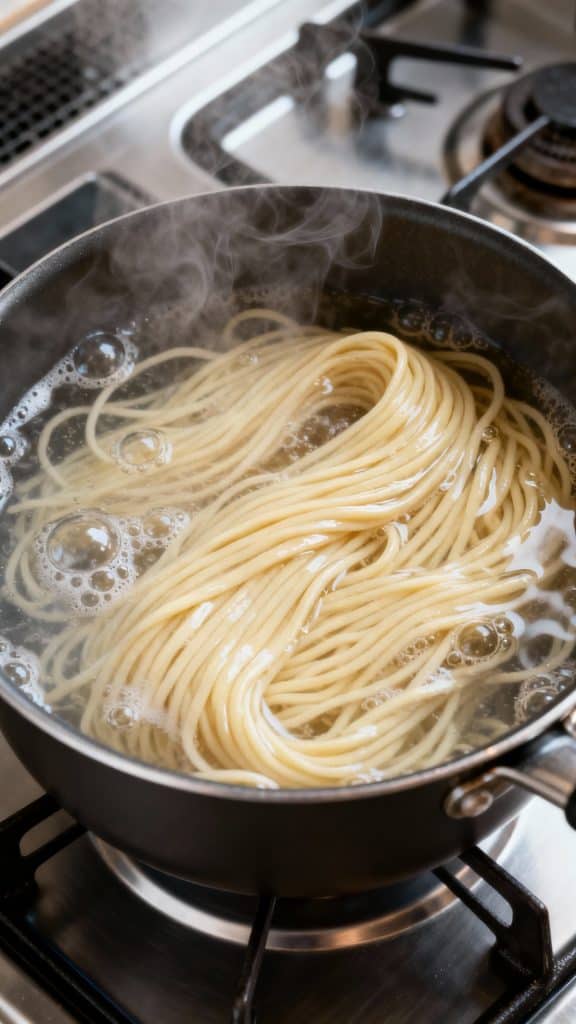
Boil fresh ramen noodles (4 servings) according to package directions. Drain and set aside.
Step 6: Assemble the Bowl
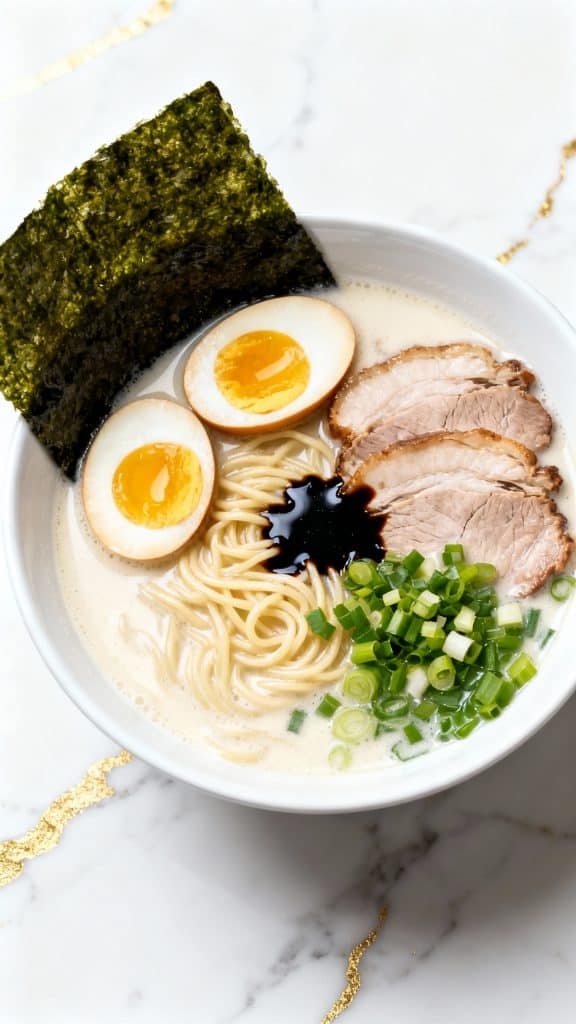
In each bowl, add 2 tbsp tare, then pour in 2 cups hot broth. Add cooked noodles. Top with 2 slices of chashu, 2 egg halves, chopped green onion, 1 sheet of nori, and a drizzle of black garlic oil (optional).
Leftovers & Storage
- Store leftover broth in the fridge for up to 4 days or freeze for 3 months
- Keep tare in a sealed jar in the fridge up to 2 weeks
- Cook noodles fresh each time for best texture
FAQ
Can I make the broth in a pressure cooker?
Yes! Cook for about 2 hours on high pressure and let it naturally release.
Can I use store-bought broth?
Not for this one—it won’t have the same richness. But you can use a store-bought tonkotsu base as a shortcut.
What if I don’t eat pork?
Try chicken bones with miso and mushrooms for a similar feel.
Why does my broth look gray or dull?
Probably not boiling hard enough or skipped the first blanch step.
Final Thoughts
Tonkotsu ramen is one of those dishes that really shows how much flavor you can get from simple ingredients and time. Making this at home gives you a deep appreciation for every bowl you’ve ever ordered at a ramen shop. I hope you give this a try—it’s a great weekend cooking project and totally pays off in flavor.