
Ham Cheese Croissant Casserole turns buttery croissants into a warm, savory bake with tender ham and melted cheese. The edges stay golden while the middle becomes soft and custardy. A little Dijon adds a gentle tang without taking over. Serve it for brunch, or pair it with a crisp salad for an easy supper.

Why I Love This Recipe
This bake has the comfort of a breakfast casserole with the rich flavor of a ham and cheese croissant. Cutting the bread into chunks helps spread the filling through every serving. There is no need to make pastry or cook a separate sauce.
- Simple prep: Mix the filling in the dish and whisk the custard in a bowl.
- Good use for leftovers: Slightly stale croissants soak up the egg mixture well.
- A balanced cheese blend: Swiss brings a nutty flavor, while cheddar adds a little sharpness.
- Flexible timing: Assemble it ahead and bake when you need it.

What You’ll Need
- Servings: 8
- Prep Time: 20 minutes
- Soaking Time: 20 minutes
- Cook Time: 45–55 minutes
- Rest Time: 10 minutes
- Total Time: 1 hour 35 minutes–1 hour 45 minutes
- Oven Temperature: 350°F (175°C)
- Pan Size: 9×13-inch baking dish
Ingredients
- 1 tablespoon unsalted butter, softened, for the dish
- 8 medium plain baked croissants, about 14 ounces (400 g) total, preferably a day old
- 8 ounces (225 g) fully cooked ham, thinly sliced and cut into small pieces
- 4 ounces (115 g) Swiss cheese, shredded, divided
- 4 ounces (115 g) sharp cheddar cheese, shredded, divided
- 6 large eggs
- 1 1/2 cups whole milk
- 1/2 cup heavy cream
- 1 tablespoon Dijon mustard
- 1/4 teaspoon fine salt
- 1/2 teaspoon ground black pepper
- 1 tablespoon finely chopped fresh parsley
Use plain bakery croissants rather than raw refrigerated crescent dough. Weighing the croissants helps keep the bread-to-custard balance steady. If your ham is very salty, omit the added salt.

Tools You Need
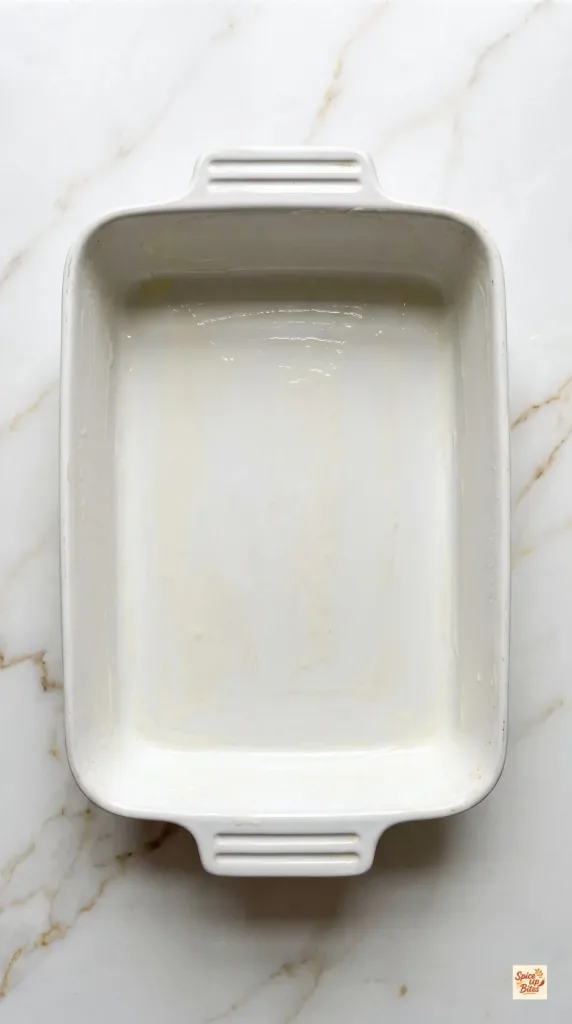
- White rectangular 9×13-inch ceramic baking dish with slotted integrated end handles
- Large mixing bowl and whisk
- Cutting board and bread knife
- Box grater
- Measuring cups and spoons
- Foil
- Instant-read thermometer
- Wide serving turner
How to Make Ham Cheese Croissant Casserole
Build the bread mixture first, then give the custard time to soak in before baking.
Step 1: Prepare the Dish
Heat the oven to 350°F (175°C) with a rack in the middle.
Spread 1 tablespoon softened unsalted butter over the bottom and sides of a 9×13-inch baking dish.
Step 2: Add the Bread, Ham and Cheese
Cut 8 medium croissants, about 14 ounces (400 g) total, into roughly 1-inch chunks.
Put the croissant chunks in the prepared dish with 8 ounces thinly sliced fully cooked ham, cut into small pieces, 2 ounces shredded Swiss cheese and 2 ounces shredded cheddar cheese.
Toss gently so the ham and cheese sit between the bread chunks, then spread everything into an even layer. Keep the pieces loose instead of packing them firmly.

Step 3: Whisk the Custard
Whisk 6 large eggs in a mixing bowl until the whites and yolks blend.
Whisk in 1 1/2 cups whole milk, 1/2 cup heavy cream, 1 tablespoon Dijon mustard, 1/4 teaspoon fine salt and 1/2 teaspoon ground black pepper until smooth.

Step 4: Soak and Top the Casserole
Pour the full custard mixture evenly over the croissant mixture.
Press gently with the back of a spoon so the bread touches the liquid, then let it soak for 20 minutes while the oven finishes heating.
Spread the remaining 2 ounces shredded Swiss cheese and 2 ounces shredded cheddar cheese evenly over nearly the entire top in a thin layer.

Step 5: Bake Until Set
Cover the dish loosely with buttered foil, buttered side facing the cheese, and bake for 30 minutes.
Remove the foil and bake for 15–25 minutes more, until the top is golden and the middle is set without liquid egg.
Check the center with an instant-read thermometer; the egg mixture should reach 160°F (71°C). If the top browns too quickly, tent it with foil while the center finishes cooking.
As soon as the casserole comes out of the oven, sprinkle 1 tablespoon finely chopped fresh parsley over the melted cheese.

Step 6: Rest and Serve
Let the casserole rest for 10 minutes so the custard settles and the servings hold together better.
Divide into 8 portions and lift each one with a wide turner. Expect tender, rustic edges rather than firm, sharp slices.
Serve warm. A simple green salad or fresh fruit makes a light pairing; extra plain croissants are optional if you want more bread.

Why This Recipe Works (Quick Science)
Egg proteins set as they heat, binding the milk and cream around the croissant pieces. The bread absorbs some of that liquid during the soak, so the center becomes tender instead of dry. Croissant layers near the surface stay more exposed and develop golden edges.
Milk keeps the custard from feeling too heavy, while a little cream adds richness. Cheese mixed through the bread gives flavor inside, and the thin top layer melts over the uneven surface. Resting the bake helps the custard firm up enough to serve without squeezing out liquid.

Common Mistakes to Avoid
- Using too much bread: Oversized croissants can leave dry patches. Aim for the listed total weight.
- Using wet ham: Pat away excess moisture before chopping so it does not thin the custard.
- Skipping the soak: Give the bread time to absorb liquid before baking.
- Relying on top color alone: A golden top can hide an undercooked center. Check the middle temperature.
- Packing the dish tightly: Lightly arranged chunks absorb the custard more evenly.
- Serving too soon: A short rest makes the casserole easier to portion.
What to Serve With Ham Cheese Croissant Casserole
A green salad with a sharp vinaigrette cuts through the rich cheese and croissants. Fresh fruit adds a lighter note to a brunch plate. Extra plain croissants are optional, though the casserole already provides plenty of bread. Serve these sides separately so everyone can choose what they like.
Make-Ahead Tips
Assemble the casserole through the cheese topping, cover and refrigerate for up to 12 hours instead of soaking at room temperature. Keep the parsley separate until after baking.
Keep the ceramic dish refrigerated until you are ready to prepare it for the oven, and follow its maker’s guidance on temperature changes. Start with a fully preheated oven. A cold casserole may need 10–15 minutes longer; use the center temperature and set texture to judge doneness.
Leftovers and Storage
Refrigerate leftovers in a covered container within 2 hours and use within 3–4 days. Reheat covered portions in a 325°F (165°C) oven until the center reaches 165°F (74°C). Uncover near the end if you want the top a little crisper.
Freeze cooled individual portions in airtight containers for up to 2 months for best texture. Thaw overnight in the refrigerator before reheating. The custard may be slightly softer after freezing.
Substitutions and Variations
- Cheese: Replace the Swiss with the same weight of Gruyère or use all cheddar.
- Ham: Leftover cooked ham works well when sliced thin or chopped small. Avoid thick, heavy cubes.
- Fresh bread: If the croissants are very soft, spread the cut pieces on a baking sheet and dry them at 300°F (150°C) for 8–10 minutes. Cool before assembling; allow this extra time.
- Mustard: Smooth Dijon blends most evenly. Whole-grain mustard gives small visible seeds and a slightly different texture.
Macros Information
Estimated per serving, based on 8 servings, including the parsley and excluding optional sides:
- Calories: 430 kcal
- Protein: 22 g
- Carbohydrates: 25 g
- Fat: 27 g
- Saturated Fat: 15 g
- Fiber: 1 g
- Sugar: 7 g
- Sodium: 820 mg
These are estimates; croissant size, cheese and ham brands will change the values.
Frequently Asked Questions (FAQ)
Q: Can I assemble this the night before?
A: Yes. Cover and refrigerate the assembled casserole for up to 12 hours, then bake until the center reaches 160°F (71°C). Add the parsley after baking.
Q: Do the croissants need to be stale?
A: Slightly stale croissants work well because they absorb the custard readily. Very soft fresh ones can be dried briefly in the oven first.
Q: Can I use raw crescent dough?
A: Use baked croissants for this recipe. Raw dough needs a different method and will not absorb the custard in the same way.
Q: Why is the middle still wet?
A: It may need more baking time, especially if the dish started cold. Cover the top loosely and continue baking until the center is set and reaches 160°F (71°C).
Q: Can I use leftover holiday ham?
A: Yes. Use 8 ounces fully cooked ham, cut into small thin pieces. Trim away any very sweet glaze if you want a fully savory result.
Q: Can I leave out the heavy cream?
A: Replace the 1/2 cup heavy cream with 1/2 cup whole milk. The custard will be a little less rich, but the eggs will still help it set.
Q: Can I bake it in a glass dish?
A: Yes, an oven-safe 9×13-inch glass baking dish is suitable. Follow its maker’s directions for oven use and temperature changes, and check doneness rather than relying on time alone.
Q: Can I freeze the baked casserole?
A: Yes. Cool and freeze individual portions in airtight containers. Thaw in the refrigerator, then reheat to 165°F (74°C).
Q: Why are the servings soft around the edges?
A: This is a tender bread-and-egg bake. Letting it rest helps it hold together, but the portions should still have soft, rustic edges.
Final Thoughts
Ham Cheese Croissant Casserole brings buttery bread, savory ham and a golden cheese top to one easy dish. Give the bread time to soak, check the center and let it rest before serving. Leave a comment with your favorite cheese blend or what you served alongside it.
Happy cooking!