
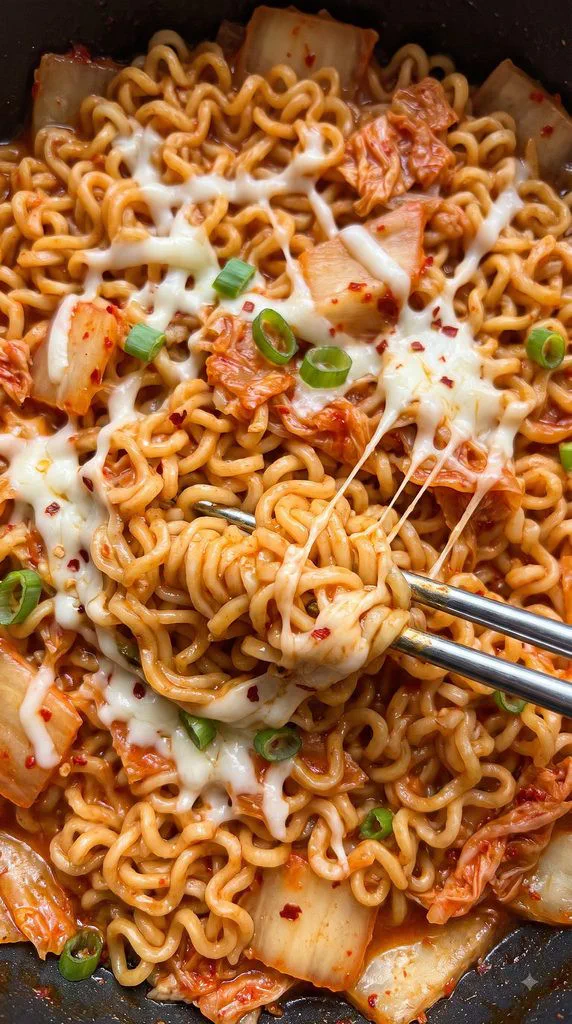
Kimchi Cheese Ramen Stir-Fry brings tangy cabbage, springy noodles, and melted cheese together in one quick meal. Gochujang adds a deep savory heat, while mozzarella softens its edge. The sauce hugs the noodles instead of filling the bowl with broth. Keep your ingredients close by, because the skillet part moves fast.
Why I Love This Recipe
This is a useful way to turn a packet of ramen and a little kimchi into something full of flavor. Each ingredient has a job, so you can keep the shopping list short without ending up with plain noodles.
- Big flavor: Fermented kimchi brings tang and a little crunch.
- Creamy finish: Mild mozzarella melts right into the spicy sauce.
- Small batch: The recipe makes a generous solo lunch or light dinner.
- Easy cleanup: A saucepan and skillet handle the cooking.
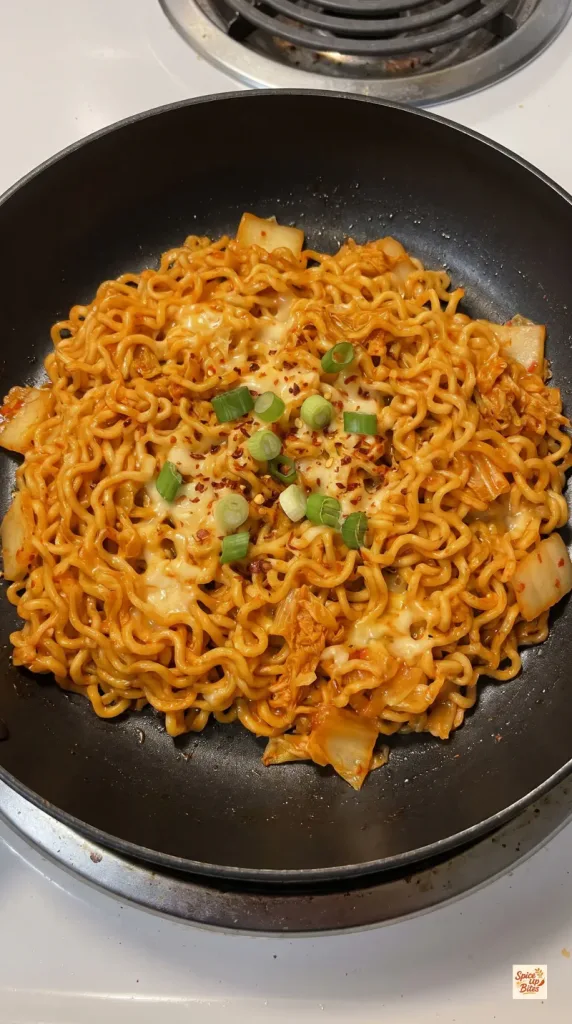
What You’ll Need
- Servings: 1
- Prep Time: 5 minutes
- Cook Time: 10 minutes
- Total Time: 15 minutes
- Skillet: 10-inch nonstick skillet
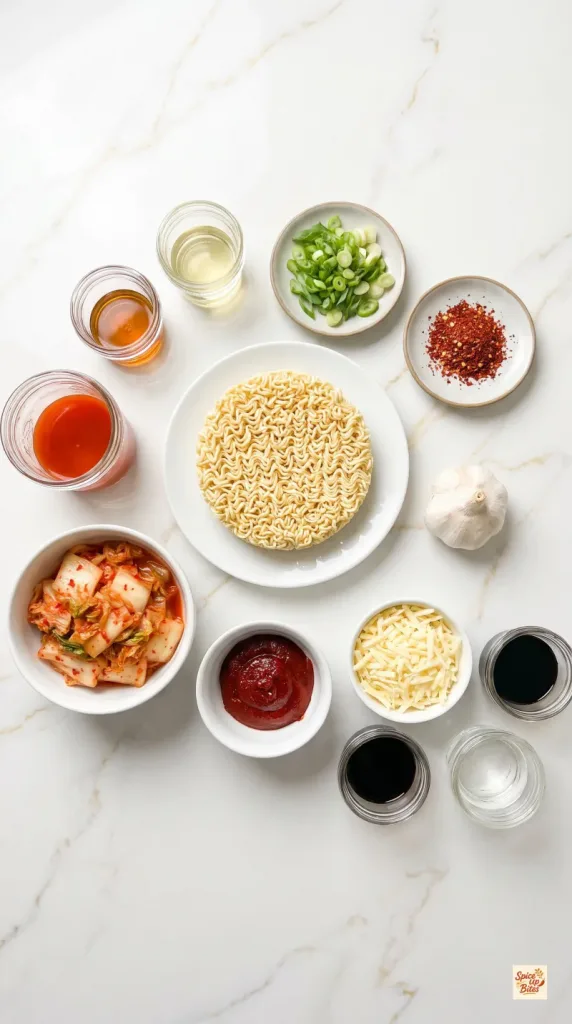
Ingredients
- 1 package instant ramen noodles, about 3 ounces, seasoning packet discarded
- 1/2 cup chopped cabbage kimchi
- 1 tablespoon kimchi juice
- 1 teaspoon sesame oil
- 1 teaspoon neutral oil, such as canola
- 1 garlic clove, minced
- 1 tablespoon gochujang
- 1 teaspoon soy sauce
- 1/4 cup water, plus 4 cups for boiling noodles
- 1/4 cup shredded low-moisture mozzarella, about 1 ounce
- 1 green onion, thinly sliced, optional
- 1 pinch red pepper flakes, optional
Choose well-fermented kimchi for a sharper flavor. For a vegetarian meal, check both the kimchi and noodles for fish, shellfish, or meat ingredients.
Tools You Need
- 10-inch nonstick skillet
- Small saucepan
- Colander
- Silicone spatula or wooden spoon
- Measuring cups and spoons
- Knife and cutting board
- Serving bowl and chopsticks, if desired
How to Make Kimchi Cheese Ramen Stir-Fry
Have everything measured before you turn on the skillet.
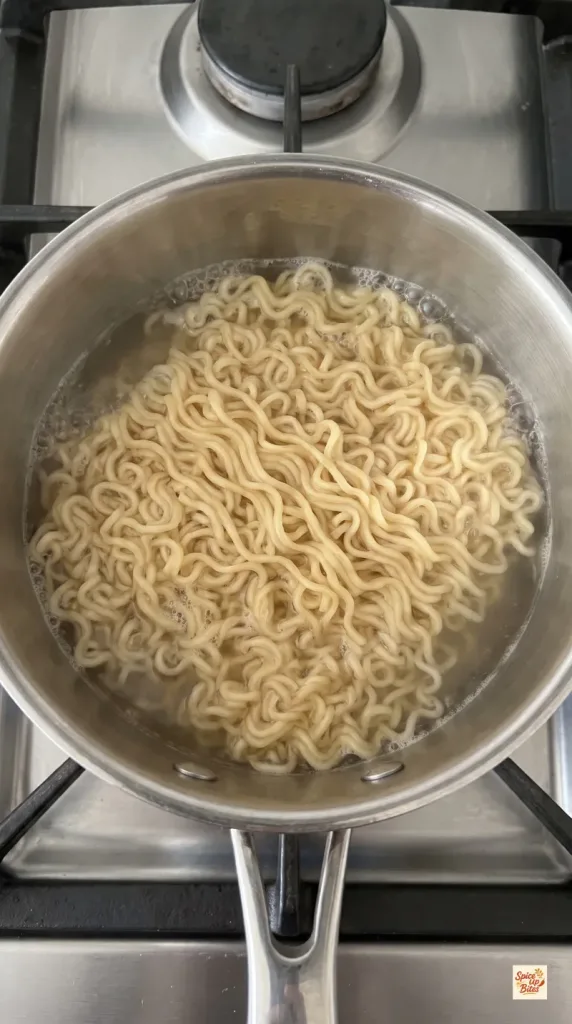
Step 1: Cook the Noodles
Bring 4 cups water to a boil in a small saucepan.
Add 1 package instant ramen noodles, about 3 ounces, without its seasoning packet. Cook for 3–4 minutes, or follow the package timing, stopping when the strands separate and are just tender with some spring.
Drain well. Keep the noodles nearby while you start the skillet.
Step 2: Soften the Kimchi
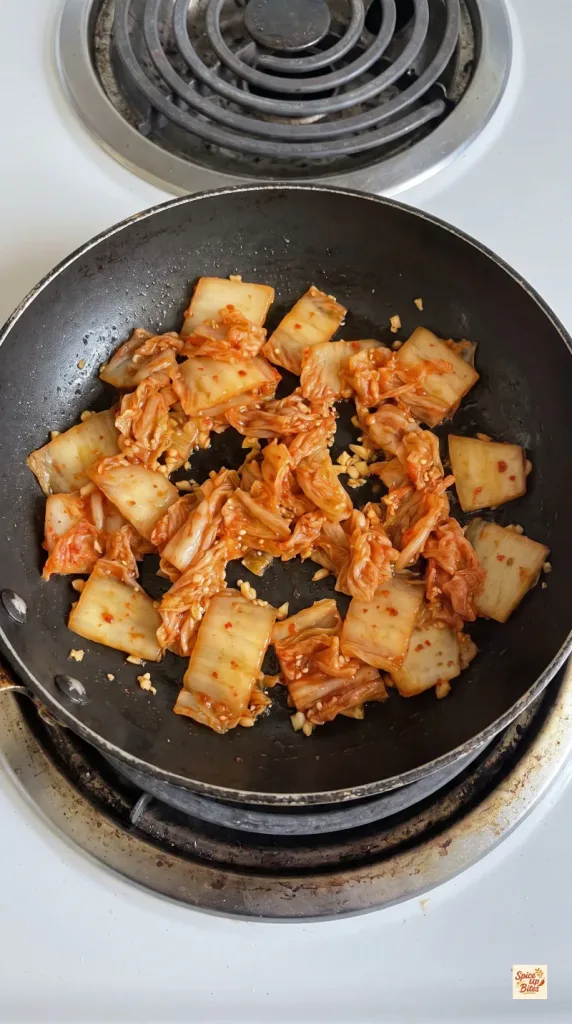
Heat 1 teaspoon neutral oil and 1 teaspoon sesame oil in a 10-inch nonstick skillet over medium heat.
Add 1 minced garlic clove and 1/2 cup chopped kimchi. Stir for 2–3 minutes, until the cabbage softens slightly and the garlic smells fragrant. Lower the heat if the garlic starts browning quickly.
Step 3: Build the Sauce
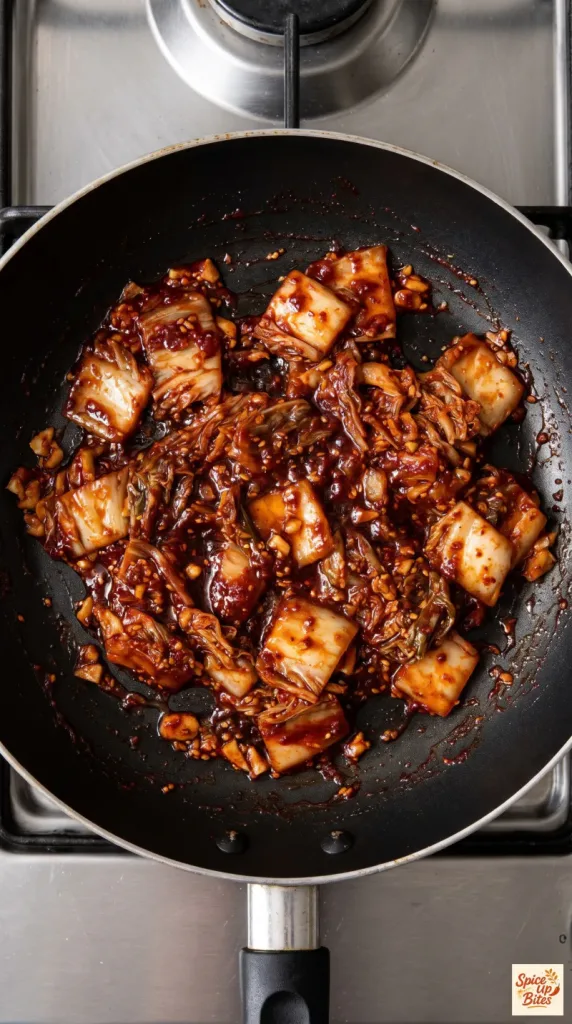
Stir 1 tablespoon gochujang, 1 teaspoon soy sauce, and 1 tablespoon kimchi juice into the kimchi.
Mix for about 30 seconds, until the paste loosens and coats the cabbage evenly.
Step 4: Toss the Ramen
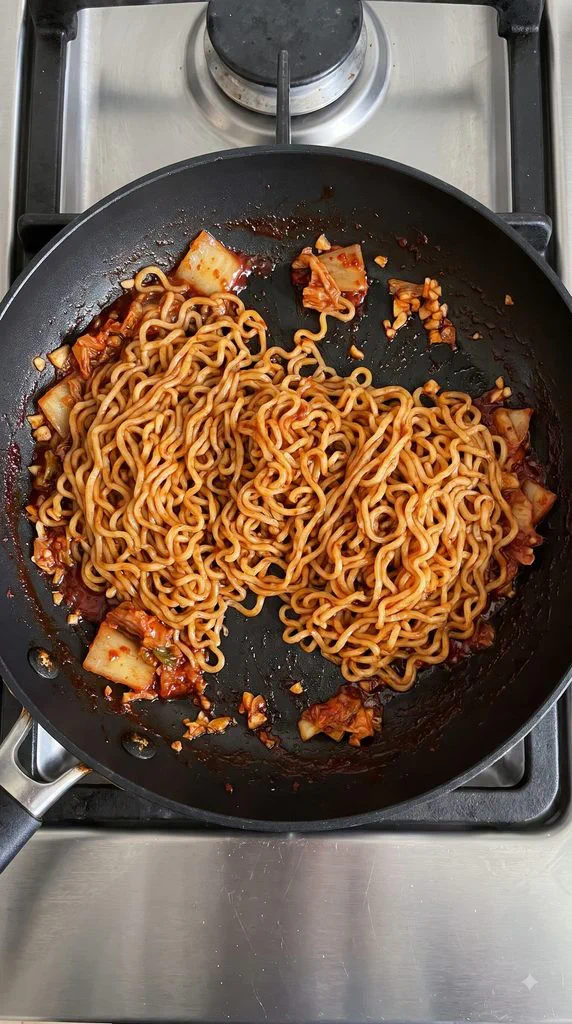
Add the drained noodles from 1 package ramen and 1/4 cup water to the skillet.
Toss gently over medium heat for 1–2 minutes, until the curls are evenly coated and there is no loose puddle of water. Keep the noodles moving so the sauce does not stick.
Step 5: Melt in the Cheese
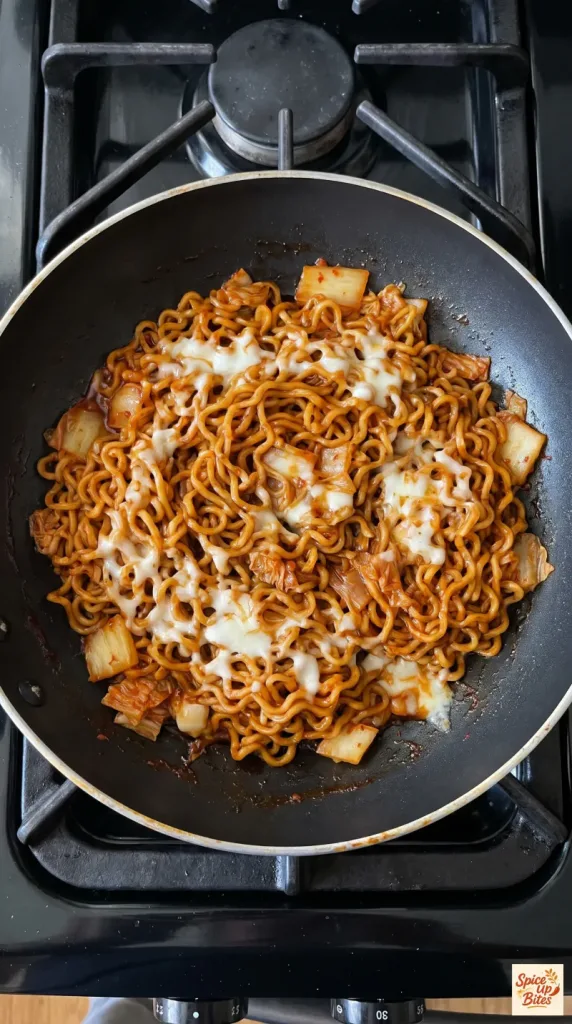
Turn off the burner and leave the skillet in place. Scatter 1/4 cup shredded mozzarella, about 1 ounce, across the noodles.
Let it soften for 30–60 seconds, then fold it through until the noodles look glossy and creamy. Avoid prolonged heat once the cheese melts.
Step 6: Garnish and Serve
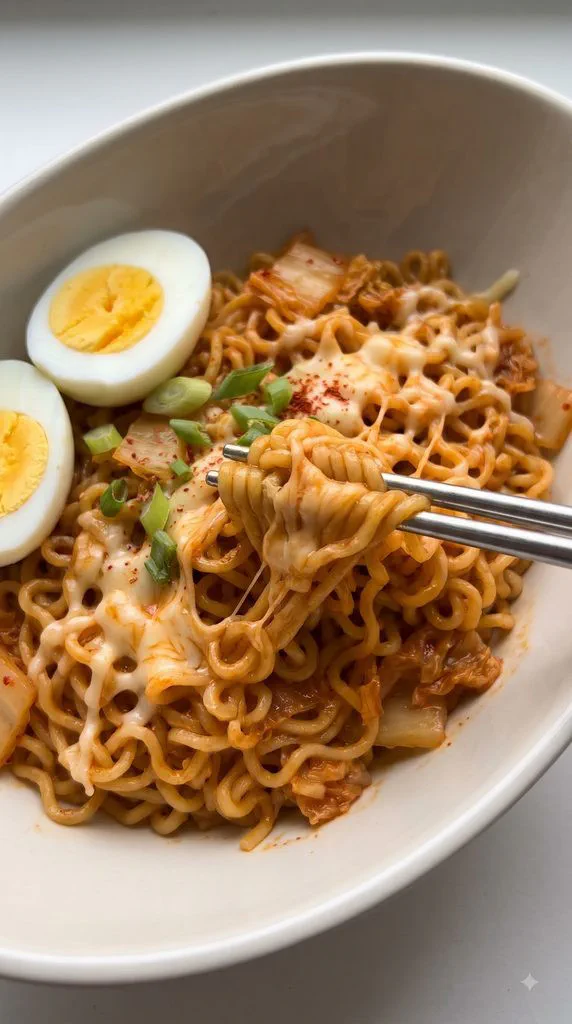
If using, scatter 1 thinly sliced green onion and 1 pinch red pepper flakes over the finished noodles.
Serve straight from the skillet while it rests on the switched-off burner, or transfer to a shallow bowl. Eat promptly for the best noodle texture.
For a fuller meal, offer cucumber salad or a cooked egg alongside.
Why This Recipe Works (Quick Science)
Kimchi brings acidity that cuts through the cheese’s richness. Cooking it briefly softens the cabbage without removing all its bite. Gochujang adds body as well as heat, so the sauce sticks to the curls.
The added water helps spread the paste through the noodles. As that water reduces, starch on the ramen helps the sauce cling. Folding in mozzarella off the heat keeps it soft and stretchy rather than letting it catch on the pan.
Common Mistakes to Avoid
- Using the seasoning packet: Kimchi, gochujang, and soy sauce already bring plenty of salt.
- Boiling until very soft: Ramen cooks a little more in the skillet.
- Leaving the sauce watery: Toss until the liquid coats the strands before adding cheese.
- Keeping the cheese over high heat: Residual heat is enough to melt finely shredded mozzarella.
- Adding more chili without tasting: Kimchi and gochujang vary a lot in heat.
What to Serve With Kimchi Cheese Ramen Stir-Fry
A crisp cucumber salad gives this rich dish a refreshing partner. A cooked egg on the side adds protein and makes the meal more filling. These are optional additions; the ramen is ready to enjoy on its own.
Substitutions and Variations
- Use vegetarian kimchi and meat-free noodles for a vegetarian version.
- Reduce the gochujang to 1–2 teaspoons for a gentler dish, and leave out the pepper flakes.
- Try the same amount of cheddar in place of mozzarella for a sharper flavor. It will be less stretchy.
- Double all ingredients in a larger skillet, leaving enough space to toss without crushing the noodles.
Leftovers and Storage
The noodles have their best texture right after cooking. If you have leftovers, refrigerate them in a sealed container promptly and use within a day for best quality.
Reheat gently in a skillet with a small splash of water, folding until warmed through. The noodles will be softer, and the sauce may need a little extra stirring to loosen.
Macros Information
Estimated per serving, using a standard fried ramen cake, mozzarella, and both optional garnishes. Brands and noodle-package sizes will change these numbers.
- Calories: 630
- Protein: 18 g
- Carbohydrates: 72 g
- Fat: 31 g
- Saturated Fat: 12 g
- Fiber: 5 g
- Sugar: 10 g
- Sodium: 1,650 mg
Frequently Asked Questions (FAQ)
Q: Do I use the ramen seasoning packet?
A: No. Set it aside for another use. The sauce ingredients season these noodles.
Q: Which kimchi should I choose?
A: Chopped cabbage kimchi works well. A well-fermented jar gives a stronger tang than very fresh kimchi.
Q: Can I use fresh ramen?
A: Yes. Use a single-serving portion and follow its package cooking time. Drain before adding it to the skillet.
Q: Will mozzarella make this taste mild?
A: It softens the heat, but the dish is still spicy. Reduce the gochujang if needed.
Q: Why did my noodles become sticky?
A: They may have been overcooked or left to sit too long. Cook just until tender and finish the skillet steps promptly.
Q: Is there supposed to be broth?
A: No. This is a sauced stir-fry. Let the added water reduce until it clings to the noodles.
Q: Can I chop the ingredients ahead?
A: Yes. Keep the chopped kimchi, minced garlic, and sliced green onion in separate covered containers in the fridge until needed.
Q: Can I leave out the garnish?
A: Yes. Green onion adds freshness and pepper flakes add heat, but neither is needed to make the sauce work.
Final Thoughts
Kimchi Cheese Ramen Stir-Fry is a quick way to enjoy bold, tangy flavor with a creamy finish. Keep the noodles springy, reduce the sauce, and let the cheese melt gently. Leave a comment with your favorite kimchi or tell us how spicy you made your bowl. Happy cooking!