
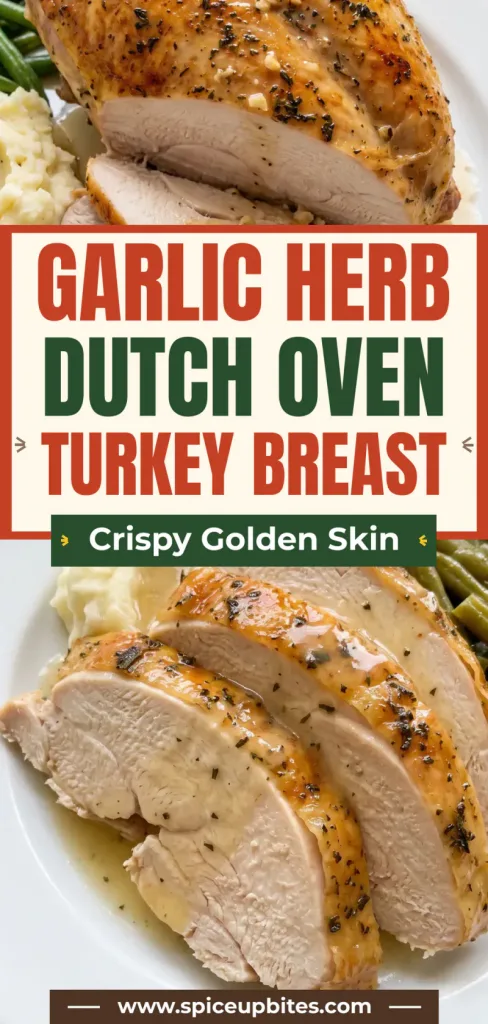
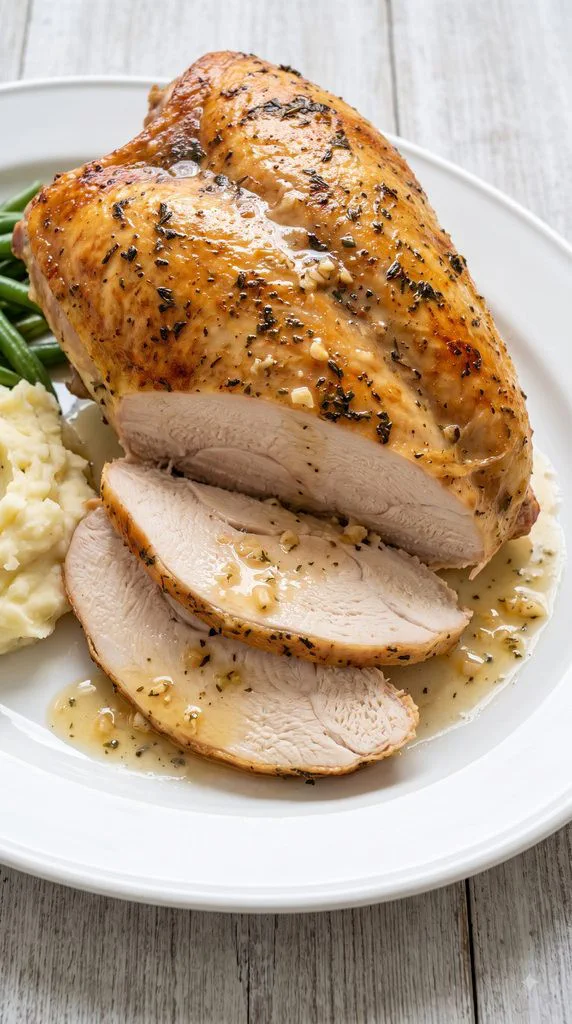
Garlic Herb Dutch Oven Turkey Breast brings buttery garlic flavor and tender slices to a smaller holiday table or a cozy Sunday dinner. Fresh rosemary and thyme season the meat beneath the skin. A little broth keeps the pan from drying out, while an uncovered finish gives the skin its golden color. You get simple pan juices to spoon over every serving, too.
Why I Love This Recipe
This recipe keeps a turkey dinner manageable. A split breast fits in a roomy Dutch oven, and the garlic-herb butter goes right where it can flavor the meat. There is no large roasting pan to wrestle with, and the pan juices need no flour or separate saucepan.
- Smaller batch: Six moderate servings suit a small gathering and leave room for sides.
- Simple seasoning: Garlic, rosemary, thyme, and lemon give the turkey a savory, fresh flavor.
- Gentle start: The covered roasting stage helps limit surface drying.
- Golden finish: Taking off the lid lets the skin brown without a separate searing step.
- Useful drippings: Broth and melted herb butter make a thin, flavorful spooning sauce.
What You’ll Need
- Servings: 6
- Prep Time: 20 minutes
- Cook Time: 1 hour 30 minutes to 2 hours
- Rest Time: 20 minutes
- Total Time: 2 hours 10 minutes to 2 hours 40 minutes
- Oven Temperature: 350°F (175°C)
- Pot Size: A 6- to 7-quart oven-safe Dutch oven with a lid; the turkey must fit below the rim without touching the lid.
Ingredients:
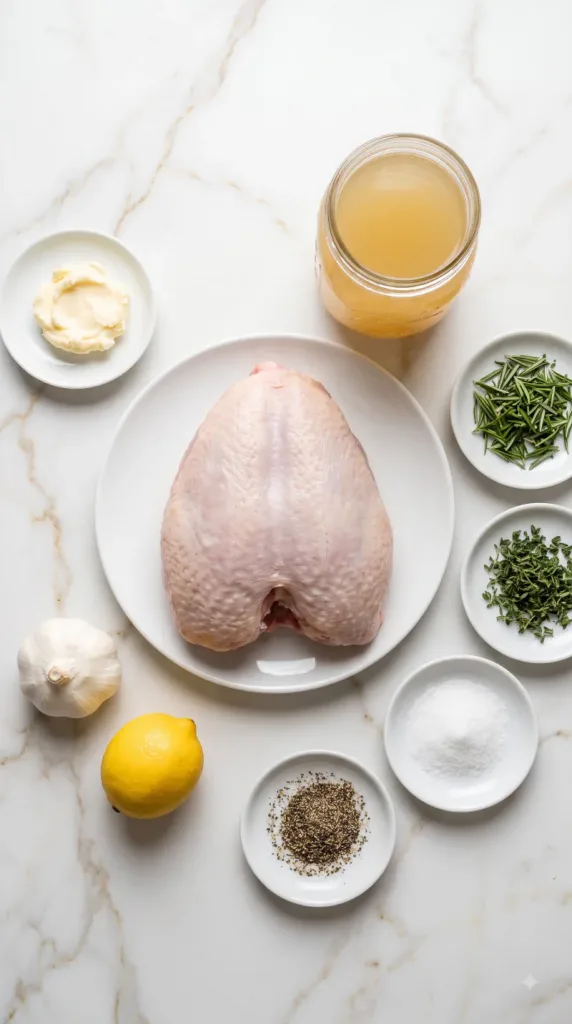
- 1 unenhanced, skin-on, bone-in split turkey breast, 3 pounds, fully thawed; not a whole double breast or a rolled boneless roast
- 4 tablespoons unsalted butter, softened
- 4 garlic cloves, finely minced
- 1 tablespoon finely chopped fresh rosemary
- 1 tablespoon fresh thyme leaves, chopped
- 1 teaspoon fine sea salt
- 1/2 teaspoon ground pepper
- 1 teaspoon finely grated lemon zest
- 1 tablespoon fresh lemon juice
- 1 cup low-sodium chicken broth
Choose turkey without an added salt solution so the seasoning stays balanced. Use the lemon zest and juice from the same lemon; save the unused lemon for another meal.
Tools You Need
- 6- to 7-quart oven-safe enameled Dutch oven with a lid and oven-safe handles
- Small glass mixing bowl
- Measuring cups and spoons
- Fine grater
- Instant-read meat thermometer
- Wooden carving board
- Carving knife and serving spoon
- Oven mitts
How to Make Garlic Herb Dutch Oven Turkey Breast
Have the sides ready near the end of roasting so the turkey can rest before you slice it.
Step 1: Prepare the Turkey
Heat the oven to 350°F (175°C) and place a rack low enough to hold the covered Dutch oven.
Remove all packaging from the 3-pound skin-on, bone-in split turkey breast and pat it dry with paper towels. Do not rinse raw turkey.
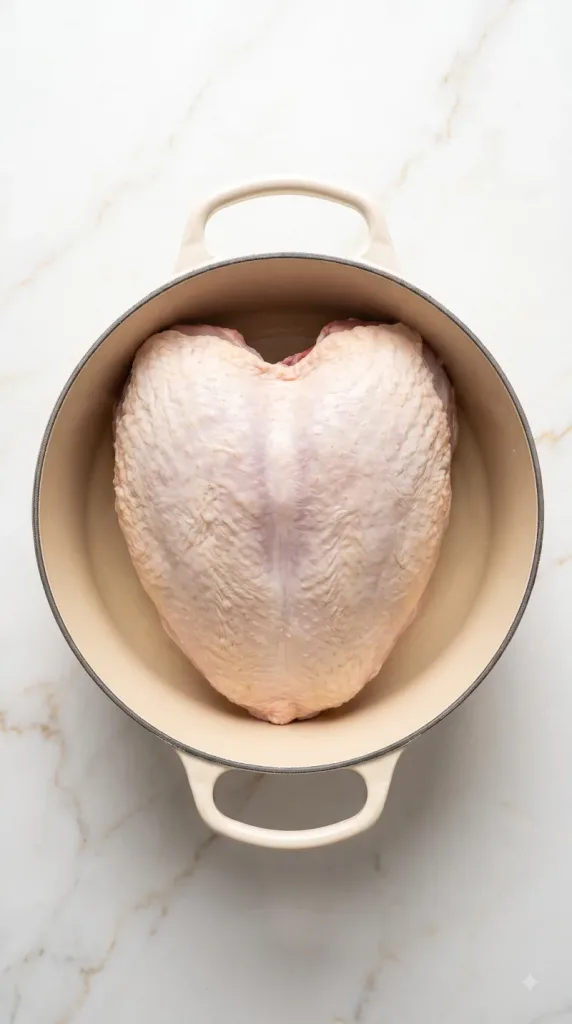
Check that it fits skin-side up in your 6- to 7-quart Dutch oven, with space for the lid to close. Wash your hands and clean any surfaces that touched the raw turkey.
Step 2: Make the Garlic-Herb Butter
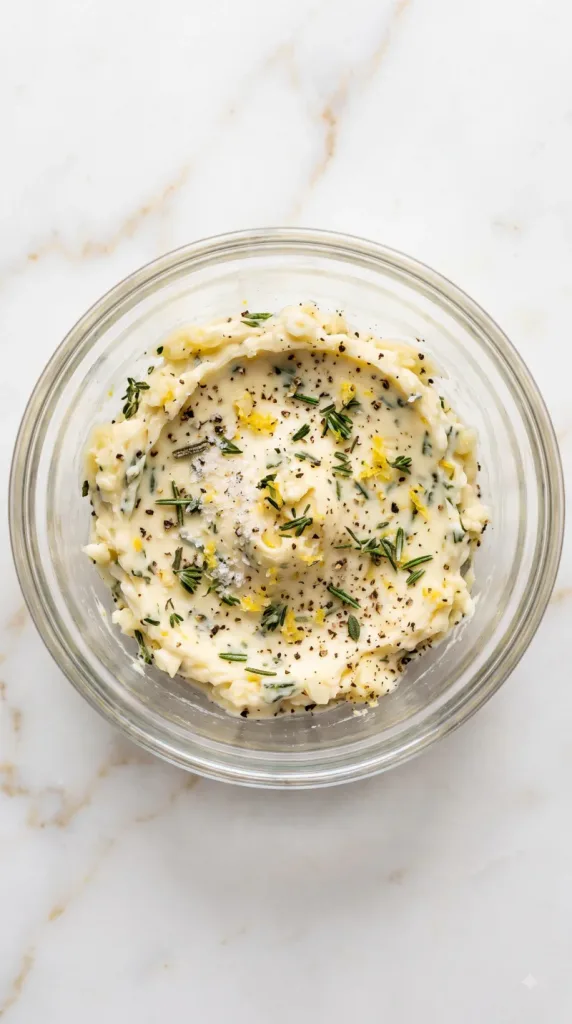
Mix 4 tablespoons softened unsalted butter, 4 finely minced garlic cloves, 1 tablespoon chopped fresh rosemary, and 1 tablespoon chopped fresh thyme leaves in a small glass bowl.
Stir in 1 teaspoon fine sea salt, 1/2 teaspoon ground pepper, and 1 teaspoon finely grated lemon zest until evenly blended.
Step 3: Season and Add the Broth
Gently loosen the skin of the 3-pound turkey breast without tearing it or detaching it completely.
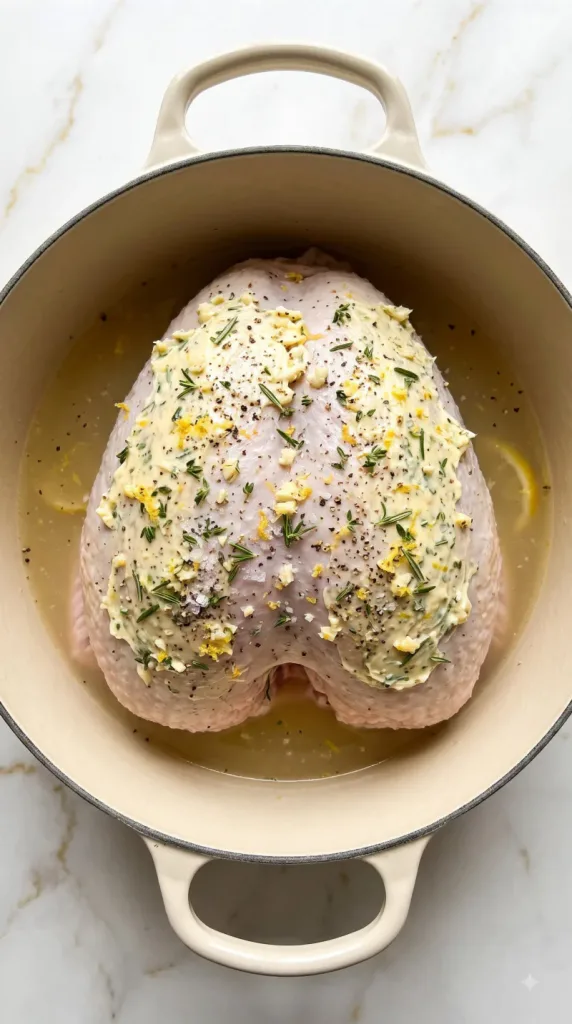
Spread half of the garlic-herb butter mixture beneath the skin and the other half over the skin and exposed sides. Use the whole mixture made with 4 tablespoons butter, 4 garlic cloves, 1 tablespoon rosemary, 1 tablespoon thyme, 1 teaspoon salt, 1/2 teaspoon ground pepper, and 1 teaspoon lemon zest.
Set the turkey skin-side up in the Dutch oven. Pour 1 cup low-sodium chicken broth and 1 tablespoon fresh lemon juice around it, keeping the butter on the skin in place.
Step 4: Roast Covered, Then Brown the Skin
Cover the Dutch oven and roast at 350°F (175°C) for 60 minutes.
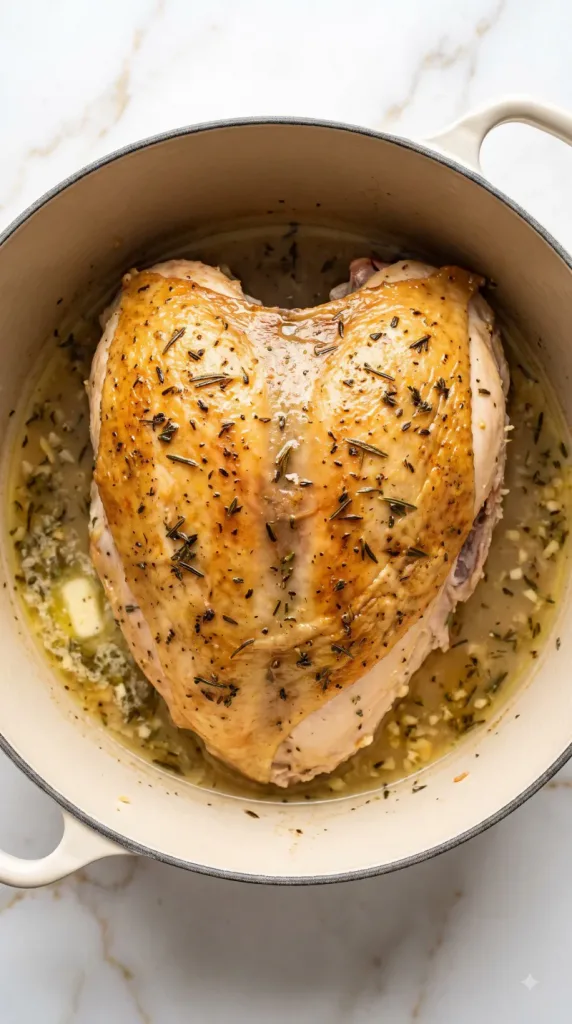
Remove the lid carefully and continue roasting uncovered for 30 to 60 minutes, until the skin is golden-brown and the thickest part of the breast reaches 165°F (74°C). Start checking after 30 minutes uncovered, keeping the thermometer tip away from bone.
Use temperature, rather than the clock or meat color, to decide when it is done. If the skin browns before the center is ready, lay a loose piece of foil over the breast and keep roasting.
The pan juices should be thin and pale gold with fine herb flecks, not a thick gravy. This minimum internal temperature follows [USDA turkey guidance](https://www.fsis.usda.gov/food-safety/safe-food-handling-and-preparation/poultry/lets-talk-turkey-roasting).
Step 5: Rest, Slice, and Serve
Move the cooked 3-pound bone-in turkey breast to a wooden carving board and rest for 20 minutes, loosely covered with foil. Keep the pan juices in the Dutch oven, covered and off the heat.
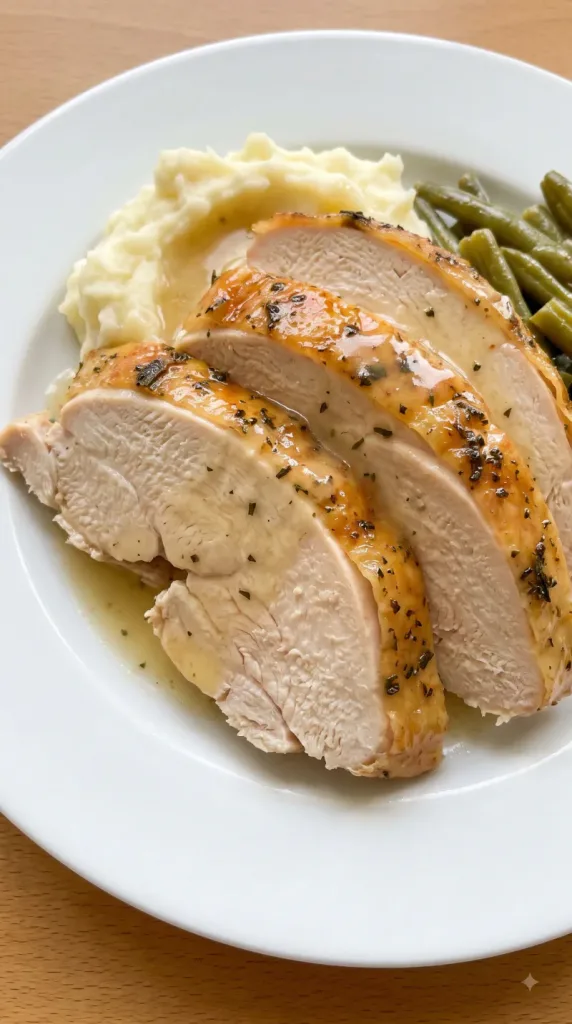
Remove the meat from the bone, then cut across the grain into 1/4-inch-thick slices. Divide into 6 servings, about 5 ounces cooked turkey per serving, depending on bone weight and cooking loss.
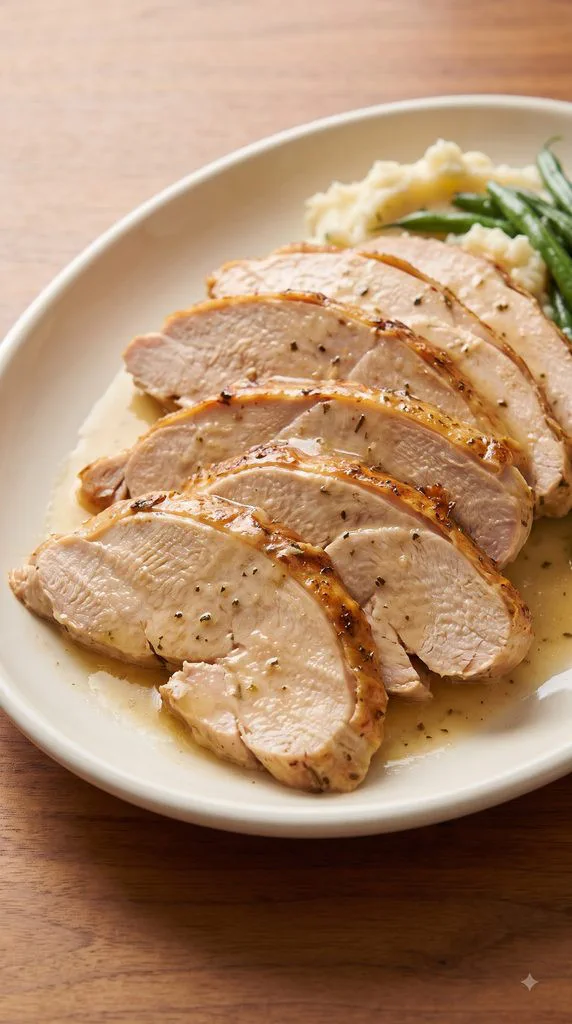
Spoon the thin garlic-herb pan juices lightly over the slices. The meat should stay moist and tender even on the cut faces without sauce.
Serve with optional mashed potatoes and cooked green beans for a complete meal.
Why This Recipe Works (Quick Science)
Turkey breast is lean, so an accurate thermometer matters more than extra roasting time. Butter beneath the skin adds flavor directly to the meat, while the skin helps shield the surface. The covered Dutch oven limits moisture loss early on; removing the lid allows the skin to dry and brown. Resting gives the meat time to cool slightly before carving, which helps keep more juice in the slices.
Broth, lemon juice, and melted butter make a thin sauce. It stays translucent and pale gold rather than turning into an opaque gravy because there is no flour or starch.
Common Mistakes to Avoid
- Using a different cut without adjusting: A whole double breast or rolled boneless roast cooks differently from this split bone-in breast.
- Starting with a partly frozen center: Thaw the breast fully in the refrigerator before cooking.
- Letting the thermometer touch bone: Check the thickest meat from more than one angle.
- Leaving the lid on throughout: The skin needs the uncovered finish to brown.
- Cooking past the target temperature: Extra oven time dries the lean meat.
- Carving right away: Give the breast its full rest before slicing.
What to Serve With Garlic Herb Dutch Oven Turkey Breast
- Mashed potatoes: A creamy scoop catches the thin garlic-herb juices.
- Cooked green beans: Tender beans add a simple vegetable side without crowding the plate.
Both sides are optional and are not included in the turkey’s nutrition estimate. Keep their seasonings mild so the rosemary and garlic can stand out.
Leftovers and Storage
Refrigerate carved turkey and pan juices in shallow containers within 2 hours of cooking, or 1 hour if the room is above 90°F (32°C). Keep at 40°F (4°C) or below and use within 3 to 4 days. Freeze for 3 to 4 months for best quality.
Reheat portions covered with their saved juices in a 325°F (165°C) oven until the meat reaches 165°F (74°C). These storage and reheating guidelines follow [USDA leftover food safety advice](https://www.fsis.usda.gov/food-safety/safe-food-handling-and-preparation/food-safety-basics/leftovers-and-food-safety).
Macros Information
Estimated per serving, based on 6 servings, including skin and an equal share of butter and pan juices, without optional sides:
- Calories: 310
- Protein: 43 g
- Carbohydrates: 2 g
- Fat: 14 g
- Saturated Fat: 6 g
- Fiber: 0 g
- Sugar: 0 g
- Sodium: 540 mg
These are estimates; turkey yield, skin portions, broth brand, and the amount of pan juices served will change the numbers.
Frequently Asked Questions (FAQ)
Q: Is this a whole turkey breast?
A: No. Use a 3-pound bone-in split breast, which is one side of the breast with its skin attached. A whole double breast is larger and may not fit the pot.
Q: Can I use boneless turkey instead?
A: It needs a different timing plan. This recipe is written for the bone-in cut; a boneless roast may also be rolled or netted, which changes how it cooks.
Q: Do I need to sear the turkey first?
A: No. The uncovered oven stage browns the skin. Skipping a separate sear also keeps the minced garlic from scorching in direct contact with a heated pan.
Q: Will the skin be crisp?
A: It should be golden with some crisp edges, but the moist covered start makes it less crisp than a fully uncovered roast. Keep pan juices off the skin until serving if you want to preserve that texture.
Q: Can I use dried herbs?
A: Replace the fresh rosemary with 1 teaspoon dried rosemary and the fresh thyme with 1 teaspoon dried thyme. Crush them before mixing them into the butter.
Q: Can I prepare the butter ahead?
A: Yes. Mix it up to 2 days ahead and refrigerate it covered. Let it soften enough to spread before seasoning the turkey.
Q: Why are my pan juices thin?
A: That is expected. This recipe makes a broth-and-butter spooning sauce, not thick gravy. Stir the juices before serving to spread the herb flecks and butter through them.
Q: What if my turkey is ready sooner?
A: Take it out when the thickest meat reaches 165°F (74°C), even if the suggested cooking time has not passed. Pot shape, oven accuracy, and the breast’s thickness affect timing.
Q: Should I add more salt to an enhanced turkey breast?
A: Added salt solutions can make the full seasoning amount too salty. Choose an unenhanced breast for this recipe so the salt level is easier to control.
Final Thoughts
Garlic Herb Dutch Oven Turkey Breast makes a smaller turkey dinner feel special with simple herbs, buttery pan juices, and tender slices. Let the thermometer guide you, give the meat time to rest, and bring it to the table with your favorite potatoes and green beans. Leave a comment with what you served alongside it. Happy cooking!