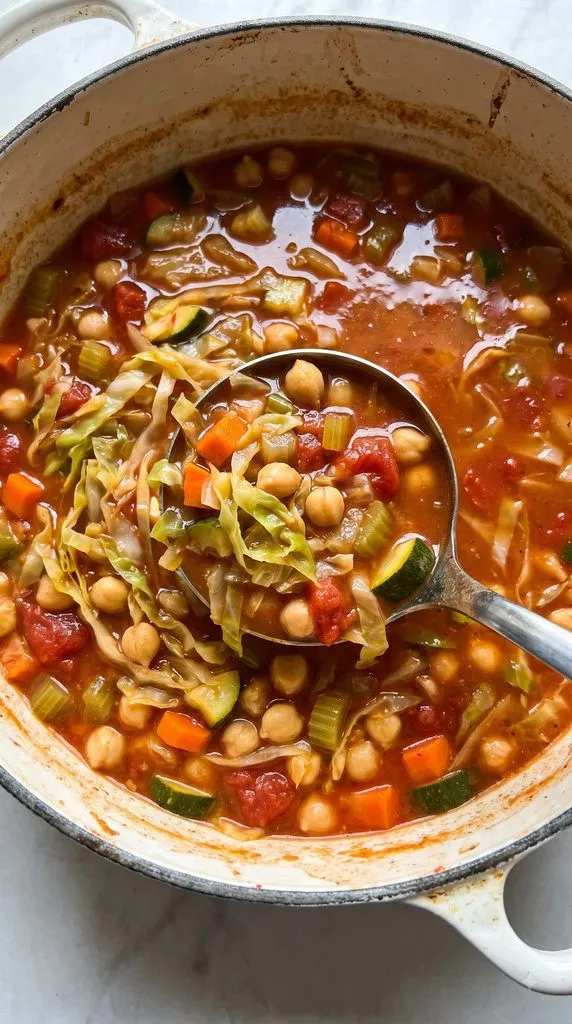

This Mediterranean cabbage soup is light, cozy, and full of simple vegetables. The cabbage turns soft and tender, while tomatoes, lemon, garlic, and herbs give the broth a bright, savory flavor. It is an easy one-pot meal that tastes even better the next day.
Makes: 6 servings
Prep time: 15 minutes
Cook time: 35 minutes
Total time: 50 minutes
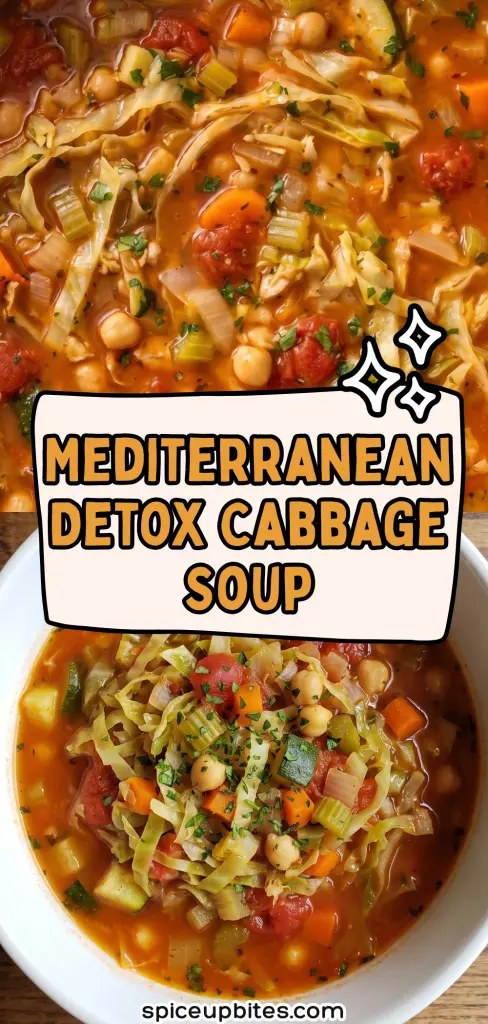
Why I Love This Recipe
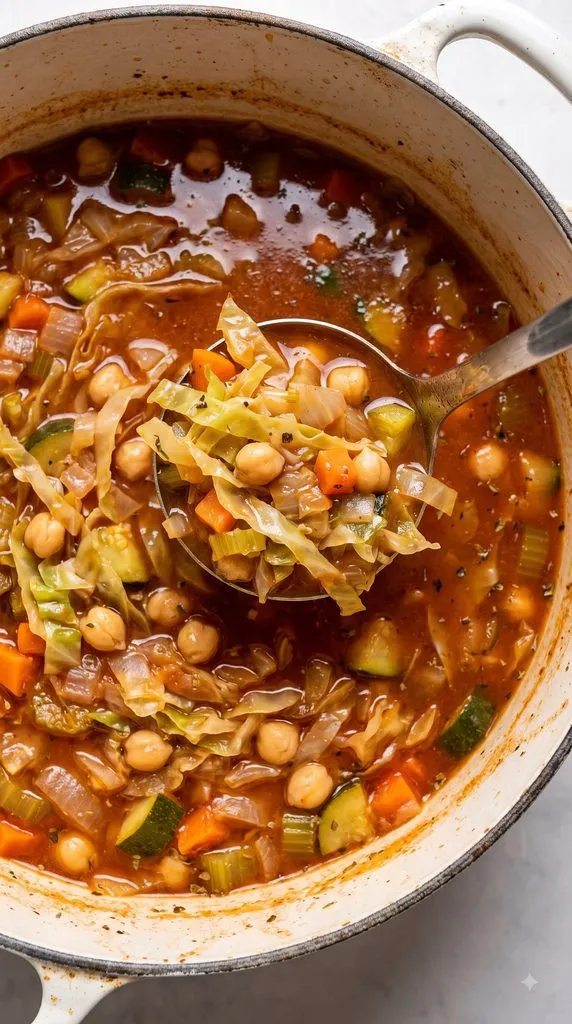
I started making soups like this when I wanted something warm that did not feel heavy. Cabbage is great for that. It cooks down into the broth and takes on all the flavors around it.
The first version was very plain. Adding Mediterranean flavors made the difference. Garlic, oregano, tomatoes, parsley, and lemon turn basic cabbage into a soup I actually look forward to eating.
I love this recipe because:
- Everything cooks in one pot.
- It uses simple, easy-to-find vegetables.
- Chickpeas add extra protein and make the soup more filling.
- Lemon keeps the tomato broth fresh and bright.
- There is no cream or butter needed.
- The leftovers develop even more flavor overnight.
I use the word “detox” here in the everyday recipe sense: this is a light, vegetable-packed soup. Your liver and kidneys already handle your body’s normal detox processes, so no single soup is needed to “cleanse” your body.
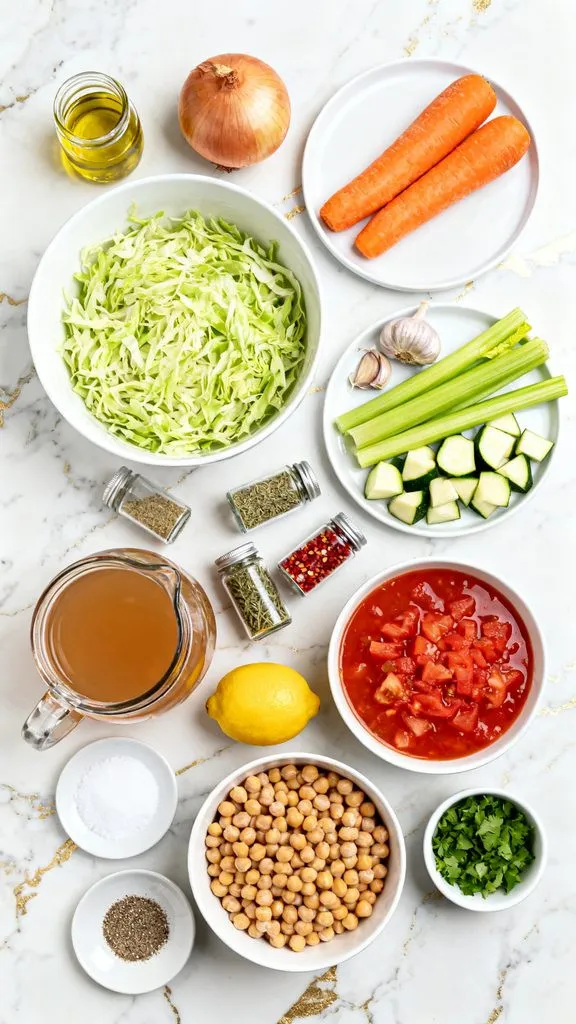
What You’ll Need
- 2 tablespoons extra-virgin olive oil
- 1 medium onion, diced, about 1 1/2 cups
- 2 medium carrots, peeled and diced, about 1 cup
- 2 celery stalks, diced, about 1 cup
- 4 garlic cloves, minced
- 1 teaspoon dried oregano
- 1/2 teaspoon dried thyme
- 1/4 teaspoon red pepper flakes, optional
- 6 cups thinly shredded green cabbage
- 1 medium zucchini, diced, about 1 1/2 cups
- 1 can (14.5 ounces) diced tomatoes with their juices
- 1 can (15 ounces) chickpeas, drained and rinsed
- 6 cups low-sodium vegetable broth
- 1 teaspoon kosher salt, plus more if needed
- 1/2 teaspoon ground black pepper
- 2 tablespoons fresh lemon juice
- 1/4 cup chopped fresh parsley
Recipe and Instructions
Step 1: Soften the Onion, Carrots, and Celery
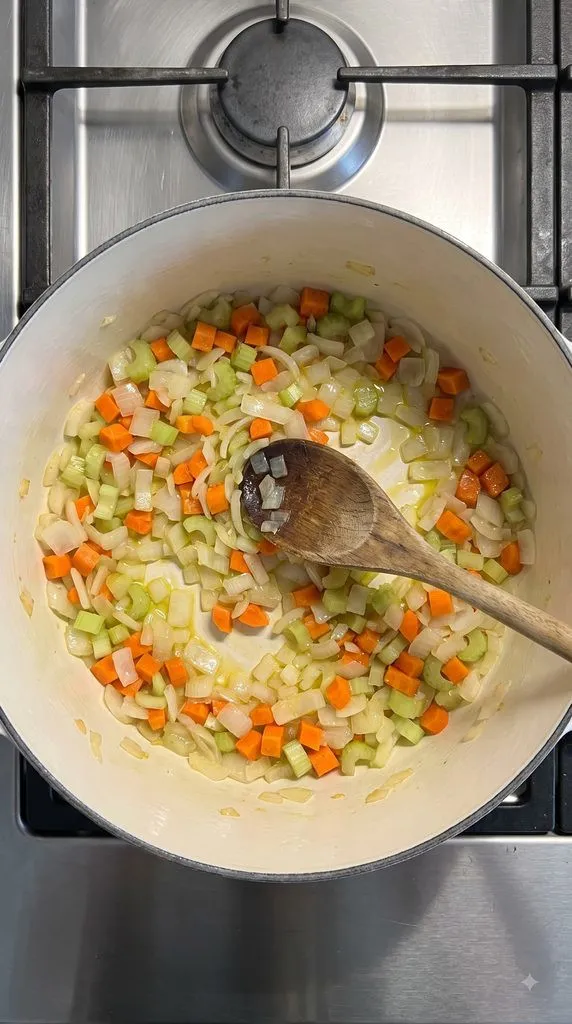
Heat 2 tablespoons extra-virgin olive oil in a large Dutch oven over medium heat.
Add 1 medium diced onion (about 1 1/2 cups), 2 peeled and diced medium carrots (about 1 cup), and 2 diced celery stalks (about 1 cup). Cook for 6 to 7 minutes, stirring every minute or two. The onion should look soft and clear around the edges. The carrots and celery will start to soften but should not be fully cooked yet.
Step 2: Add the Garlic and Herbs
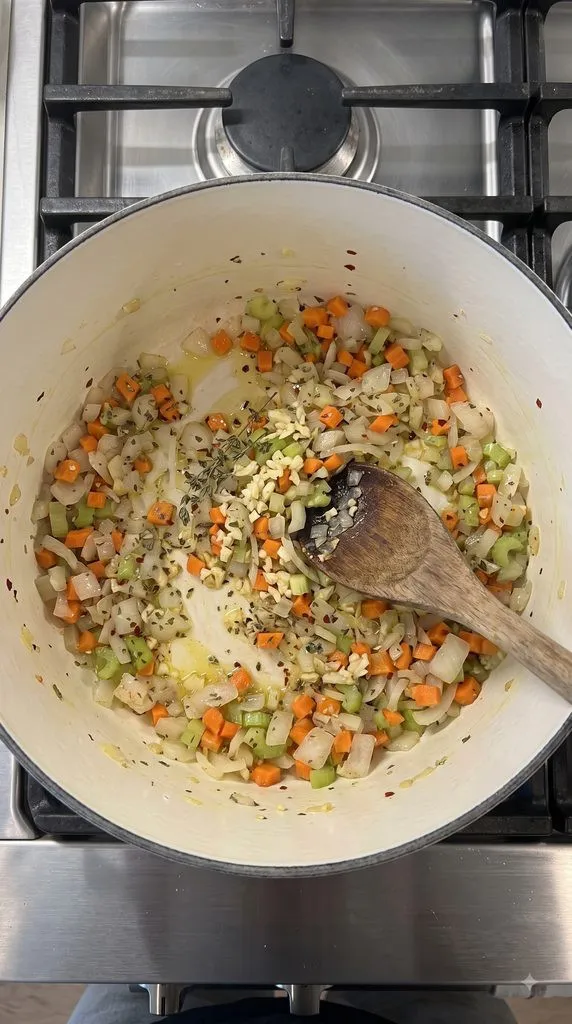
Add 4 minced garlic cloves, 1 teaspoon dried oregano, 1/2 teaspoon dried thyme, and 1/4 teaspoon red pepper flakes if using.
Stir constantly for about 30 seconds. Stop when the garlic smells fragrant. Do not let it turn dark brown.
Step 3: Add the Cabbage and Zucchini
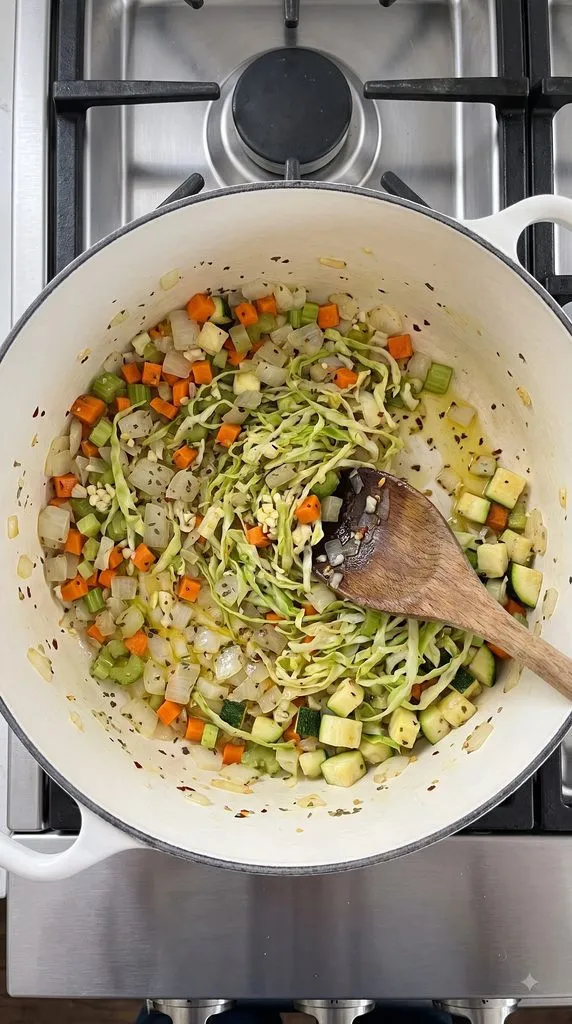
Add 6 cups thinly shredded green cabbage and 1 medium diced zucchini (about 1 1/2 cups).
Cook for 3 minutes, stirring often. The cabbage will begin to wilt and shrink. It does not need to become completely soft yet.
Step 4: Build the Soup
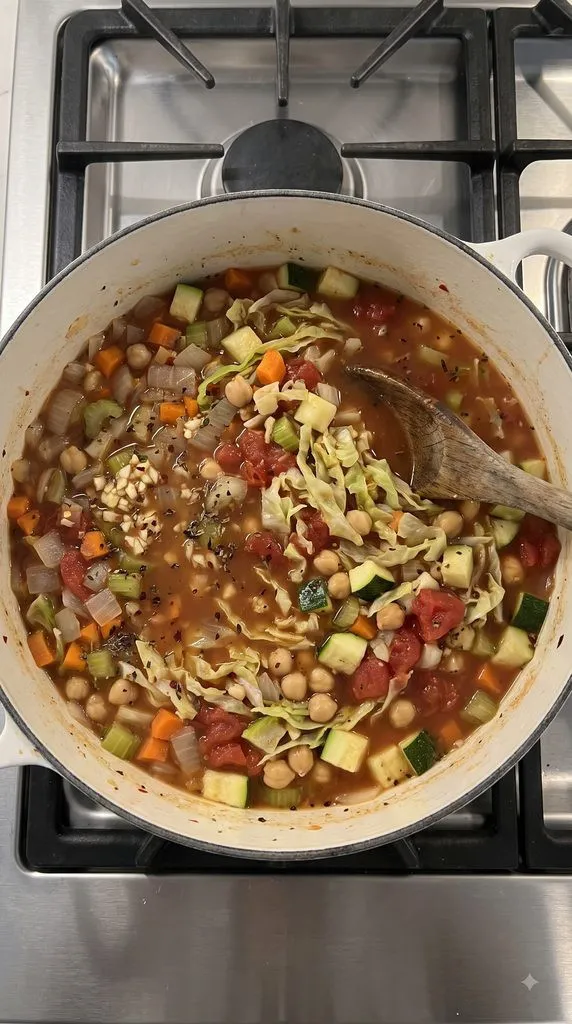
Pour in 1 can (14.5 ounces) diced tomatoes with their juices and 6 cups low-sodium vegetable broth.
Add 1 can (15 ounces) drained and rinsed chickpeas, 1 teaspoon kosher salt, and 1/2 teaspoon ground black pepper.
Stir well, scraping the bottom of the pot. Raise the heat and bring the soup to a gentle boil.
Step 5: Simmer Until Tender
Once the soup boils, lower the heat so it gently simmers. Partly cover the pot and cook for 20 minutes.
Stir once or twice. At the end, the 6 cups shredded cabbage, 1 medium diced zucchini, 2 diced carrots, 2 diced celery stalks, and 1 diced onion should be tender. The chickpeas should be hot and soft, and the broth should taste rich and savory.
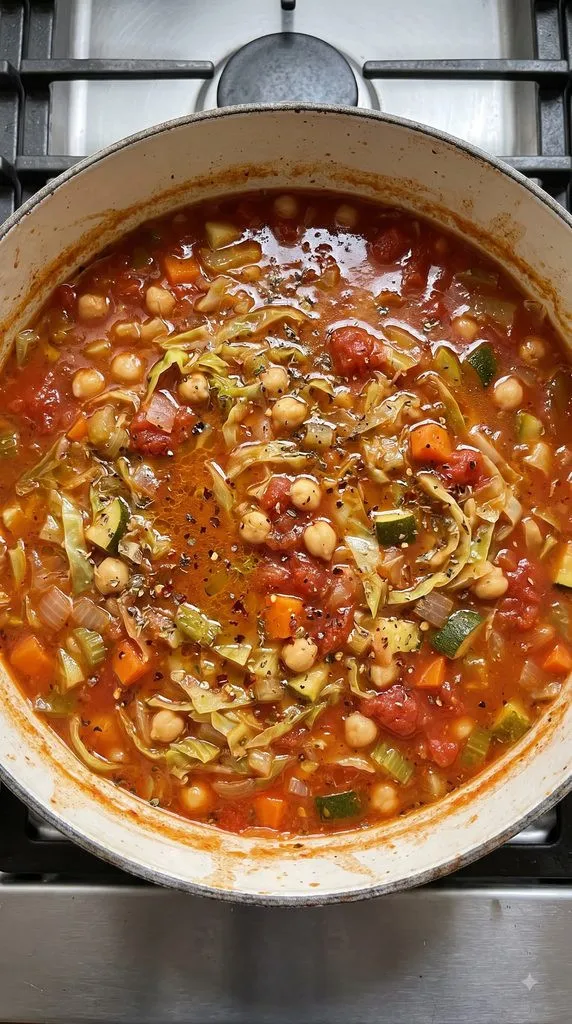
Step 6: Finish With Lemon and Parsley
Turn off the heat. Stir in 2 tablespoons fresh lemon juice and 1/4 cup chopped fresh parsley.
Taste the soup. Add a little more salt only if it needs it. Let it sit for 5 minutes before serving. This short rest helps all the flavors come together.
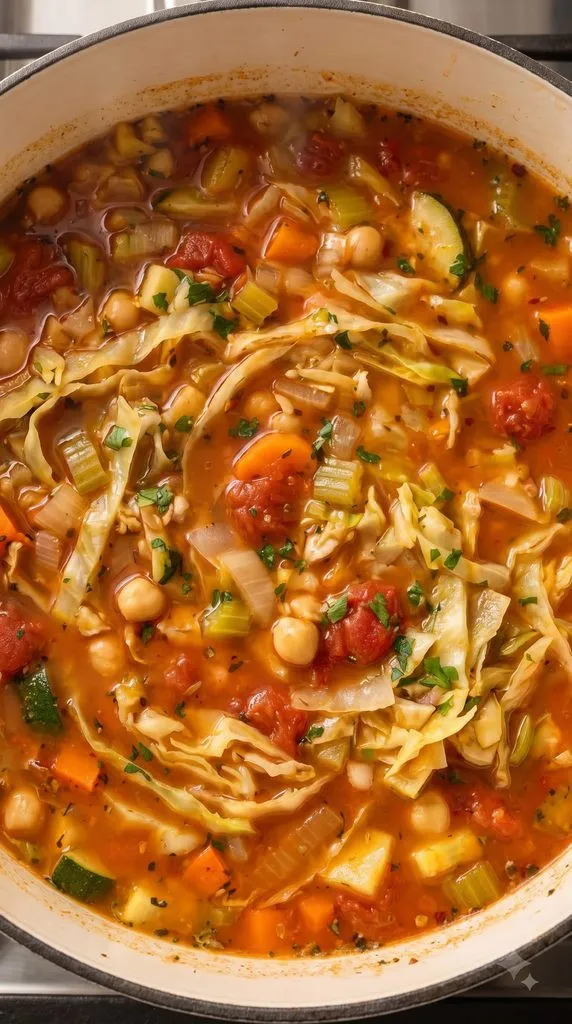
Step 7: Serve
Ladle the hot soup into round bowls. Make sure each serving gets plenty of cabbage, chickpeas, zucchini, carrots, celery, and tomato along with the broth.
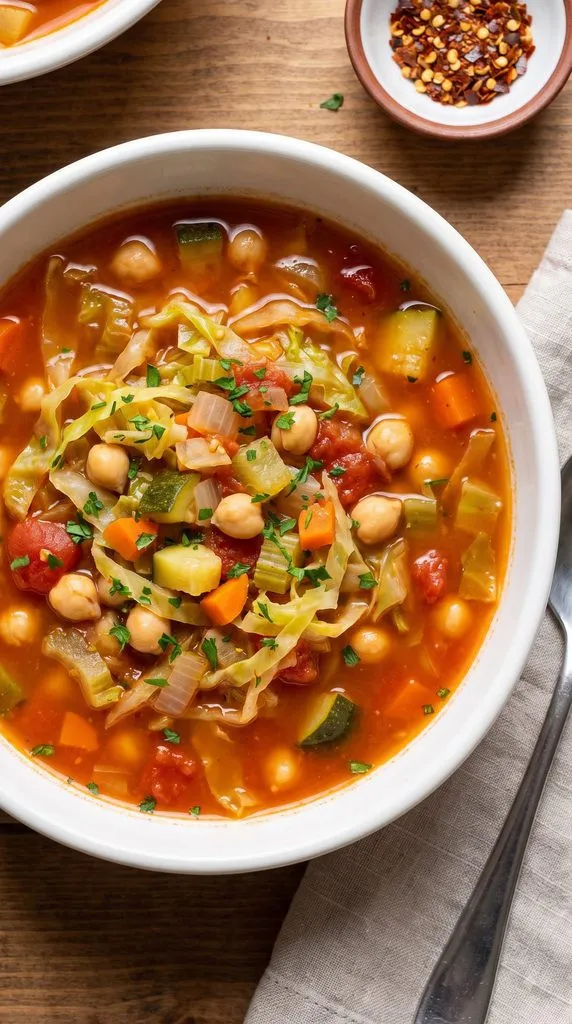
Why This Recipe Works (Quick Science)
Cabbage has a lot of water trapped inside its leaves. As it heats, the leaves soften and shrink. That is why 6 cups can look like a huge amount at first but fit nicely into the soup after a few minutes.
Cooking the onion, carrot, and celery in olive oil first also matters. Heat helps bring out their natural sweetness. Cooking the garlic and dried herbs briefly in the oil helps release more of their aroma.
Tomatoes bring acidity and savory flavor. Chickpeas add starch, protein, and fiber, which makes a light vegetable soup more satisfying.
The lemon goes in at the end because long cooking can dull its fresh flavor. Adding it last gives the whole pot a brighter taste.
Pro Tips
- Cut vegetables to a similar size. They will cook more evenly.
- Shred the cabbage thinly. Thick pieces take much longer to become tender.
- Do not burn the garlic. Thirty seconds is usually enough before adding the next ingredients.
- Keep the simmer gentle. A hard boil can make the zucchini too soft.
- Wait before adding extra salt. Broth and canned foods already contain some salt, so taste the finished soup first.
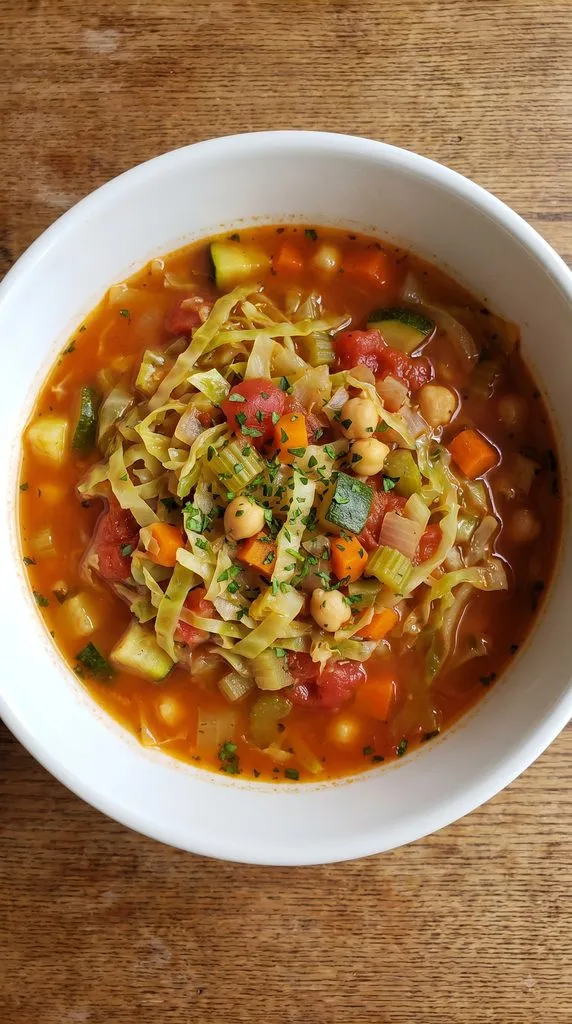
Tools You’ll Need
- Large Dutch oven or soup pot with lid
- Chef’s knife
- Cutting board
- Vegetable peeler
- Wooden spoon
- Can opener
- Colander
- Measuring cups
- Measuring spoons
- Citrus juicer
- Soup ladle
- Serving bowls
Substitutions and Variations
- White beans: Replace the chickpeas with one 15-ounce can of drained and rinsed cannellini beans.
- Chicken broth: Use low-sodium chicken broth instead of vegetable broth if the soup does not need to be vegetarian.
- Spinach: Stir in 2 cups of baby spinach during the last 2 minutes.
- More protein: Add 2 cups of cooked shredded chicken near the end and heat it through.
- More heat: Increase the red pepper flakes to 1/2 teaspoon.
- No zucchini: Replace it with an equal amount of diced green beans.
- More lemon flavor: Serve with lemon wedges so each person can add more.
Make-Ahead Tips
You can chop the onion, carrots, celery, cabbage, and zucchini up to 2 days ahead. Keep them in covered containers in the refrigerator.
You can also make the whole soup ahead of time. In fact, the flavor often gets better after sitting overnight. Wait to add a little fresh parsley until serving if you want the brightest color.
Macros Information
Approximate nutrition per serving, based on 6 servings:
- Calories: 220
- Protein: 8 g
- Carbohydrates: 33 g
- Fat: 8 g
- Fiber: 9 g
These are estimates. The exact numbers will change based on the broth, canned tomatoes, chickpeas, and other brands you use.
Common Mistakes
- Cutting the cabbage too thick: It can stay tough while the other vegetables become soft.
- Adding garlic too early: Garlic can burn during the longer vegetable sauté and make the soup bitter.
- Boiling too hard: Keep the soup at a gentle simmer once it reaches a boil.
- Skipping the lemon: The soup can taste flat without that final bit of acidity.
- Adding too much salt at the start: The soup concentrates a little while it cooks. Taste it at the end before adding more.
- Overcooking the zucchini: It should be tender but still hold its shape.
What to Serve With
This soup works well as a light meal by itself, but you can make it more filling with:
- Warm whole-grain bread
- Toasted pita
- Garlic bread
- A simple Greek salad
- Hummus and pita
- Grilled chicken
- Baked fish
- A small sprinkle of feta cheese
- A spoonful of plain Greek yogurt
Leftovers and Storage
Let leftover soup cool, then place it in an airtight container.
- Refrigerator: Keep for up to 4 days.
- Freezer: Freeze for up to 3 months. Leave a little empty space in the container because liquids expand as they freeze.
- Reheating: Warm gently in a saucepan over medium-low heat until steaming hot. You can also reheat individual portions in the microwave.
- After storing: The cabbage and chickpeas may soak up some broth. Add a splash of vegetable broth or water when reheating if the soup seems too thick.
- Freshen it up: A small squeeze of lemon and some fresh parsley can wake up leftover soup.
FAQ
Q: Does cabbage soup really detox your body?
A: No single food or soup removes toxins from your body. Your liver and kidneys do that work. This recipe is called a detox soup because it is a light meal packed with vegetables, legumes, and fiber.
Q: Can I use red cabbage?
A: Yes, but it will change the soup’s color and has a slightly different flavor. Green cabbage gives the most classic result.
Q: Can I make this soup without chickpeas?
A: Yes. Leave them out or replace them with white beans.
Q: Is this soup spicy?
A: With 1/4 teaspoon red pepper flakes, it has only a small amount of heat. Leave them out for a completely mild soup.
Q: Why do I add lemon at the end?
A: Fresh lemon loses some of its bright flavor when cooked for a long time. Adding it after cooking keeps the soup fresh tasting.
Q: Can I freeze Mediterranean cabbage soup?
A: Yes. The vegetables will be a little softer after freezing and reheating, but the soup still freezes well.
Q: Can I add meat?
A: Yes. Cooked shredded chicken or turkey works well. Add it near the end so it only needs enough time to heat through.
Final Thoughts
Mediterranean cabbage soup proves that a big pot of vegetables does not have to taste plain. Tomatoes, garlic, herbs, chickpeas, parsley, and that final splash of lemon give every bowl plenty of flavor.
Make a pot when you want something warm, simple, and filling without being heavy. Save the leftovers for an easy lunch, and leave a comment to share how your soup turned out, any changes you made, or any questions you have.
ChatGPT có thể mắc lỗi. Hãy kiểm tra thông tin quan trọng.