
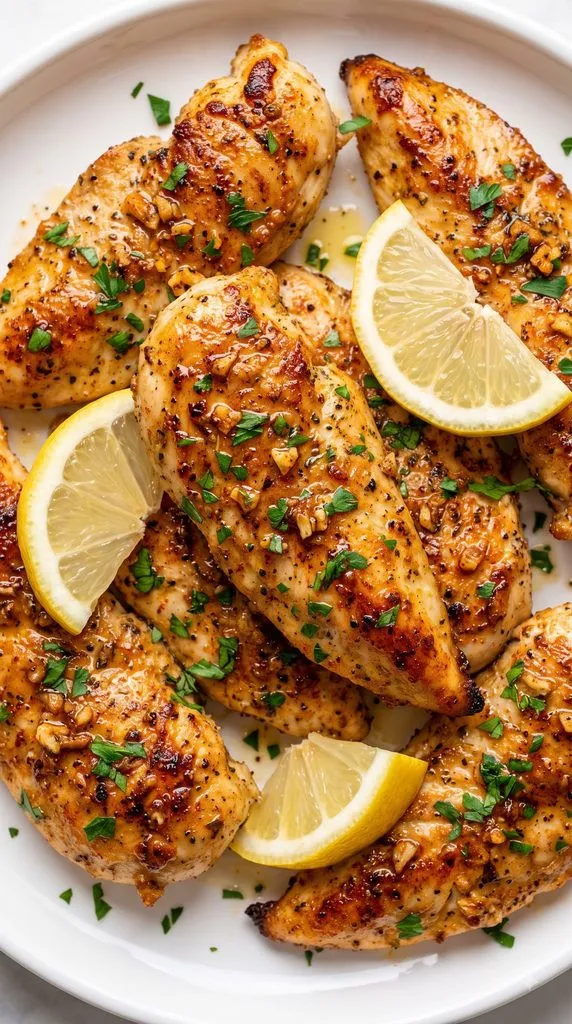
These Mediterranean Chicken Tenders are juicy, golden, garlicky, and full of fresh lemon and herbs. The outside gets beautifully browned with little bits of Parmesan, paprika, garlic, and parsley, just like the tenders in the photo. They are quick enough for a weeknight but look special enough to serve to guests.
Servings: 4
Prep time: 10 minutes
Cook time: 12–15 minutes
Total time: About 25 minutes
Why I Love This Recipe
This is the kind of chicken recipe I like to keep around for busy nights. Chicken tenders cook fast, but plain chicken can get boring. A simple mix of lemon, garlic, Parmesan, paprika, oregano, and parsley changes that.
The best part happens in the skillet. The Parmesan and seasonings hit the hot oil and form those little browned, flavorful spots you see on the chicken. Then a squeeze of lemon at the end wakes everything up.
- It takes about 25 minutes from start to finish.
- You only need one skillet for cooking.
- The chicken stays juicy because tenders cook quickly.
- Parmesan gives the outside extra browning without a thick breading.
- Lemon, garlic, oregano, and parsley give it a bright Mediterranean-style flavor.
- It works with rice, potatoes, pasta, salad, or warm pita.

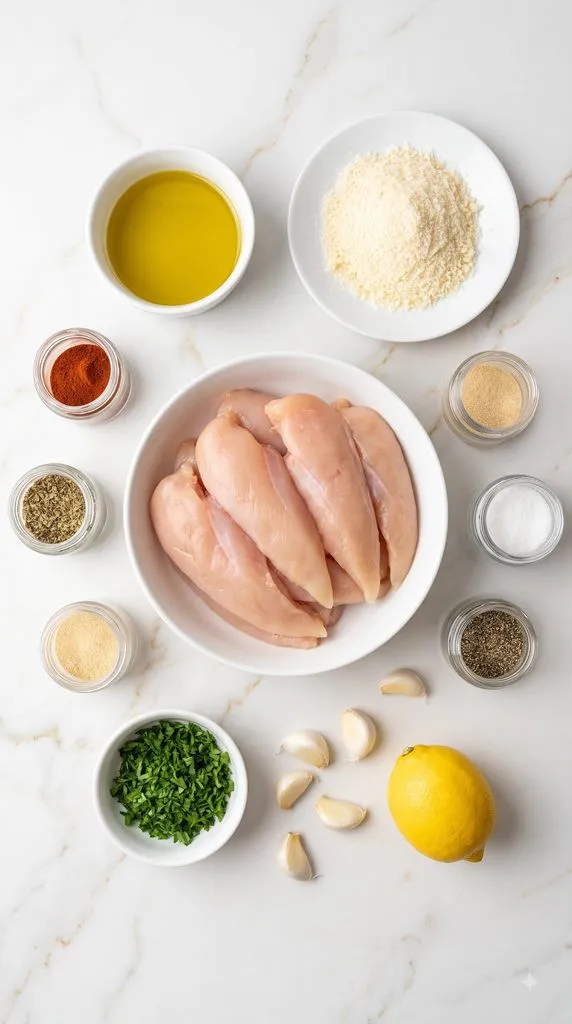
What You’ll Need
- 1 1/2 pounds chicken breast tenders, about 10–12 tenders
- 2 tablespoons extra-virgin olive oil, divided
- 3 tablespoons finely grated Parmesan cheese
- 3 cloves garlic, finely minced
- 1 teaspoon smoked paprika
- 1 teaspoon dried oregano
- 1/2 teaspoon garlic powder
- 3/4 teaspoon kosher salt
- 1/4 teaspoon black pepper
- 1 tablespoon fresh lemon juice
- 1 teaspoon finely grated lemon zest
- 3 tablespoons fresh parsley, finely chopped and divided
- 1 lemon, cut into wedges for serving
Recipe and Instructions
Step 1: Dry the Chicken
Place 1 1/2 pounds chicken breast tenders on a plate lined with paper towels. Pat both sides very dry. Removing the extra moisture helps the chicken brown instead of steam.
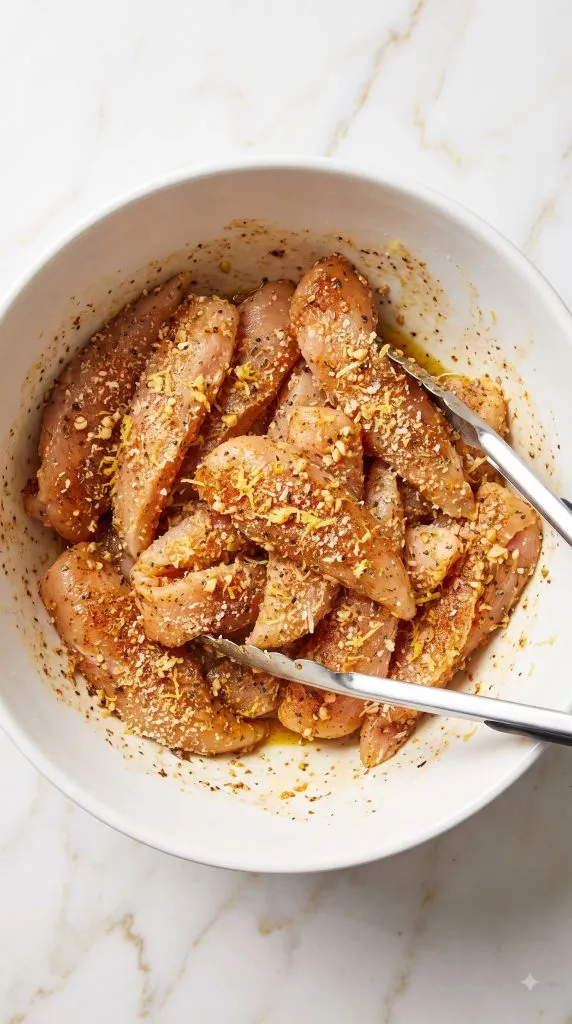
Step 2: Season the Chicken
Put the dried 1 1/2 pounds chicken breast tenders in a large bowl. Add 1 tablespoon extra-virgin olive oil, 3 tablespoons finely grated Parmesan cheese, 3 finely minced garlic cloves, 1 teaspoon smoked paprika, 1 teaspoon dried oregano, 1/2 teaspoon garlic powder, 3/4 teaspoon kosher salt, 1/4 teaspoon black pepper and 1 teaspoon finely grated lemon zest.
Use tongs to toss until every tender has a thin, even coating.
Step 3: Sear the First Side
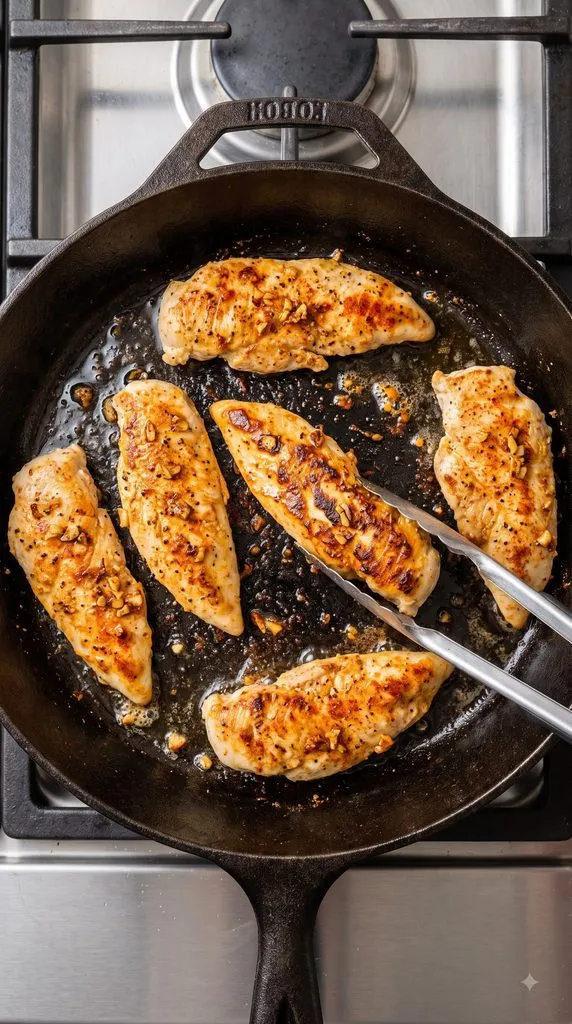
Heat a large skillet over medium to medium-high heat. Add the remaining 1 tablespoon extra-virgin olive oil.
Once the oil is hot and shimmering, add the seasoned 1 1/2 pounds chicken breast tenders in a single layer. Do not pile them on top of each other. If your skillet is small, cook them in two batches.
Cook without moving them for about 3–4 minutes, until the bottoms are deep golden brown.
Step 4: Flip and Finish Cooking
Flip each chicken tender with tongs. Cook for another 3–4 minutes, or until the second side is browned and the thickest part of the chicken reaches 165°F (74°C).
The outside should now have dark golden spots with toasted Parmesan, paprika, garlic, oregano, and parsley.
Step 5: Add Lemon and Parsley
Turn off the heat. Drizzle 1 tablespoon fresh lemon juice over the cooked chicken. Sprinkle with the remaining 1 tablespoon finely chopped fresh parsley.
Gently turn the tenders through the flavorful juices in the skillet. Let them rest for 3 minutes before serving.
Step 6: Serve
Move the chicken to a round white serving plate. Add the lemon wedges from 1 lemon around the chicken. Spoon any tasty juices from the skillet over the top.
Serve while the tenders are warm.
Why This Recipe Works (Quick Science)
Chicken tenders are thin, so they cook much faster than a whole chicken breast. Drying the chicken first is important. Water on the surface creates steam, and steam makes it harder to get that deep golden color.
The hot skillet creates browning through the Maillard reaction. That is the reaction that gives cooked meat its savory flavor and brown crust.
Parmesan also helps. Its proteins and natural sugars brown quickly against the hot skillet, making little crispy, deeply flavored spots.
The lemon is added at the end for a reason. Fresh lemon juice tastes brighter when it is not cooked for a long time. Its acidity also balances the salty Parmesan and rich olive oil.
Pro Tips
- Dry the chicken well. This is one of the easiest ways to get a browned outside.
- Finely grate the Parmesan. Large shreds can fall off or burn before the chicken is done.
- Don’t crowd the skillet. Use two batches if needed. Crowded chicken releases steam and stays pale.
- Watch the heat. Parmesan and garlic can burn. Lower the heat a little if the brown bits become very dark before the chicken is cooked.
- Use a thermometer. Pull the chicken from the heat once the thickest tender reaches 165°F (74°C). Overcooking makes tenders dry.
Tools You’ll Need
- Large heavy skillet
- Large mixing bowl
- Round serving plate
- Cutting board
- Chef’s knife
- Tongs
- Measuring spoons
- Tablespoon measure
- Microplane or fine grater
- Instant-read meat thermometer
- Paper towels
Substitutions and Variations
- Chicken breasts: Slice boneless chicken breasts lengthwise into strips about the size of tenders.
- Regular paprika: Use it instead of smoked paprika for a milder flavor.
- Fresh oregano: Replace 1 teaspoon dried oregano with about 1 tablespoon finely chopped fresh oregano.
- Pecorino Romano: It can replace Parmesan, but use a little less salt because Pecorino is quite salty.
- Less garlic: Drop the fresh garlic to 1 or 2 cloves for a softer garlic flavor.
- A little heat: Add 1/4 teaspoon crushed red pepper flakes to the seasoning.
- Extra lemon: Serve more lemon wedges on the side instead of adding extra juice while cooking.
Make-Ahead Tips
You can trim and dry the chicken several hours ahead. Keep it covered in the refrigerator.
You can also mix the Parmesan, paprika, oregano, garlic powder, salt, and pepper ahead of time. Keep that mixture covered until you are ready to cook.
For the best texture, season the chicken shortly before cooking rather than leaving the Parmesan coating on overnight.
Common Mistakes
- Putting wet chicken in the skillet: It will steam instead of getting nicely browned.
- Starting with a cold skillet: Wait until the oil is hot and shimmering.
- Using very high heat: Garlic and Parmesan can burn quickly.
- Moving the chicken constantly: Leave the first side alone for 3–4 minutes so it can develop a crust.
- Crowding the pan: Cook in batches if the tenders cannot sit in one layer.
- Overcooking: Chicken tenders are small and can dry out quickly. Check for 165°F (74°C).
What to Serve With
These chicken tenders go well with simple sides such as:
- Lemon rice or herbed rice
- Roasted potatoes
- Couscous
- Greek-style salad
- Cucumber and tomato salad
- Roasted zucchini
- Steamed green beans
- Warm pita bread
- Hummus or tzatziki
- Buttered pasta
Macros Information
Approximate nutrition for 1 of 4 servings, based on the ingredients listed:
- Calories: 330
- Protein: 47 g
- Carbohydrates: 3 g
- Fat: 14 g
- Fiber: Less than 1 g
These numbers are estimates. The exact nutrition will change with the size and brand of your ingredients and how much cooking oil remains in the skillet.
Leftovers and Storage
Let leftover chicken cool, then place it in an airtight container. Keep it in the refrigerator for up to 3–4 days.
For reheating, warm the tenders gently in a covered skillet over low heat with a small splash of water. You can also microwave them in short bursts. Avoid heating them longer than needed because chicken tenders can dry out.
For longer storage, freeze the cooked and cooled tenders in a freezer-safe container for up to 2 months. Thaw them overnight in the refrigerator before reheating.
FAQ
Q: Can I bake these Mediterranean chicken tenders instead?
A: Yes. Put them on a lightly greased baking sheet and bake at 425°F (220°C) until they reach 165°F (74°C), usually around 15–18 minutes depending on their thickness. They will not have quite the same skillet-seared crust.
Q: Why did my Parmesan stick to the skillet?
A: The skillet may not have been hot enough when the chicken went in, or you may have tried to flip the chicken too early. Once the crust browns, it releases more easily.
Q: Can I leave out the Parmesan?
A: Yes. The chicken will still taste good, but the surface will be less crusty. The Parmesan helps create the browned texture seen in the finished dish.
Q: Is this chicken spicy?
A: No. Smoked paprika adds warm, smoky flavor rather than strong heat.
Q: Can I use chicken thighs?
A: Yes. Cut boneless, skinless thighs into similar-sized strips and cook until the thickest pieces reach at least 165°F (74°C).
Q: How do I make the chicken look like the photo?
A: Pat it very dry, use finely grated Parmesan, coat every tender evenly, and give the first side enough time to brown without moving it. Fresh parsley added at the end gives you those bright green pieces, while smoked paprika and browned Parmesan create the rich red-golden surface.
Final Thoughts
These Mediterranean Chicken Tenders pack a lot of flavor into a quick meal. You get juicy chicken, browned Parmesan and garlic, smoky paprika, herbs, and a bright pop of lemon in every bite.
Serve them straight from the skillet with your favorite simple side, and don’t forget those lemon wedges. If you make the recipe, leave a comment and share how yours turned out or any questions you had along the way.