
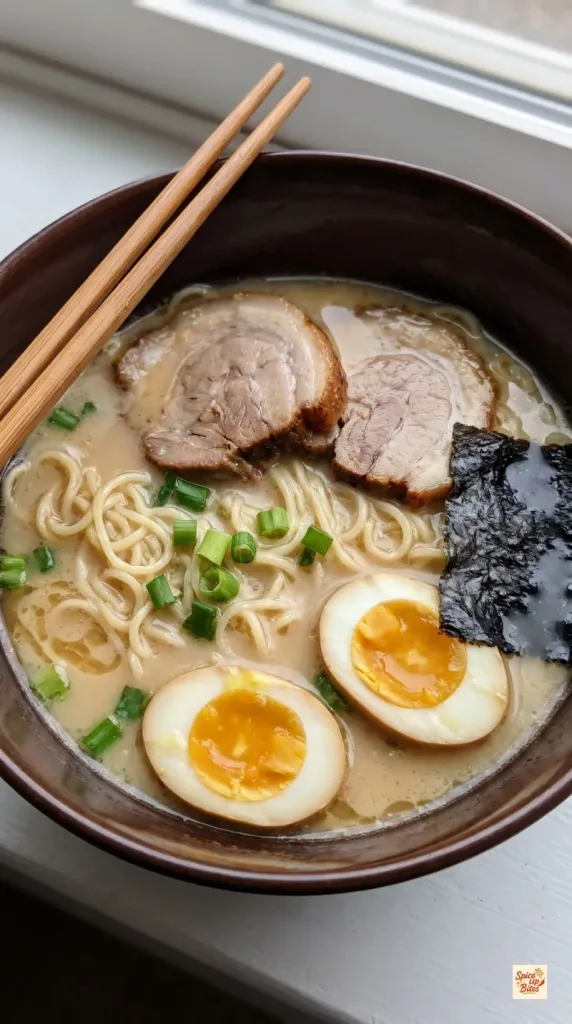
Homemade Tonkotsu Ramen is a slow weekend project with a deeply comforting finish. Pork bones turn plain water into a rich, creamy broth without any dairy. A quick soy-miso seasoning brings it to life, and springy noodles, tender pork and eggs make each bowl a full meal. Most of the cooking takes patience, with regular checks on the pot.
Why I Love This Recipe
The broth does the heavy lifting here. You build it with simple ingredients, then season each bowl just before serving so the flavor stays balanced.
- Creamy without cream: Bones and steady boiling give the broth its silky body.
- Worth making ahead: The broth freezes well for another ramen night.
- Simple finishing steps: Prepared chashu keeps the last part manageable.
- Flexible seasoning: Taste the first bowl before portioning the remaining tare.
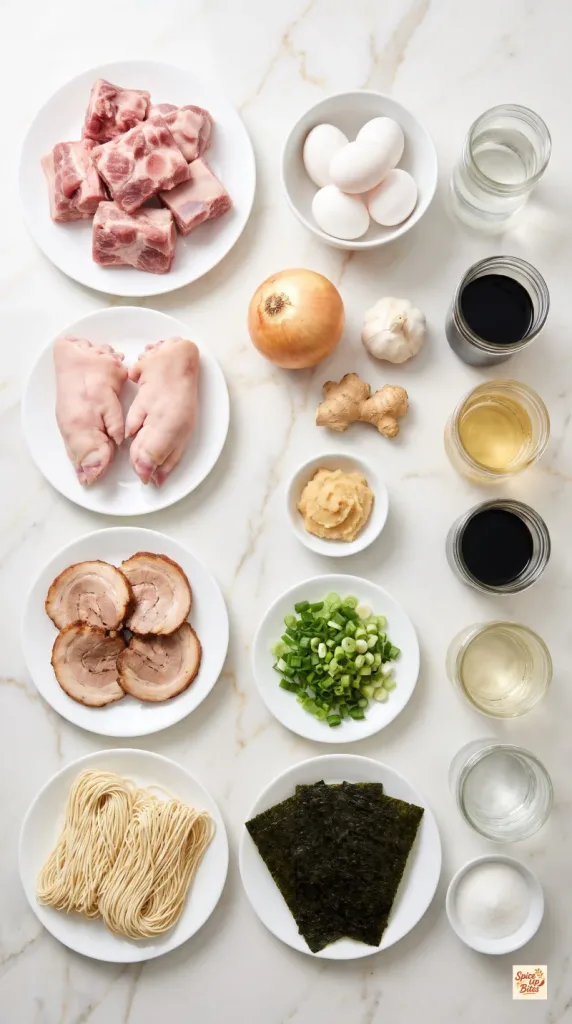
What You’ll Need
- Servings: 4 large bowls
- Prep Time: 30 minutes
- Cook Time: 10 hours 30 minutes–12 hours 30 minutes, including bringing water to a boil and finishing; toppings cook during the broth stage
- Total Time: 11–13 hours; allow extra time if the broth needs longer
- Broth Yield: 8 cups for assembly, plus 1/2 cup for warming the pork
For the broth
- 4 pounds pork neck bones, cut into stockpot-sized pieces by the butcher
- 1 pound pig trotters, split into pieces by the butcher
- 1 medium onion, halved
- 1 head garlic, halved crosswise
- 1 piece fresh ginger, 2 inches long, sliced
- 2 scallions, cut into large chunks
- 5 quarts fresh water to start the broth, plus water for blanching and hot water for topping up
For the tare
- 1/4 cup soy sauce
- 2 tablespoons mirin
- 1 tablespoon sake
- 1 tablespoon white miso paste
- 1 teaspoon sugar
For the bowls
- 16 ounces thin fresh ramen noodles, divided into 4 portions
- 4 large eggs
- 8 slices fully cooked chashu pork, about 8 ounces total
- 2 scallions, finely sliced
- 4 sheets nori
- Water for boiling noodles and eggs, plus ice water for cooling eggs
The tare is the concentrated seasoning added to each bowl. Black garlic oil is an optional variation, rather than part of the base bowls here.
Tools You Need
- Heavy 12-quart stockpot
- Fine-mesh strainer and a second large heatproof pot
- Small saucepan and wide saucepan
- Large noodle pot
- Ladle, tongs and slotted spoon
- Measuring cups and spoons
- Instant-read thermometer
- Cutting board and knife
- Deep ramen bowls
How to Make Homemade Tonkotsu Ramen
Start the broth early and prepare the toppings while it cooks. Keep the stove attended throughout the long boil.
Step 1: Blanch and Clean the Bones
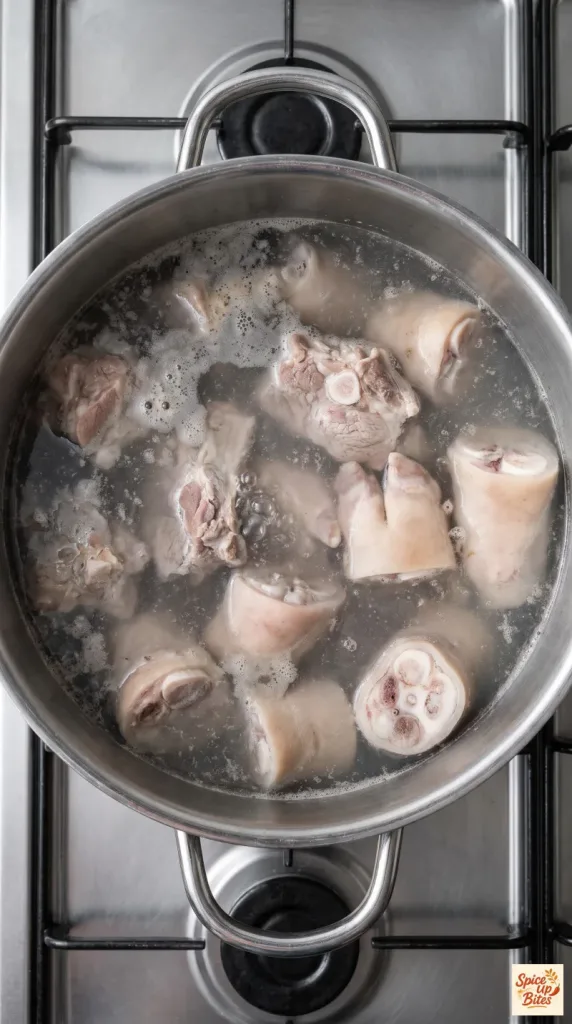
Put 4 pounds pork neck bones and 1 pound split pig trotters into the 12-quart stockpot. Add cold water to cover them by about an inch, leaving plenty of room below the rim.
Bring to a boil, then boil for 10 minutes. Drain carefully, rinse the bones under cool water and rub away loose gray residue. Wash the pot before returning the bones to it.
Step 2: Build the Broth
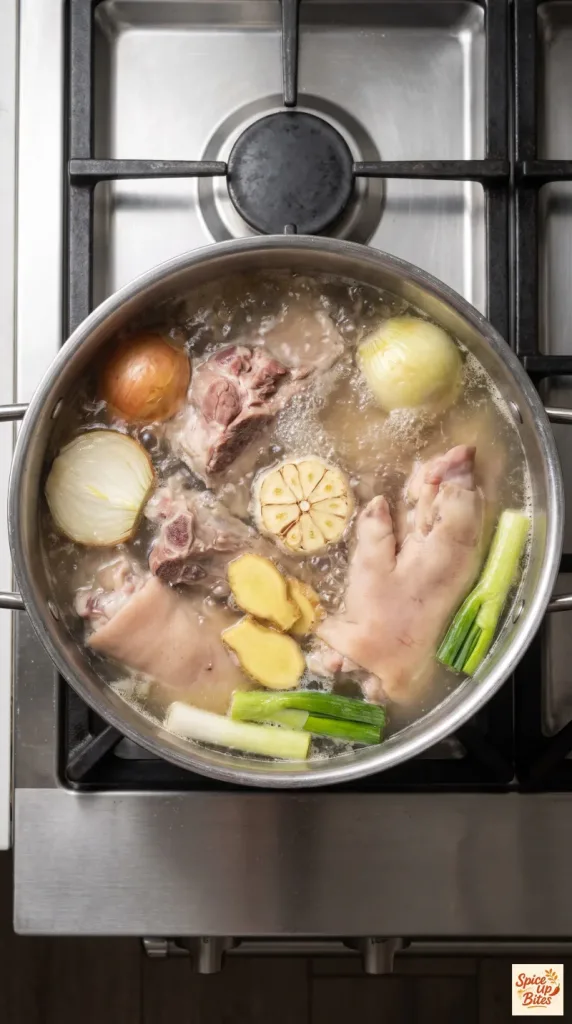
Return the cleaned bones to the pot with 5 quarts fresh water, 1 halved onion, 1 crosswise-halved head garlic, 1 sliced 2-inch piece ginger and 2 chunked scallions. If needed, add enough extra water to cover the bones while keeping the pot safely below its rim.
Bring to a steady rolling boil, then adjust the heat so the liquid keeps moving strongly without splashing over. Leave the lid off or partly ajar. Cook for 10–12 hours, until the broth is opaque and rich and the connective tissue is very soft.
Check about every 30 minutes. Stir along the bottom to prevent sticking and add hot water as needed to keep the bones covered. Do not let the pot boil dry or leave it running overnight unattended.
Step 3: Strain and Adjust the Yield
Set a fine-mesh strainer over a clean heatproof pot. Carefully strain the broth, working in smaller batches if the stockpot is too heavy to lift safely. Discard the spent bones and aromatics.
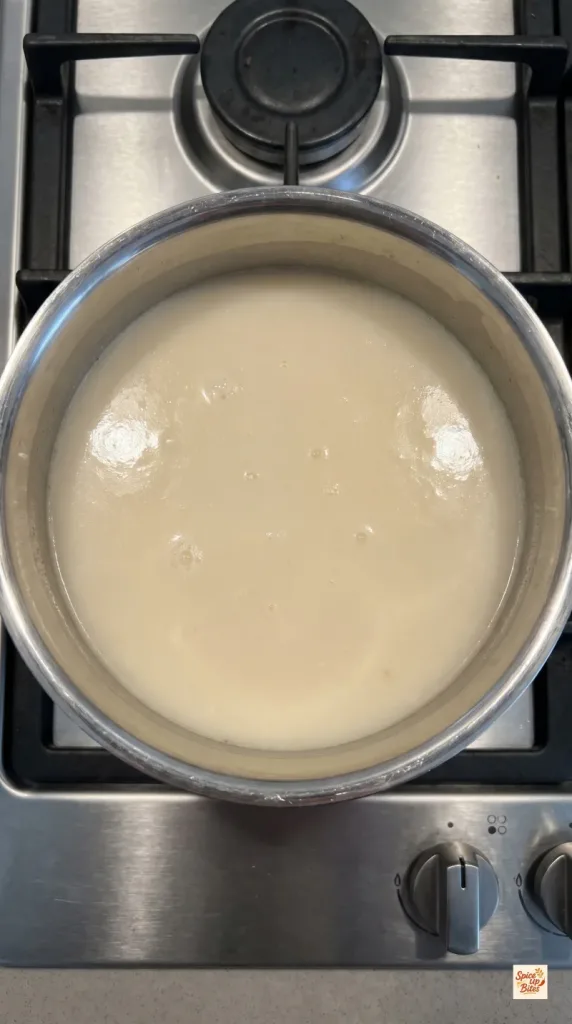
Measure the strained broth. You need 8 1/2 cups: 8 cups for the bowls and 1/2 cup for the pork. If you have less, stir in hot water to reach that amount. If you have more, reserve the extra or boil it down briefly for a richer batch.
Keep the 8 cups broth hot in the clean pot. The strained broth should be opaque ivory and silky, not clear or dairy-thick.
Step 4: Make the Seasoning
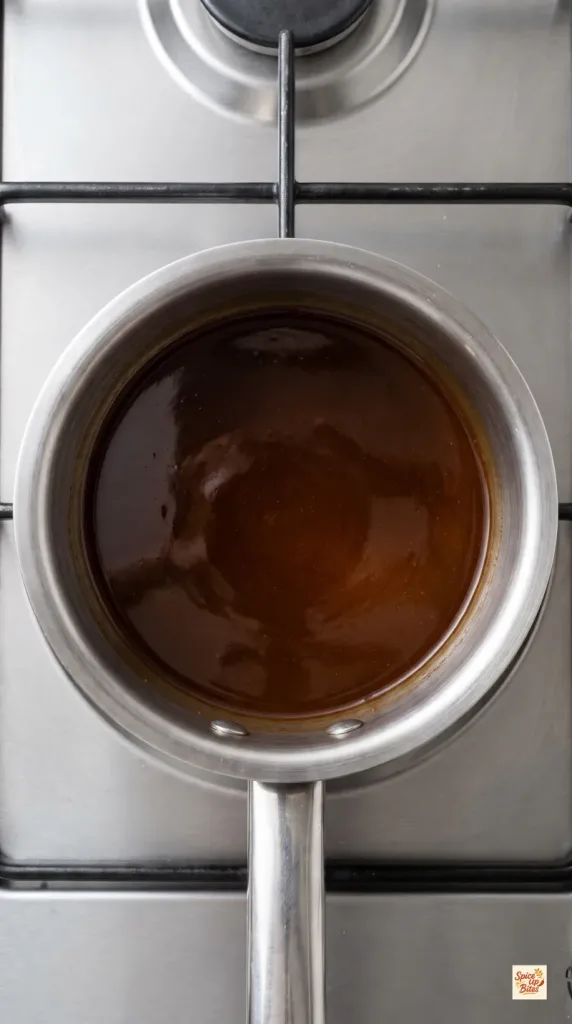
Combine 1/4 cup soy sauce, 2 tablespoons mirin, 1 tablespoon sake, 1 tablespoon white miso and 1 teaspoon sugar in a small saucepan.
Bring to a gentle simmer while stirring, then cook for 2 minutes until the miso is smooth and the sugar dissolves. Remove from the heat. This makes roughly 1/2 cup tare, with the exact yield depending on evaporation.
Step 5: Prepare the Eggs
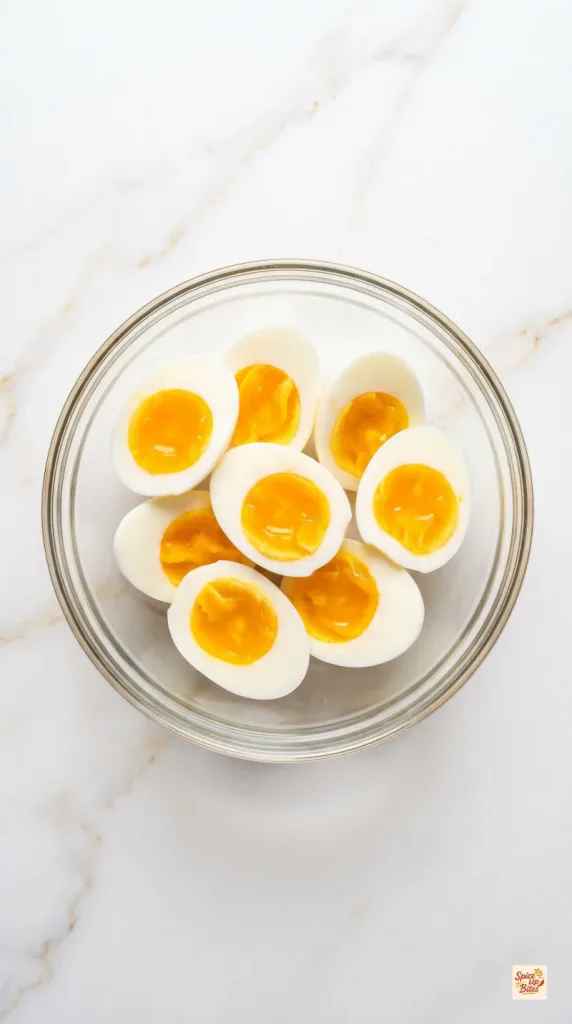
Lower 4 large eggs into gently boiling water. Cook for 7 minutes for jammy yolks, then transfer to ice water for 5 minutes. Peel and halve lengthwise.
For fully firm yolks, cook for 10–12 minutes instead. People who need fully cooked eggs should choose this option. Refrigerate prepared eggs until close to serving time if the broth is still cooking.
Step 6: Warm the Pork
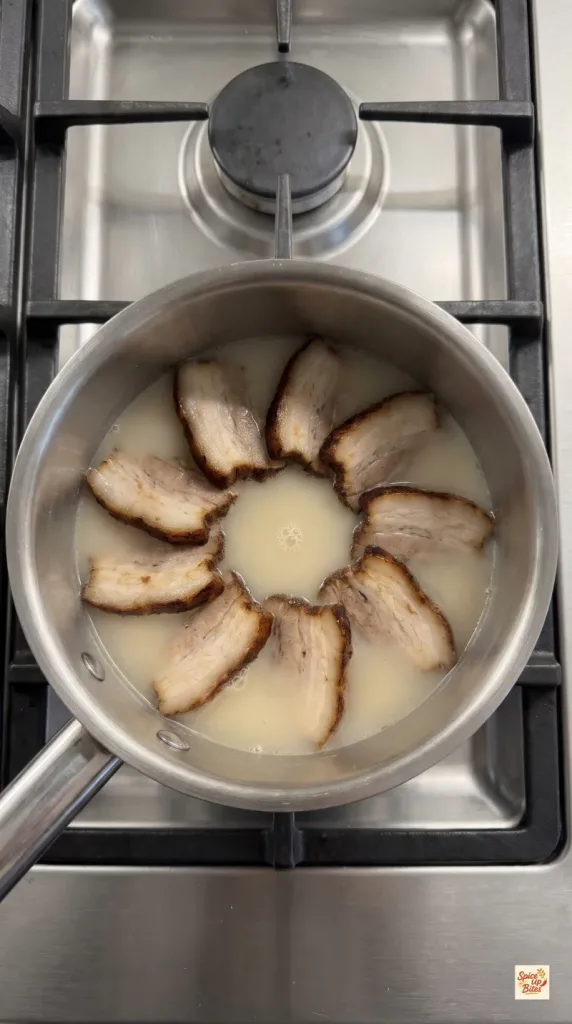
Put 8 fully cooked chashu slices, about 8 ounces total, into a wide saucepan with the reserved 1/2 cup broth. Warm gently for 3–5 minutes, turning once, until heated through.
If using refrigerated leftover pork, reheat it to 165°F (74°C). This recipe starts with cooked chashu; do not replace it with raw pork belly at this step.
Step 7: Cook the Noodles
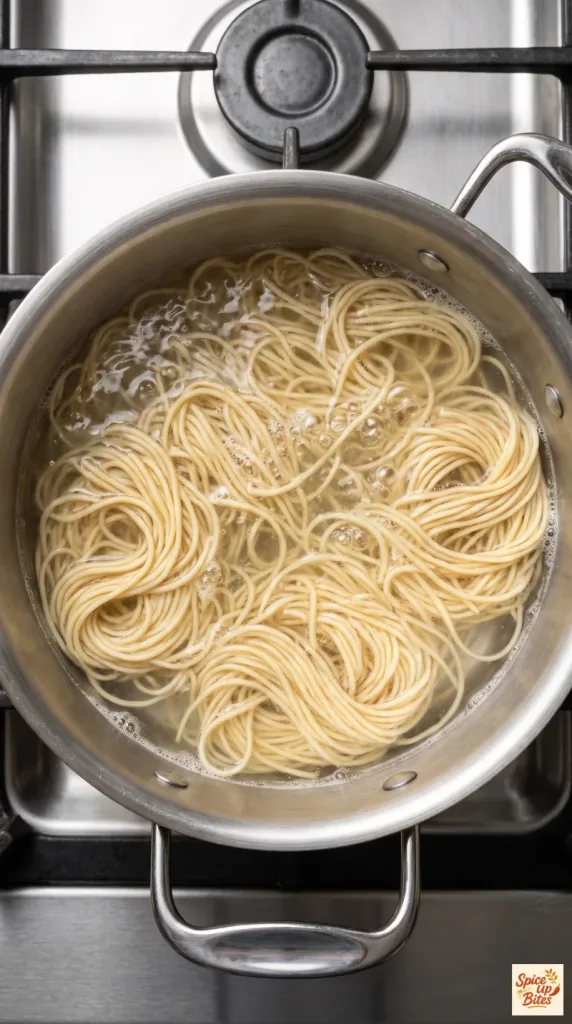
Bring a large pot of fresh water to a rolling boil. Cook 16 ounces fresh ramen noodles, working in batches if needed, for the package’s stated time, often 1–3 minutes.
Drain well and use immediately. Do not cook the noodles in the finished broth, where their loose starch would change its texture.
Step 8: Assemble and Serve
Warm 4 deep bowls with hot water, then empty them. Start with 1 tablespoon tare per bowl, reserving the rest for adjustment.
Stir 2 cups hot broth into each bowl. Taste, then add up to 1 more tablespoon tare per bowl, according to salt level and the actual tare yield. Do not force all of it into the bowls if they already taste balanced.
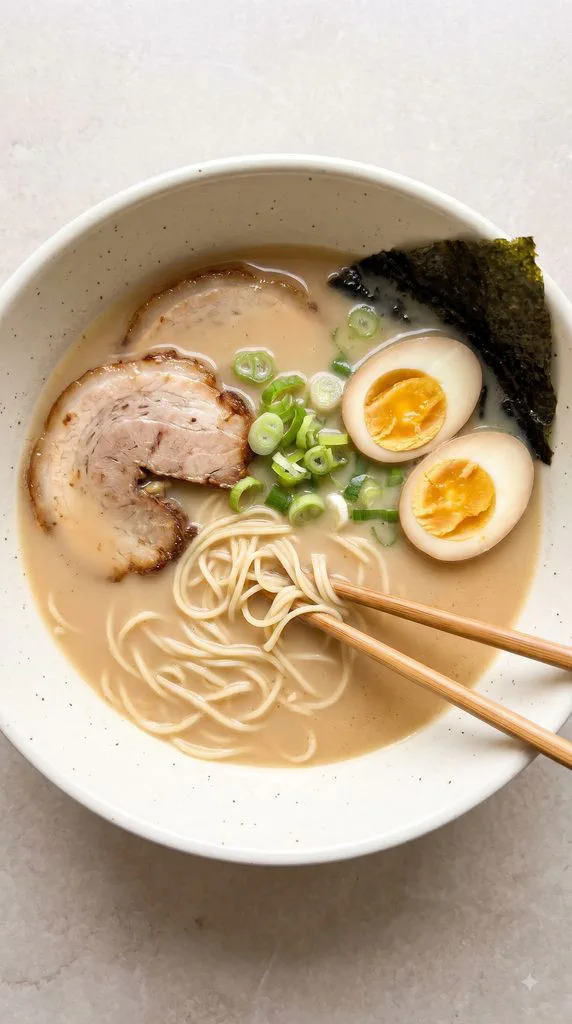
Divide the cooked noodles equally among the bowls. Let them sit low and loose, with visible curls at the surface and broth between them.
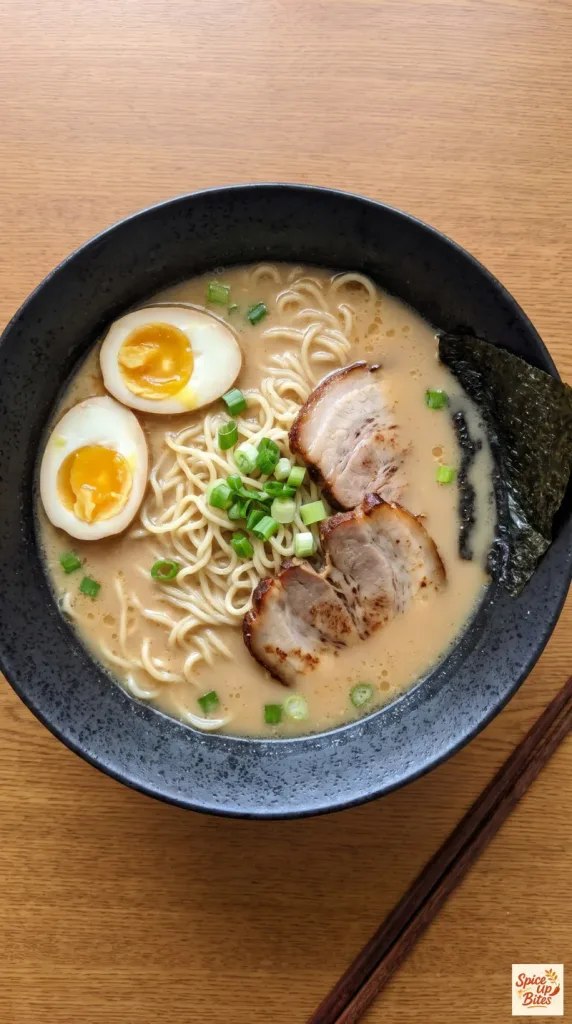
Add 2 chashu slices, 2 egg halves, one-quarter of the 2 sliced scallions and 1 nori sheet to each bowl. Nestle the toppings casually among the noodles rather than arranging neat sections. Serve right away, with optional cucumber salad or Japanese pickles alongside.
Why This Recipe Works (Quick Science)
A long boil pulls gelatin from connective tissue, which gives the broth body. The moving liquid also breaks pork fat into small droplets and keeps them dispersed, making the broth creamy and opaque. That is why a quiet simmer produces a different result.
Seasoning happens after straining so water loss does not make the stock too salty. Cooking the noodles separately keeps their starch out of the carefully built broth.
Common Mistakes to Avoid
- Keeping the heat too low: The broth needs a rolling boil to develop its cloudy body.
- Ignoring the water level: Exposed bones and a dry pot can lead to scorching.
- Adding all the tare at once: Soy sauce and miso vary in saltiness. Start small and taste.
- Leaving noodles waiting: They soften quickly once cooked. Assemble immediately.
- Treating this as unattended cooking: Plan for regular checks and hot-water top-ups.
Pro Tips
- Ask the butcher to split the trotters and cut large bones. Avoid trying to chop hard bones at home.
- Use a roomy pot so a strong boil stays manageable.
- If the chilled broth sets like jelly, that is normal. It loosens again when heated.
- Stir the hot broth before ladling so the fat and liquid stay evenly distributed.
Substitutions and Variations
- Black garlic oil: For an optional finish, allow 1 teaspoon per bowl. Drizzle it lightly across the surface after adding the toppings. It adds a dark roasted-garlic note and is not included in the base nutrition estimate.
- Dried ramen: Use the package’s amount for four servings and follow its cooking time. Discard any instant seasoning packets.
- Different pork: Thin slices of fully cooked roast pork can replace chashu, though their flavor and fat content will differ.
- No pork: Choose a separate chicken or mushroom ramen recipe. Swapping the bones changes the identity of this broth.
Make-Ahead Tips
The broth is the best part to make ahead. Prepare it the day before, cool it quickly and chill it. Make the tare separately and keep it refrigerated. Cook the noodles just before eating.
Leftovers and Storage
Divide broth into shallow containers and refrigerate within 2 hours, or 1 hour if the room is above 90°F (32°C); an ice bath helps cool it quickly. Keep chilled broth and cooked pork at 40°F (4°C) or below and use within 3–4 days. Freeze broth for up to 3 months for best quality.
Store toppings separately. Use jammy eggs within 2 days and refrigerated tare within 4 days. Reheat broth and leftover pork to 165°F (74°C), stirring the broth to recombine it. Add freshly cooked noodles when serving.
What to Serve With Homemade Tonkotsu Ramen
This is already a hearty meal. A small cucumber salad or Japanese pickles adds a cool, crisp contrast. Gyoza is another option for a larger meal. Keep those extras on the side so they do not crowd the ramen bowl.
Macros Information
Estimated per large bowl, using all the tare and excluding optional sides and black garlic oil. Bone extraction, pork fat and noodle brands make these values especially variable.
- Calories: 840 kcal
- Protein: 39 g
- Carbohydrates: 70 g
- Fat: 45 g
- Saturated Fat: 16 g
- Fiber: 3 g
- Sugar: 8 g
- Sodium: 1,650 mg
Frequently Asked Questions (FAQ)
Q: Does the creamy broth contain milk?
A: No. Pork fat and gelatin give it body, and boiling makes it opaque.
Q: Can I use ordinary boxed pork stock?
A: It will make noodle soup, but it will not match this long-boiled broth. A prepared tonkotsu base is a closer shortcut; season according to its label.
Q: Why is my broth still clear?
A: It may need stronger boiling or more time. Check that the liquid is moving steadily and that the bones include the trotters listed here.
Q: Can I stop cooking and finish tomorrow?
A: Yes, but cool and refrigerate the broth and bones promptly in shallow containers. Do not leave a large warm pot on the stove overnight. Bring back to a boil the next day and continue.
Q: Should I skim all the fat away?
A: No. Remove gray residue during blanching, but some pork fat is needed for the finished broth’s body.
Q: Do I have to make chashu from scratch?
A: No. Prepared fully cooked chashu works well. This recipe’s timing does not include making a separate pork roast.
Q: Can I make the eggs with firm yolks?
A: Yes. Cook them for 10–12 minutes and cool them in ice water before peeling.
Q: Can I freeze assembled bowls?
A: Freeze the broth by itself instead. Fresh noodles and separately stored toppings give a much better result.
Q: Is tonkotsu the same as tonkatsu?
A: No. Tonkotsu refers to pork-bone broth. Tonkatsu is a breaded pork cutlet.
Final Thoughts
Homemade Tonkotsu Ramen asks for time, but the finishing steps are simple once the broth is ready. Keep an eye on the water level, taste the seasoning and serve the noodles right away. Leave a comment with your favorite ramen topping. Happy cooking!